Skip to content
First United Methodist Church Schenectady
  • Lenten Photo Show
  • About Us
    • Meet the Pastor
    • Committees
    • Contact Us
    • Calendar
    • Our Building
    • The Pipe Organ
    • FAQs
    • Wedding Guidelines
  • Worship
    • Sermons
    • Online Worship
  • Ministries
    • Music Ministries
    • Children’s Ministries
    • Volunteer In Mission
    • Carl Lecture Series
  • Give Back
    • Electronic Giving
  • Events
    • Family Faith Formation
Uncategorized

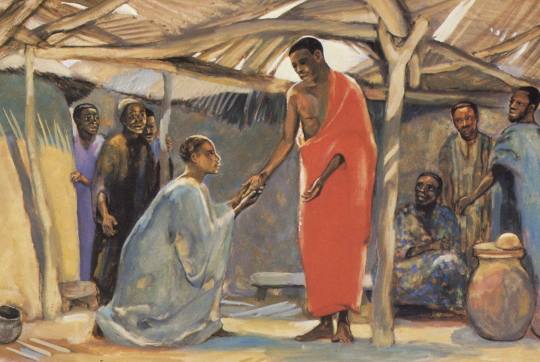
“Journey with Jesus” based on Psalm 133 and John…

  • April 11, 2021
  • by Sara Baron

Have
you ever thought about what it would be like to journey with Jesus?
I’m not actually talking about spiritual metaphor here, I suspect if
I was many people could openly say, “Yes, that’s my life!”  I
mean, what it was like for the first followers of Jesus to journey
around Galilee and later Judah with the historical Jesus.

Being
a part of the 21st century, my capacity for 1st
century historical accuracy is lacking, so I’m sometimes hesitant to
to project myself into those experiences.  Nevertheless, it feels
like I can’t enter into this story of “Doubting Thomas” without
letting my questions about journeying with Jesus come front and
center.

I
wonder how often those first followers were uncomfortable, especially
in the face of Jesus’ teaching.  This is likely projection on my
part, a reflection of how challenged I am by what he taught.  “Love
your enemy,” “give to anyone who asks of you,” “everyone is
your neighbor,” and  “love your neighbor as you love yourself”
are all important, profound teachings.  They’re also ones I fail to
live up to every day.  Did the disciples squirm like I do?  Or is it
that I come from a position of relative power and wealth that leads
me to squirm, and those who followed him more often had nothing and
could more easily accept his teaching?

What
about the parables?  Even the Jesus Seminar believes that Jesus
probably taught in parables.  The thing about parables is that
they’re lessons that keep on giving.  Every time you think about
them, you can see something new.  They grow with you.  This is,
obviously, amazing as a teaching tool.  But was it hard, as a first
follower, to be stretched and grown every day?  Did it feel like
drinking from a fire hose?  Did they ever feel like they got it, they
knew what he was up to, they were following along?

I
wonder too about the pace of life for those first followers.  The
gospel writer of Mark likes the word “immediately” and seems to
tell a rapid fire story.  But that just means he skips the quiet,
slow parts.  Did they linger of meals, talking and laughing?  Or was
everything GO-GO-GO like in the midst of an advocacy campaign with a
legislative deadline?  I suspect it was the former.  I don’t think
you actually build a movement that lasts unless you work at the pace
of human trust, and that pace requires a lot of talking, laughing,
story telling, meaning making, and even sitting around the fire in
quiet wonder.  

Some
of my questions really add up to, what kind of spiritual development
happened to those who were following Jesus?  The first followers were
members of a powerful faith tradition already, one that Jesus was
using and drawing from.  They were also, mostly, disenfranchised
people without any reason to have faith or trust in the systems of
the day.  They were marginalized people.  (And that’s where I have to
be so careful to pay attention to the fact that I am not one, and not
to project myself more than I should.)  In some ways, marginalized
people have an advantage in seeing what God is up to in the world,
because God is always up to upsetting the status quo to allow more
people to thrive AND survive and that is GOOD NEWS for the
marginalized people but threatening for those who are not.

And
they were spending all their time with Jesus, and with each other,
and that feels like the very best set up for rapid faith development.
Jesus was deeply connected with the Divine, likely a mystic, and
ready and able to put the needs of others before his own.  In my
life, people like that have taught me SO much, and I’d imagine being
with Jesus for a year would change EVERYTHING.

I’m
wondering this because of the easy way with which Thomas is able to
express his doubt to his fellow disciples.  This is an expression of
a rather well developed faith.  I want to consider a few “stages of
faith development” according to James Fowler, and wonder about
where the disciples were with those.  Yet, I want to be a little bit
careful. It can be really easy to hear about stages like these and
try to characterize one’s self as HIGH as one can, as well as to
deride others for being in LOWER stages.  That is NOT the point.  In
fact, I suspect that most of us move around between stages based on
the level of stress we’re under, the strength of the teaching we’d
received on any given topic, the level of stress around us, and the
number of other things we’re trying to do at the same time. God is
with people wherever we are, and while we do want to “develop” as
people of faith, part of that development is making peace with the
honesty of where we are and being peaceable about where others are –
without judgement.  This is also to say that if you feel like you’ve
moved backward over the past, say 15 months, then have grace with
yourself – that means you’ve been under unsustainable stress.

The
least developed “adult faith”1
is one that easily yields to authority and quietly pushes away any
conflicts in faith in order to minimize the threat to faith.  To help
grasp the stages, I think it may be instructive to see how the Psalm
might be heard from within this stage.  The Psalm’s opening verse,
“How very good and pleasant it is when kindred live together in
unity!” can be heard as an encouragement to keep the peace, quiet
one’s own questions, and silence the concerns of those who raise
issues – in the name of “unity.”  Unfortunately, this
understanding of unity has the impact of silencing people who are
marginalized and preventing growth.  Yet, it is easy to see how it
can be heard that way, right? “How very good and pleasant it is
when kindred live together in unity!”  So— be quiet about issues
and experience the good and pleasant!!  Thomas is well past this
stage when he easily, immediately, questions the statement of TEN of
his friends and faith companions.  

The
next level of “adult faith”2
is characterized by angst and struggle as the person takes
responsibility for their own faith, instead of just following
blindly.  In this stage is greater nuance, greater open-mindedness,
and more potential conflict.  How might people in this stage hear,
“How very good and pleasant it is when kindred live together in
unity!”?  I wonder if the word “unity” becomes more complicated
here, or if “kindred” are subdivided.  Is this a place where the
unity of the kindred reflects similar thinking groups, but there are
several different areas of unity?  Does challenging authority become
a means of separation?  (There are many other possible answers.)  It
is clear that Thomas is AT LEAST at this stage, as he speaks his own
truth clearly.  He stands in his own integrity whether anyone is with
him or not, although it is worth pointing out that he remains with
the whole, and that might suggest that this sort of unity is large
enough for everyone’s integrity.

The
next level of “adult faith” seems like the one all of the
disciples were in the midst of transitioning into after the death of
Jesus.  It generally comes after a significant crisis, and James
Fowler calls this “Conjunctive Faith.”  This is faith that can
handle paradoxes and mystery, and let go of pieces of tradition or
faith from prior stages that don’t work anymore.  It is a stage and a
space where multiple truths can be held simultaneously, without
conflict.  So how might, “How very good and pleasant it is when
kindred live together in unity!” be heard here?  Perhaps this is
when “unity” becomes about seeking each other’s well-being
regardless of differences of perspective or differences of need.
Unity doesn’t require similarity, only love, and love flows from God.

I
cannot tell for sure if Thomas or the rest where in this stage yet.
I think most likely they were growing into it, and this is a story
about that transition.  This is, after all, a story remembering that
different people have different experiences and rather than all the
value going to the ones with greater experience, there is an
acknowledged blessing of those who follow without the experiences.
This is a story that anticipates us – the ones who did not
experience the first resurrection first hand, and yet celebrate it.  

There
is, for Fowler, a rare final stage of adult faith development, one
neither this story nor most people of faith reach.  I suspect that
most of the disciples reached it by the end of their lives, and I
further suspect it is what John Wesley was talking about when he
suggested that people could reach perfection in living God’s love
during their lifetimes.  I think that people in that stage would
hear, “How very good and pleasant it is when kindred live together
in unity!” and immediately grasp that “kindred” is universal
and “unity” comes when all the people have the peace that comes
after the needs of justice are met.

Was
it because the disciples had time with Jesus that they reached the
final stage?  Or was it because they lost Jesus and had to find the
ways to go on that they did?  Or both?  Or neither?  It is
unknowable.

As
United Methodists, we are taught about that idea of reaching
perfection in living God’s love during our lifetimes.  It is most
often called “going on to perfection” and most frequently it
serves to make me sad when I realize how far I am from that goal.
Yet, when I slow down enough to listen to the voice of God, I hear
God saying that I don’t have to be there yet, God hasn’t asked that
of me.  Rather, God says, I’m asked to be where I am, and be open to
the next means of grace that will help me walk along my journey.
And, that seems fair, because God is a just God, and God doesn’t ask
more of us than we can give, and what we can give is based on who we
are today and where we are on our faith journey.

Which
means, really that I’m back to the metaphorical journey with Jesus,
and am encouraging you to think about how your journey is going, and
what the next steps are, and to check to see if you need any help
along the way.  I can think of no clearer role for the church than to
help each other as we move along our journeys with Jesus.  Or, in
other words, we help each other move onto perfect.  May God help us
all!!  Amen

1James
W. Fowler Stages of Faith: The Psychology of Human Development
and the Quest for Meaning (
San
Francisco: Harper&Row, 1981).  Fowler’s stage 3:
Synthetic-Conventional”
Faith.  Summary found at
https://www.institute4learning.com/2020/06/12/the-stages-of-faith-according-to-james-w-fowler/
(I have and love the book, but thank God for other people’s
thoughtful work.)

2 Fowler’s
stage 4: “Individuative-Reflective
Faith”

Rev. Sara E. Baron
First United Methodist Church of Schenectady
603 State St. Schenectady, NY 12305
Pronouns: she/her/hers
http://fumcschenectady.org/
https://www.facebook.com/FUMCSchenectady

April 11, 2021
Sermons

“Refusing to be Silent” based on Acts 5:27-32, John…

  • April 30, 2019February 15, 2020
  • by Sara Baron

I’ll admit I have a strong
bias in this story.  It feels like my
personal job to protect Thomas from the accusations made about him over the
years.  I feel for him.  He said something reasonable and rational and
has gained the title “Doubting Thomas” for 2 millennia.  (My desire to protect Thomas would make a bit
more sense if the Jesus Seminar thought this story reflected historical memory,
which it does not, but that hasn’t had quite the impact you’d expect on my need
to protect Thomas.)

The problem, I think, is that
this story does what it supposed to do.
It was designed to include those Christians who did not experience the
resurrection first hand, and to affirm their faith.  The line, “Have you believed because you
have seen me? Blessed are those who have not seen and yet have come to
believe.”(20:29)  The story seems to
say, because Thomas needed proof, but YOU managed to believe without it, you
are even better than one of the first disciples!  

“Have faith, even in what you
can’t see” has been a perennial preaching favorite, and Thomas has been the
straw man set up to make it work.  There
are a few issues with this though.  Most
importantly, “believe what I tell you because I told you so, even if it doesn’t
make sense” is a terrible way to lead people.
Also, bodily resurrection is … a great metaphor, but not something to
get obsessed about as historical fact.

This year, I came across a new
great way to defend Thomas, namely that none of the disciples believed the
Easter story to begin with.  Gail O’Day
in the New Interpreter’s Bible says, “John 20:19-23 is linked with the
preceding story in the garden by use the emphatic expression ‘that day’ (v.
19), although the disciples fearful conduct indicates that they have not
credited Mary’s report (cf. Luke 24:11).
The locked doors may be mentioned to heighten the drama and supernatural
effect of Jesus’ entrance into the room (v. 19b, fc. 25; Luke 24:37),
but their primary importance for the Fourth Evangelist is found in the phrase
‘for the fear of the Jews.’”[1]
Aka, all the disciples were scared, and hiding in that room, even though they’d
heard the Easter narrative from the women already.  They hadn’t seen and they didn’t
believe.  It wasn’t just Thomas.

Furthermore, as another
scholar says, ““The women’s report should have been credible because (1) they were
relating events of which they had firsthand experience (2) there were several
witnesses (3) their character has been established by the reports of their
selfless service to Jesus and his disciples.”[2]  

Now, before I can go on in my
defense of Thomas, I need to take a break and talk about antisemitism in the
New Testament.  It is morally
reprehensible not to, especially with texts like what we have today, and
shootings like we had yesterday – not to mention the past two millennia of
Western history.  Now, I’m actually not
convinced about whether or not the New Testament is inherently antisemitic for
two historical reasons.  The first is
that at the time the New Testament was written, Christians understood
themselves to be Jews who were following “the way” of Jesus…. not unlike the
various denominations in Christianity today where all of us would say we are
following the way of Jesus, but we might add that we’re doing so through some
of the teachings of John and Susanna Wesley.
Given that the earlier followers of “the way” were Jewish, the things
they’re saying against the Jews are INTERNAL squabbling, reflecting something
like the things I say about the WCA.  

The problem is that while the
followers of “the way” were an oppressed group in the time of the writing in
the New Testament, they became the powerful group and the history of the
Western hemisphere since Constantine has involved Christians having power over
Jews and using the language of the New Testament to justify mistreatment of
others of God’s beloved people.

The second piece takes a
little bit more nuance.  “The Jews” is
not really a reference to all Jews, or Jews in general.  More often, it is being used to refer to the
people in roles of authority within Judaism.
This applies to the Gospel and to the story from Acts.  The people who were in roles of Jewish authority
were the ones who had been placed there by the Roman Empire, with the intention
of controlling the Jewish colonies by controlling their leaders.  Because the Empire appointed, and removed,
leaders at will; the Jewish leaders served the Empire rather than the people,
or God, or the faith tradition.  So,
sometimes, “the Jew” doesn’t even mean people who are Jewish, it means Roman
Empire leadership appointed to Jewish roles.
In our Sunday Night Bible Study, where people are great at asking
questions and pondering, we have been wondering if “the Jews” was really coded
language for “the oppression of the Empire” while being a FAR safer way to say
it.  Further, the Roman appointed leaders
REALLY wanted to keep the peace, and keep their jobs.

But, again, even though I’m
not sure the original language of John or Acts was anti-Jewish, because 1.  it was written by people who were themselves
Jewish, about an internal fight within Judaism and 2. the references to “the
Jews” seems to refer to Roman appointed leaders, I KNOW that these texts
have been used SINCE Christianity became a dominate religion to do harm, and I
want us to be very very careful in how we hear, speak about, and reflect these
texts in our lives
.  NOTHING about
Jesus or the Jesus movement gives us permission to do harm (or allow harm to be
done) to God’s beloved people, and God’s beloved people come in ALL faith
traditions or lack there of.  Some of our
job in refusing to be silent is refusing to be silent about the mistreatment of
our Jewish siblings in faith by Christians.

Now, all that said, in Acts,
we hear Peter telling the Jewish authorities that they have murdered
Jesus.  (Do you see now why I spent all
that time fussing?)  The authorities are
presented as being concerned about disrupting the peace, which probably
reflects the fact that Luke-Acts was written AFTER the Roman Empire came in and
destroyed the 2nd Temple ALONG with killing a lot of people (the
Jewish historical Josephus says 1.1 million people died, that is likely an
exaggeration, but it reflects an enormous scale).  I think the Jewish leaders probably WERE
trying to prevent something like that from happening.  

Both Christianity and Judaism
were transformed, perhaps even formed by the experience of death and
destruction in 70 CE.  Nothing is the
same as it was before then, and some of the separation of the traditions
happened as the Temple was destroyed.   I
believe that the New Testament, which other than the authentic letters of Paul
was written in the aftermath of the destruction of the Temple, seeks to make
sense of that destruction in many of the same ways that the Hebrew Bible tries
to make sense of the destruction of the first temple and Jerusalem in 586 BCE.

One of the ways we see God at
work in the world is that what should be an end point, a death, a destruction,
ends up being over the long run a source of great wisdom, creativity,
compassion, and growth.  The faith
traditions we have today were developed in the midst of horror and destruction,
but they speak to growth, hope, faith, and love.

In Acts, we hear Peter say, “We
must obey God rather than human authority.”
How and when do we make that determination?  When are we clear that God’s will is distinct
from the will of those in authority?  Is
it simply the question of violence – that God is not for violence, passive or
active?  Or is it about oppression – that
God is not on the side of oppression?  Or
is it more positive?  That God is on the
side of life!  And love!  And expansive possibility!  This determination matters.  

Now, the story in John is
happening on Easter evening.  That’s why
it is so notable that none of those gathered seemed to have figured out that
hope and courage are the Resurrection narrative, not being afraid and locking
yourselves into a room by yourself.  We
do know, because of the radical growth of Christianity in the early years, that
the disciples did leave the room, and did so with great courage.  They continued sharing Jesus message of love,
of God, of hope and possibility, and were killed for it too – and they too died
with great courage and integrity.  The
Resurrection narrative is the story of facing fears with courage and letting
God’s yes take precedence over the world’s no.

In the midst of this
narrative, in the midst of the fear of the disciples sitting in the locked
room, we hear a repetition of a blessing, “Peace be with you.”  Peace is shalom here, it is a holistic desire
for well-being, not just the absence of violence.  Shalom implies physical, mental, spiritual, emotional,
AND relational well-being.  That’s the
best part of it – shalom can’t exist in just one person because it is
inherently relational.  It also can’t
exist without each person finding it, so all gain from it.  “Shalom, well-being, connection, love,
wholeness be with all of you!” And this gets repeated.

Then there is the weird thing
about sins.  Did you hear it?  “When he had said this,”  (the peace bit) “he breathed on them and said
to them, “Receive the Holy Spirit. If you forgive the sins of any, they
are forgiven them; if you retain the sins of any, they are retained.”  What does that mean?  Gail O’Day says, “Any discussion of this
verse, therefore, must be grounded in an understanding of the forgiveness of
sins as the work of the entire community. … The forgiveness of sins must be
understood as the Spirit-empowered mission of continuing Jesus’ work in the
world.  … Because the community’s work
is an extension of Jesus’ work, v. 23 must be interpreted in terms of Jesus’s
teaching and actions about sin.  … In
John, sin is a theological failing, not a moral or behavioral transgression (in
contrast to Matt 18:18).  To have sin is
to be blind to the revelation of God in Jesus.
”[3]

Does that mean, then, that
what Jesus is quoted as saying can be understood as “If you teach people of the
possibilities of life as I taught you, they will be free from fear; but if you
allow them to continue to live in fear, nothing will change?”    It is amazing, but this all fits with the
Maundy Thursday narrative about “love each other as I have loved you.”  O’Day says, “By loving one
another as Jesus loves, the faith community reveals God to the world.”[4]   And THAT, amazingly enough, releases “sin”
in John’s perspective.  😉

Now all of this brings us back
around to my friend Thomas, the one who is as direct and honest as Peter when
he says, “Unless I see the mark of the nails in his hands, and put my finger
in the mark of the nails and my hand in his side, I will not
believe.”  I really love this
line.  I love it especially because when
the story then provides him with proof he does a 180 and DOES affirm the truth,
more strongly than anyone has before him.
“My Lord and My God” was a very strong statement.  I wonder how often, when we are presented
with proof we’ve asked for, we are able to notice that it is there and it is
time to change our minds?

Most of all though, do we have
the courage of Peter and of Thomas, to speak the truth?  Are we willing to say what we don’t believe
when we don’t believe it AND what we do when we do?  Are we willing to speak up and witness to the
power of love to transform lives?  That
is, to release the power of sin in the world?
(Giggle, it is so weird to say that.)
May it be so.  Amen

[1]Gail
O’Day, New Interpreter’s Bible Volume IX: John, Leander E. Keck
editorial board convener (Nashville: Abingdon Press,1995)  846.

[2] R.
Alan Culpepper, “Luke,” in The New Interpreter’s Bible Vol. 9
(Nashville: Abingdon Press, 1994) 470.

[3]O’Day,
847.

[4]O’Day,
848.

Rev. Sara E. Baron

First United Methodist Church of Schenectady

603 State St. Schenectady, NY 12305

Pronouns: she/her/hers 

http://fumcschenectady.org/
https://www.facebook.com/FUMCSchenectady

  • First United Methodist Church
  • 603 State Street
  • Schenectady, NY 12305
  • phone: 518-374-4403
  • alt: 518-374-4404
  • email: fumcschenectady@yahoo.com
  • facebook: https://www.facebook.com/FUMCSchenectady
  • bluesky: @fumcschenectady.bluesky.social
Theme by Colorlib Powered by WordPress