Skip to content
First United Methodist Church Schenectady
  • Lenten Photo Show
  • About Us
    • Meet the Pastor
    • Committees
    • Contact Us
    • Calendar
    • Our Building
    • The Pipe Organ
    • FAQs
    • Wedding Guidelines
  • Worship
    • Sermons
    • Online Worship
  • Ministries
    • Music Ministries
    • Children’s Ministries
    • Volunteer In Mission
    • Carl Lecture Series
  • Give Back
    • Electronic Giving
  • Events
    • Family Faith Formation
Uncategorized

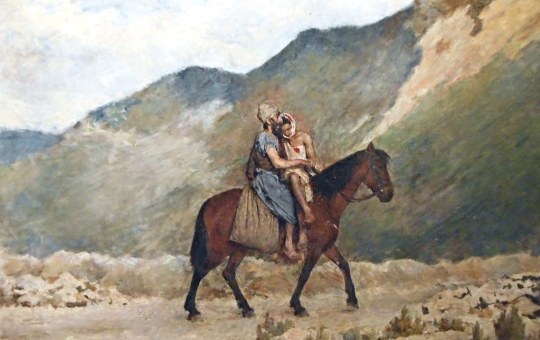
“Desperate Places” based on  Amos 7:7-17 and Luke 10:25-37

  • July 10, 2022
  • by Sara Baron

The
Good Samaritan parable is one of the best known in our tradition.  I
believe most people have heard about it, and there is a shared common
understanding: be like the Good Samaritan who showed compassion.

“Go
and do likewise.”  Amen

Or…maybe…
there are some other things to consider.  Even with this story we
know so well, even with the simplistic moral that we struggle to
live.

This
week I found myself wondering about the robbers.  I’ve never paid
attention to them before.  After all, they’re more in the set up to
the parable than the parable itself.  But I’ve always taken for
granted the “facts” that the road from Jerusalem to Jericho was
dangerous, and roaming groups of robbers attacked people there,
especially people traveling alone, and it was sort of a gamble to
take that road.

Which
makes me sort of wonder about myself, and why I took that for
granted.

Upon
examination, I am well aware of places like the Jerusalem to Jericho
road.  I’ve spent my life getting messages about where not to go –
especially alone at night, about what not to drink, about making sure
I have my carkeys in hand before I leave a building, about holding
purses in particular ways in particular areas… etc.  So, perhaps, I
took for granted that there are dangerous places because it so easily
mirrors the world as I know it.

However,
I’m at this point in my life well aware that “dangerous places”
are actually “desperate places.”  Most people who have
non-violent, viable ways to care for themselves and their loved ones
choose those options.  It is when those options are closed off that
people are forced into other choices.  And, let’s note that addiction
is a huge factor in increasing desperation and urgency, and addiction
itself is incredibly responsive to social factors as well.  Desperate
people make desperate choices.  If we want to decrease the prevalence
of those choices, the most effective way is to decrease the
desperation.

Which
leads me back to wondering about those robbers.  WHY were there bands
of robbers along that road?  The answer I’ve been taught to give is
because it was rocky and it was easy to hide behind the rocks, which
perhaps answers the question of “why there” but doesn’t actually
get to the core question of “why at all?”

Because
being a part of a roaming band of robbers isn’t an ideal way to live.

I
don’t think people decided to do it for fun, or adventure, or even
profit.  It was an act of desperation.

We
have some knowledge of what that desperation looked like in those
days.  You may remember that Ancient Israel brought great
intentionality to making sure that each family had land access, and
that it couldn’t be taken away from them.  For many generations, the
agrarian society had been largely sustainable, even if there were
imperfections in the system, and greed from the top.  But, people
farmed the land, fed their families, and took care of each other.
They even had enough to give away, to care for both the religious
leaders and those who by circumstance, were landless (widows,
orphans, foreigners).

At
its best, the system outlined in the Torah and lived in Ancient
Israel created a system of radical equality.  This lasted until
kingship, of course, but between the people and the prophets there
seems to have been maintained an idea that all are equal before God,
and all people have a right to a livelihood.

By
the time of Jesus, the system was buckling under the pressure from
the Roman Empire to enrich the upper class at the expense of everyone
else. The tax burden was so high that landowners regularly fell into
debt, indebted landowners often lost their land and their livelihood,
those without land struggled to get hired as day laborers, and those
who couldn’t get hired had no way to eat except to steal. The
ECONOMIC SYSTEM created the conditions by which people were so
desperate that bands of robbers stole what they could to eat while
they could.

Which
is to say, that the backdrop of the Good Samaritan story is the
dehumanization of the people, the ways people were seen as
expendable, and the desperation such policies create.

Jesus
thus started a story saying, “A man was going down from Jerusalem
to Jericho, and fell into the hands of robbers, who stripped him,
beat him, and went away, leaving him half dead,” but only because
the people he was talking to were already aware of the circumstances
of their lives, and that the story really started with, “The Empire
is stealing our land, our labor, our livelihood, and our hope.  Those
fighting to live are desperate, and that desperation is visible in
the bands of robbers who hide behind rocks on the road from Jerusalem
to Jericho.”

For
me, remembering the robbers are people too, actually changes the way
I hear the story.  Now, after I had this insight about the robbers I
went to my handy “Social Science Commentary on the Synoptic
Gospels” (one of the books I sighed in relief over when I unpacked)
and read what Bruce Malina and Richard Rohrbaugh had to say about
this story.  And, as per usual, their analysis suggest mine hasn’t
yet gone far enough.  Here is a part of their textual notes on Luke
10:25-37:

The priest and the Levite would
avoid contact with a naked and therefore presumably dead body.  A
priest could touch a corpse only to bury immediate family (cf. Ezek
44:25).  The fact that the injured man had no clothes would make
ascertaining his social status difficult.

A Samaritan traveling back and
forth in Judean territory may have been a trader, a despised
occupation.  This is suggested by the fact that he possesses oil,
wine, and considerable funds.  Many traders were wealthy, having
grown rich at the expense of others. They were therefore considered
thieves. They frequented inns that were notoriously dirty and
dangerous and run by persons whose public status was below even that
of traders. Only people without family or social connections would
ever risk staying at a public inn.

Both the victim and the
Samaritan were thus despised persons who would not have elicited
initial sympathy from Jesus’ peasant hearers.  That sympathy would
have gone to the bandits.  They were frequently peasants who had lost
their land to the elite lenders whom all peasants feared. The
surprising twist in the story is thus the compassionate action of one
stereotyped as a scurrilous thief.1

Now,
here is where I’m shocked by this perspective: I don’t think in our
society that there is generalized agreement that desperate people
just trying to get by are the heroes while wealthy individuals or
corporations underpaying their employees to enrich themselves are the
real thieves.  I think, somehow, we’ve societally bought into the
idea that someone shoplifting food for their family is MORE at fault
than the employer who pockets what could otherwise be a living wage.

And
that worries me.

I’ve
mentioned before that the most common theft in the USA is WAGE THEFT2
which is almost never prosecuted, while petty theft lands people in
jail.  But, I don’t hear much outrage about this.  I fear we’ve given
up on even the ideals of justice, and bought into the narratives of
capitalism – including the ones that say that companies and the
PEOPLE who own them should maximize profits at all times no matter
who they harm, AND that people who are poor are either not trying
hard enough, or failures, and if they wanted to, they could “win”
too.  But, the truth is that OUR economic system is terrifyingly
similar to that of Jesus’ time.  It is similar to gambling: the house
always wins.  Money flows up, people at the bottom are considered
expendable, and the fear of landing at the bottom keeps everyone else
quiet in the face of injustice.

The
difference, it seems, is that at that time the people still saw it as
unfair (and not just “the way things are”) and that JESUS was
willing to talk about it.

It
seems shocking, then, that the fact that the wealthy trader was the
hero is the TWIST in this story, because it isn’t really the twist
for us.  I think the twist for us is realizing that the impoverished
bands of bandits were ASSUMED to be the heroes. (Think Robin Hood.)
Along with the fact that it was the Samaritan’s wealth and occupation
that were ALSO hated, and not just his background.  Well, and the
idea that being wealthy was seen as being a thief.

OK,
so, basically, the original context of this story is so radical for
us, that we can’t really get past it into the story, because we’re
still trying to process the concepts of justice contained in the
context.  Or at least I am.

And,
actually, I think that’s enough for today.

About
a decade ago I learned that The
United Methodist Church is getting wealthier.  That is, the wealth of
individual members is increasing.  Specifically, as members die off
in small rural churches (or when those churches close), new members
are mostly found in church plants in wealthy suburbs.

When
this was shared with me, it was shared as a neutral fact.  I’ve spent
a decade being horrified by it.  Jesus, and John Wesley for the
record, focused their ministries on people in poverty.  If we are a
church that is good news to the wealthy, but NOT to the poor, we need
to take stock of what our message is and whose our message is.

For
quite some time, this congregation was predominated by white upper
middle class people, the engineers and middle management of GE in
most cases.  In the most recent decades, it has diversified, thanks
be to God.  However, the models and assumptions of being a white
upper middle class church still linger among us, and I believe our
work to walk into the PRESENT as well as the future includes noticing
where we are still holding on to those models and assumptions.

Because,
friends, the followers of Jesus who heard him tell the parable the
first time assumed the WEALTHY were thieves, and the petty robbers
were heroes.  They saw what was happening economically and what
impact it had on people, and they found it morally reprehensible.  To
follow Jesus, to follow John Wesley, to build the kindom, to see the
world clearly, I think that we need to too.  May God help us.  Amen

1Bruce
J. Malina and Richard L. Rohrbaugh Social-Science Commentary on the
Synoptic Gospels (Minneapolis: Fortress Press, 2003) “Textual
Notes on Luke 10:25-37” pages 270-1.

2“This
report assesses the prevalence and magnitude of one form of wage
theft—minimum wage violations (workers being paid at an effective
hourly rate below the binding minimum wage)—in the 10 most
populous U.S. states. We find that, in these states, 2.4 million
workers lose $8 billion annually (an average of $3,300 per year for
year-round workers) to minimum wage violations—nearly a quarter of
their earned wages. This form of wage theft affects 17 percent of
low-wage workers, with workers in all demographic categories being
cheated out of pay.” –
https://www.epi.org/publication/employers-steal-billions-from-workers-paychecks-each-year/

Rev. Sara E. Baron
First United Methodist Church of Schenectady
603 State St. Schenectady, NY 12305
Pronouns: she/her/hers
http://fumcschenectady.org/
https://www.facebook.com/FUMCSchenectady

July 10, 2022
Sermons

“Finding Compassion” based on Luke 10:35-37

  • July 15, 2019February 15, 2020
  • by Sara Baron

The
Parable of the Good Samaritan is one of the best known stories from
the Bible.  Some of you are likely sick of it, some of you are bored
by it, and some of you don’t know a thing about it.  Any of those
responses are acceptable around here, but I am going to review the
basic facts for those who haven’t heard them, I’ll let the rest of
you know when you may want to tune back in…

The
Samaritans were hated by the Jews.  They had a shared history, to a
point.  Both were part of the formation of Ancient Israel, both were
led by Kings Saul, David, and Solomon, but after Solomon the Northern
and Southern Kingdoms had a civil war and separated.  The North kept
the name Israel and had two parts: Samaria and Galilee, the South
became the nation Judah – from which we get the language “Jew”.
As you’d expect, the two nations that had fought a civil war to
separate from each other had some resentments towards each other.
Then, the Northern Kingdom fell in battle to Assyria in 922, its
leaders were taken into exile, and those who remained intermarried
with foreigners.  Thus, the 10 northern tribes of Israel were “lost.”
Except, they weren’t really.  They didn’t become a self-governing
nation again, but the love of YHWH and the Jewish tradition remained,
it was just different.

Of
course, the southern nation also fell, and also went into exile, but
it was nearly 350 years later, and they WERE able to rebuild their
nation.  Because of these differences (and similarities) the Jews
HATED the Samaritans, enough that those who were going from Judah to
their Jewish colonies in Galilee would tend to walk AROUND Samaria
even though it made the trip much longer.

Thus,
having the hero of this story be the Samaritan is a really big deal,
it shakes up all kinds of assumptions about who is good in the world.
In fact, the Jewish law scholar can’t even admit that it is the
Samaritan who does right, he instead answers “the one who showed
mercy.”  Indeed, the priest and the Levite (also a religious
leader) should have been the models of good behavior, and aren’t.
This story not only talks about what it means to be a neighbor, and
how showing mercy is what defines a good neighbor, it also upsets
assumptions about WHO can be good, and who IS good, and how we see
possibility in those we might identify as our enemies.

YOU
CAN COME BACK NOW


Now
that we’ve reviewed the characters in the parable, I want to zero in
on one line that jumped out at me this week.  It is verse 33, “But
a Samaritan while traveling came near him; and when he saw him, he
was moved with pity.”  (NRSV)  Or, in the Message, “A Samaritan
traveling the road came on him. When he saw the man’s condition,
his heart went out to him.”  Or in the New American Translation,
“But a Samaritan traveler who came upon him was moved with
compassion at the sight.”

The
thing is, that every time I’ve read this story, I’ve read into it
something along the lines of, “The priest passed by on the other
side, even though he was supposed to be a person of God, the Levite
passed by on the other side, even though he was supposed to be a
person of God, but the Samaritan did what a person of God should have
done.”  I’ve missed the ATTRIBUTION of motivation.

For all these years, I thought
the Samaritan did what was right because it was right, and because
God wants us to take care of each other, so we’re supposed to.
However, the story doesn’t actually say that!!  The story says that
the Samaritan was “moved” and then acted on his response.  The
hero didn’t do the right thing simply because it was the right thing,
the hero was moved to do it.  His heart went out.  He felt
compassion.  He saw the man who had been robbed and something in his
humanity connected to something in the man’s humanity and he
responded to that.

Hearing it this way, it is
almost as if we aren’t responsible for fixing every single brokenness
in the world, and we don’t have to stop what we’re doing for every
hurting person we encounter, and … well, we don’t always have to be
THE Good Samaritan in every situation.  Now when I say that, you
hopefully think I’m crazy, because OF COURSE we don’t, because we
can’t.  Humans are finite and we simply can’t do everything for
everyone.  Further, we can do a lot more good if we focus and do what
we do well than if we try to respond to every little thing that we
see.

And yet, like most people I
know, I’m so overwhelmed by the brokenness of the world, and I feel
responsible to do my part, and often unclear about where the
boundaries lie on where my part is.  Which is to say, I often feel
guilty that I’m not doing more.

Two Sundays ago I was at camp,
and I invited the staff to do a little introductory ice breaker which
included the question “what kind of toothpaste do you use and why?”
I have previously found this to be an amusing question, which has
ended up giving shocking amounts of insight into people’s choices.
This time, however, the first two people to introduce themselves had
found ways to minimize their plastic use and carbon footprint in
their toothpaste choices (cool!), and were happy to share that their
WHY was out of love for creation.  That was awesome.  However, it
meant that for some other people who pick their toothpaste for other
reasons, and for those who hadn’t (yet) decided to make
eco-consciousness in toothpaste purchasing their priority, there was
a lot of guilt in answering the question.  

That
sort of guilt isn’t productive (if any guilt is productive, which I’m
not sure it is).  But it did serve as a good reminder to me of how
many things there are to pay attention to: how are we treating the
people we see in day to day life?  How are responding to those who
make requests of us?  How are we deciding what to buy, and who to buy
it from, and how much to pay for it, and what factors should impact
our purchases?  How do we decide what to give, and where to give, and
how much to give?  How do we decide when to work, when to play, when
to connect, when to rest?  How do we decide where to advocate, and
for what, and how?  How do we know if it has been effective?  How
much attention do we give to our physical bodies and their needs,
what about our emotional needs, what about our spiritual needs, what
about mental needs, and what about worrying about if we are being too
selfish thinking about all this?  How do we invest, if we can?  How
do we use our time, our energy, our resources, our responses, our
responsibilities, … our prayers, our presence, our gifts, our
service, and our witness 😉 … to do the most good, and the least
harm without burning out?

The only clue I have is the one
in this story.  The Samaritan didn’t act simply because it was the
right thing to do, because there are a lot of right things to do and
we just can’t do them all.  He acted on the need in front of him that
MOVED him.  He let his compassion guide him.

As far as I can tell, that’s
REALLY important.  For the Camp Staff who care about eco-choices in
toothpastes, thanks be to God!!  For the ones who don’t, whose hearts
go in other directions, thanks be to God!!  If we try to push
ourselves to care about everything, we will burn out and be able to
care about nothing.  If we try to become someone we aren’t, someone
who cares about things we don’t really care about, we’ll exhaust
ourselves and ignore our actual gifts.

Each of us in this room have a
wide range of things we’re good at, and enjoy, that support and
benefit others.  Each of us have ways that compassion naturally moves
in us, and if we follow the compassion, if we allow the movement of
our hearts to guide us, we will be doing GOOD work that benefits
ourselves AND others, and the kindom, and we might even be able to do
it in sustainable ways.

But
wait, you may be asking.  What if NOTHING moves me?  What if I have
no compassion? What if my heart is broken and it simply doesn’t go
out to anyone?  Am I damned to be the priest and Levite in this
story, the one who showed no mercy and are the examples of bad
neighborliness?

No, dear ones, you aren’t.  If
NOTHING is moving you at all, if your compassion doesn’t reach out
beyond yourself then there are two possible realities.  One is that
you haven’t found the place where your gifts lie yet, and it would be
useful to expand your exposure to the world until you find where it
does move.  More likely though, knowing all of you, if your heart
isn’t moving and compassion isn’t flowing it is because you’ve given
too much of yourself away, and you don’t have anything left to give.

If that’s true, and I’d lean
towards thinking that is true in this beautiful collection of Jesus
followers who try to be Good Samaritans in the world, then your job
is to sit with YOURSELF and offer your heart, and your compassion to
YOURSELF until you are filled back up.  You might even need to seek
out others who can offer you their hearts, and their compassion,
their listening ears or supportive shoulders.  

The world can be a very
difficult place, and if you are a person with empathy, it can be
incredibly draining.  If your heart isn’t moving, then it needs some
tender loving care, from God, from yourself, and from God’s other
beloveds.  If compassion doesn’t move you, then give yourself
compassion.

I know this is a
funny way to preach on the Good Samaritan, the normal method is to
tell you to be a good person and take care of your neighbor, but
instead I’m telling you to follow your hearts, and to trust that God
works in you through your compassion and energy – and not to push
further than your heart leads you.  Let mercy guild you, as the
parable says.  But if your heart doesn’t move, then stay put.  You’ll
be needed later, and being ready and rested will be good too.

Dear ones, follow
your compassion, and if you can’t find it, give it to yourself.  God
wants full, whole, loving beings, and that means we need to make
space to be them – even if it means walking on the other side of
the road!!!  Amen

–

Rev. Sara E. Baron
First United Methodist Church of Schenectady
603 State St. Schenectady, NY 12305
Pronouns: she/her/hers
http://fumcschenectady.org/

https://www.facebook.com/FUMCSchenectady

July 14, 2019

  • First United Methodist Church
  • 603 State Street
  • Schenectady, NY 12305
  • phone: 518-374-4403
  • alt: 518-374-4404
  • email: fumcschenectady@yahoo.com
  • facebook: https://www.facebook.com/FUMCSchenectady
  • bluesky: @fumcschenectady.bluesky.social
Theme by Colorlib Powered by WordPress