 Uncategorized
Lament / Prayer / Dreaming
“A
History Lesson”
In 1968
the Methodist Church merged with the Evangelical United Brethren
Church to form The United Methodist Church. Both of the predecessor
denominations had social creeds, statements about what justice looked
like. This had started in 1908 when The Social Creed was passed in
the Methodist Episcopal church calling for end to child labor, a fair
wage, and safety standards.1
Initially, the statements of both churches were included in the
Discipline, but the 1968 merging conference created a study committee
to create a unified statement, the first edition of the Social
Principals which state where we – as a church – stand on a wide
variety of issues.2
The
committee came to the 1972 General Conference with language that
said, “homosexual persons no less than heterosexual persons are
individuals of sacred worth.” (It seems worth noting that the
Stonewall Riot was in 1969, and may well have influenced the
intentional inclusion of this statement.)
However,
General Conference fussed over the language, and Don Hand, a delegate
from Southwest Texas suggested that the period be turned into a comma
followed by the phrase “though we do not condone the practice of
homosexuality and consider this practice incompatible with Christian
doctrine.”3
It passed.
Thus
began the 50 years of EXPLICIT homophobia in The United Methodist
Church – 50 years and counting. The next General Conference –
1976 – added funding bans to prevent church funds from being used
to “promote” homosexuality. The 1984 Discipline Adopted as the
standard for ordained clergy, commitment to “fidelity in marriage
and celibacy in singleness” and “self‐avowed practicing
homosexuals are not to be accepted as candidates, ordained as
ministers, or appointed to serve in The United Methodist Church.”
I remain particularly horrified that the church wrote in “fidelity
in marriage and celibacy in singleness” in order to attack LGB
people, while claiming to do otherwise. It took until 1996 to ban
clergy from presiding at “homosexual unions” and to tell churches
they couldn’t host them.
At the
same time, occasionally, the UMC would make attempts to remind others
that they should be in ministry “for and with all persons” (1996)
and ask “families and churches not to reject or condemn their
lesbian and gay members and friends.” (2000.) Isn’t is great the
church asked people not to reject people while actively rejecting
people? In a great turn of irony the 2008 General Conference adopted
a resolution to oppose homophobia and heterosexism. (FACEPALM.) You
can’t make this stuff up, can you?
Meanwhile,
over the course of these years, the AIDS crisis raged, suicides
stayed common, and LGBTQIA+ kids were kicked out of their homes and
onto the street. Clergy were defrocked, and people called by God
kept their calls quiet (or lived in death spiral closets),
individuals were rejected from their churches and families, and the
church’s attention remained on an odd definition of sexual purity
INSTEAD of focusing on income inequality, poverty, colonialism,
sexism, racism, or climate change.
In 2012
there was an attempt to acknowledge that people of faith disagree
about homosexuality. It failed. 49% to 51%.
Meanwhile,
as you may well know, individuals, churches, communities, and
sometimes even Annual Conferences refused to obey unjust laws. Many
organizations were founded by people who worked for inclusion, many
churches became Reconciling (26 years ago here), clergy refused to
obey rules about homosexual unions and marriages, Bishops refused to
deny people ordinations, people of God simply refused to obey unjust
laws.
And
those who wanted control, those who wanted to have authority over
OTHER people’s bodies, other people’s love, other people’s sex lives,
were really, really upset that they could pass the laws but they
couldn’t crush the dissent.
In 2016
this came to a boiling point at General Conference, and instead of
passing more laws from both sides of its mouth, the church created a
Commission to create a new way forward, and called for a Special
Session of General Conference in 2019 to receive and act on their
report. The Commission called for a moderate way forward, “The One
Church Plan” which let Annual Conferences, Bishops, clergy, and
churches be led by their own consciousness and faith. It aimed to
remove explicit homophobia from church policy but protect those who
wished to live it. Meanwhile progressives called for a FULL end to
homophobia with the “Simple Plan” and conservatives to a doubling
down on it all with the “Traditional Plan.” (While I’m teaching
this history lesson, I still can’t make myself explain all the
horrors of the Traditional Plan.)
The
2019 General Conference passed the Traditional Plan.
And, as
you may know, there was general outrage and horror, and even the
moderates in the USA got upset, and it became certain that The UMC
was headed to divorce, with the only questions being which side would
exit, where the moderates would land, and how the money would be
divided. And then, and I’m pretty sure you DO know this, there was a
pandemic, and here we still stand. 50 years of death and
destruction. And so, we lament.
“Where
are We Now?”
The
United Methodist Church these days is stuck. We’ve realized that we
cannot stay together – not when some of the church says that the
most important litmus test of faith is fidelity to homophobia at all
costs — and the rest of us … I don’t know, exist and don’t agree
with that immoral and theologically bankrupt assessment. On May 1st,
after years (decades?) of planning, the “Global Methodist Church”
(GMC) launched, inviting churches and clergy to leave The United
Methodist Church and join the GMC. That church is designed for
those who think homophobia is faithfulness to God, although oddly
that isn’t on their website. Slowly, but rather consistently, some
churches are “disaffiliating” from The United Methodist Church
and joining the GMC. I wouldn’t call it a mass exodus, perhaps
because leaving involves paying a fair share of debts owed, ministry
shares, and shared pension liability, and perhaps because their
theology is shallow and deviates wildly from Jesus’s.
There
was a hope among many that the 2020 General Conference would pass
legislation to allow a mostly graceful way forward, allowing
churches, clergy, and even Bishops to leave The UMC. However, the
next General Conference is now scheduled for 2024, (2020 never
happened) and things keep changing. There is, unfortunately, little
hope that the denomination’s official homophobic stances will change
in 2024, but there is SOME hope that our Annual Conference might
become a part of the church that refuses to acknowledge such laws.
In the
meantime, we HERE remain committed to the Reconciling statement:
“We celebrate God’s gift of diversity and value the
wholeness made possible in community equally shared and shepherded by
all. We welcome and affirm people of every gender identity, gender
expression, and sexual orientation, who are also of every age, race,
ethnicity, physical and mental ability, level of education, and
family structure, and of every economic, immigration, marital, and
social status, and so much more. We acknowledge that we live in a
world of profound social, economic, and political inequities. As
followers of Jesus, we commit ourselves to the pursuit of justice and
pledge to stand in solidarity with all who are marginalized and
oppressed.”
We
continue to celebrate love and weddings for God’s beloveds, with no
boundaries around gender or sexual orientation. We continue to
welcome into membership all of God’s beloveds, and invite people to
be in leadership in the church when they are willing and able. We
work in regular and consistent opposition to both the unjust laws of
the church, the implementation of those laws, the homophobia and
transphobia of the country and the world, and the patriarchal, white
supremacist narrative that only some people matter.
And, we
know that there are beloveds of God who cannot stomach being with us
because we are a part of The United Methodist Church, and/or
Christianity, and the harm they’ve experienced from one or both.
We are
in-between. Clear on what we believe, but stuck without a good way
forward, aware of harm happening in the meantime, and yet still
hoping God can help us find a way forward. That’s what this time of
worship is about – praying for help in the midst of all that is
“where we are now.”
“A
Glimpse of God’s Vision”
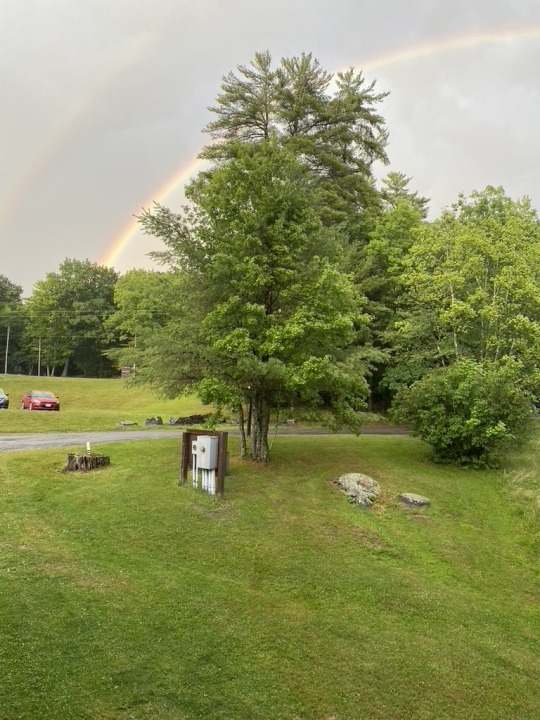
I know
that no local church, no denomination, and no clergy person will ever
be perfect. We’re human, we’re finite, our perspectives are limited,
and our needs differ from those around us.
But
sometimes I let the perfect be the enemy of the good, and I forget to
even dream with God about where God wants the church to go (because
if we can’t be perfect, why bother???) I don’t have the full vision
of God wants, no one person does, but I am going to share with you
what I can see, so that it becomes part of the conversation that can
become whole.
I
believe that the GMC is predominated by wealthy, cis, straight, white
men who are angry they couldn’t control the movement of the Spirit.
That helps me see what I want the church to look like: economically
diverse, and careful to center the voices of people living in
poverty; diverse in gender expression and careful to center the
voices of those who are trans and non-binary; diverse in sexual
expression and careful to center the voices of those who are
LGBTQIA+; racially and ethnically diverse and careful to center the
voices of people of color and immigrants; with men, women, and
non-binary people, with carefulness in centering the experiences and
needs of women and non-binary people. My language here is very
careful, because I believe in community where all are welcome and
fully engaged members, but the hierarchies of the world enter the
church with us and unless we INTENTIONALLY invert the power dynamics
of the world, they’ll replicate themselves in the church.
And, of
course, I want to be a part of a community open the radical movement
of the Spirit. The GMC uses scripture as a means of control, to
limit people and prescribe their lives. I hope to be part of a
church that sees scripture as an invitation to dialogue about what
matters, what justice looks like, and how we might work together for
the common good of all of God’s beloveds.
When I
listen to Jesus, I hear a lot of intentional inversions of the power
dynamics of the world, so I’m pretty sure he’s into that. I also
hear an amazing amount of empowerment, and reminders that together,
the people have enough to care for each other. The world believes in
scarcity, but the church is called to believe in abundance.
At this
moment in time, I see several intersecting crises that I believe we
are all called to be attending to: poverty and income inequality,
climate change, militarism and escalation of violence, and an
epidemic of loneliness. (In terms of analysis, the way we practice
capitalism seems fundamental to all of these concerns.) I hope that
when the church stops infighting about who is lovable in God’s eyes
(eyeroll) and acknowledges the answer “everyone” we might put our
energy and attention to enacting that by working on the current
crises. (I know, all too well, than when we move from explicit
homophobia to implicit homophobia and transphobia not nearly enough
will change. I know that, and I’ll keep working on it. But the care
of all people includes these pieces TOO.)
At its
worst, religion is the set of myths that empower the societal systems
that create injustice, inequality, hierarchy, and despair. I think
one of the tells of this use of religion is when it is focused on
control.
BUT, at
it’s best, religion lives out the love of God for all people,
dreams of a society of equity, justice, equality, and hope. I think
one of the tells of this use of religion is SHARED power.
While I
hope we will speak, act, live out, and advocate for justice in all
the crisis areas, I think we are best set up to change the world is
by being a place for humans to really connect,
to God and each other, and therefore changing the
epidemic
of loneliness. We are already a community. We already have a
building that can help people gather. We are already practicing
caring, and listening. Many among us have already have lives
transformed by being a part of this community, that is, by God and by
each other. Seeking to use our gifts and resources to connect with
others, and transform loneliness would ALSO increase our empathy and
lead us towards more valuable work in KNOWING that our well-being is
interconnected. I dream of a church where people are loved exactly
as they are, and listened to, and thus healed, and thus a source of
healing and love for the world around them. I think it is possible,
too!
To do
this, though, would require a rather different way of “being”
than we are now, and I am waiting to see how the Spirit moves in
others, to learn how we will move forward together.
1https://www.umc.org/en/content/methodist-history-1908-social-creed-for-workers
2https://www.umc.org/en/content/ask-the-umc-why-do-we-have-social-principles-where-did-they-come-from
3https://en.wikipedia.org/wiki/Homosexuality_and_Methodism#United_Methodist_Church,
the word “doctrine” was changed to “teaching” by friendly
amendment before the amendment and statement passed.
Worship 7/24/2022
