Skip to content
First United Methodist Church Schenectady
  • Lenten Photo Show
  • About Us
    • Meet the Pastor
    • Committees
    • Contact Us
    • Calendar
    • Our Building
    • The Pipe Organ
    • FAQs
    • Wedding Guidelines
  • Worship
    • Sermons
    • Online Worship
  • Ministries
    • Music Ministries
    • Children’s Ministries
    • Volunteer In Mission
    • Carl Lecture Series
  • Give Back
    • Electronic Giving
  • Events
    • Family Faith Formation
Uncategorized

“Love” based on Psalm 90:1-6, 13-17 and Matthew 22:34-46

  • October 25, 2020
  • by Sara Baron

I’ll
admit it.  I haven’t been thinking much about the long game.   I’m
very much in the present and the near future… the time frame
between NOW and the “end” of the pandemic (whatever that means)
and maybe the first few weeks to months afterwards.  Part of this is
the depth of unknowing – what will life look like “after”?
What does “after” mean?  When will “after” come, and how?

But
also, I think I haven’t been thinking about the long game because the
present and the near future are overwhelming and I sort of forgot
that there IS a long game.  That is, until I read the Psalm and it
felt like standing in a big field in the middle of no where watching
the stars come out at night.  (I forgot about that too.  There are
too many lights in the city, and travel is too hard with a pandemic
and a baby.)

The
Psalmist says to God, “For a thousand years in your sight are like
yesterday when it is past, or like a watch in the night.”  And it
is perspective, like seeing how SMALL we are in comparison to the
night sky, except in this case even better because the time warp
we’ve been in since March (or longer) is put in perspective too.

This
too shall pass.

It
is incomprehensibly bad, and incredibly hard, and not to be
trivialized.

But,
this too shall pass.

There
still IS a long game out there, and God is still playing it.

That
helps me breathe a little deeper.

God
is still working on the kin-dom, because God never stops working on
the kin-dom.  Despite all the intersecting crises of this moment, God
keeps working towards a world of abundance, of fair distribution, of
love.  And God WILL WIN, no matter the set back.

In
the midst of this remembering to breathe a little deeper and take
some of my fears for the moment and remember that God is playing a
long game, Jenna  posted this image on Facebook of my very favorite
place on earth.

This
image also helps me feel the way the Psalm does, with “For a
thousand years in your sight are like yesterday when it is past, or
like a watch in the night.”  It puts my fears, as well as my
frustrations and my hopes, into context.  There is so much beauty and
there is so much peace, EVEN NOW.

The
Gospel also serves as a much needed reminder speaking into these
difficult days.  The teaching here isn’t unique to Jesus, or to
Christianity.  Rather it is near universal in the world’s religions.
You may know the story of two great Rabbis, Shammai and Hillel in the
century before Jesus:

One famous account in the
Talmud (Shabbat 31a) tells about a gentile who wanted to convert to
Judaism. This happened not infrequently, and this individual stated
that he would accept Judaism only if a rabbi would teach him the
entire Torah while he, the prospective convert, stood on one foot.
First he went to Shammai, who, insulted by this ridiculous request,
threw him out of the house. The man did not give up and went to
Hillel. This gentle sage accepted the challenge, and said:

“What
is hateful to you, do not do to your neighbor. That is the whole
Torah; the rest is the explanation of this—go and study it!”1

This
is the key to a life of faith then:  Love.

Nothing
more or less.

Nothing
complicated.

Love.

Loving
God and neighbors.  We can break it down, or expound on it, but in
the end it is just love.  There is plenty of commentary on what it
means, which is good because it is more challenging than it sounds.

One
piece of commentary that has been most meaningful to me comes from
the Buddhist tradition.  From Buddhism, have learned that
loving-kindness flows from compassion, and compassion HAS TO start
with yourself.  Then it can flow to a loved one, and then loved ones,
and then known ones, and then unknown ones.

Because
most people I know, myself included, aren’t actually all that good at
self-compassion, THIS is my suggestion for you this week:  once every
day find a way you can be more compassionate to yourself, that is to
treat yourself with loving-kindness.

As
this may seem strange, let me make it a bit more concrete:

  If
your self-narrative says, “Self, you are so lazy, there is so much
to do, get up and DO IT” self compassion may sound like, “Self,
you seem warn down.  Clearly you need a few moments before anything
else is asked of you.  What might make those moments more
refreshing?”

or…

 If
your self-narrative says, “Self, you were really mean to that
person you spoke to, you are a failure at basic human dignity.”
self-compassion may sound like, “Self, that went really poorly
didn’t it?  I know I meant to do better, and I didn’t.  Let’s look at
what went wrong, and see if we can find a turning point for next
time.”

or….

 If
your self-narrative says, “Self, for pete’s sake, stop doom
scrolling!  What is wrong with you, you know better!” self
compassion may sound like, “Self, it is a scary time and I know you
are looking for answers and hope.  However, refreshing the news or
scrolling social media doesn’t have it, does it.  It would be nice to
feel like there is more control in the world, but alas, my power is
only so big.  What do I have control over that I could substitute?
Hydration?  Taking a  nap?  Deep breathes?  A walk?  Let’s find
another way to respond to anxiety that helps more!”

That
sort of thing.  This week, I hope you will do this once a day!  And,
if you are superbly good at this (wow!  Go you!) then you can try
having compassion for ONE other loved one a day too.

It
is funny, but loving our neighbors starts with loving ourselves.  And
compassion for the world starts with letting God’s compassion reign
in our hearts.

So,
dear ones, go and love.

Amen

1 https://www.chabad.org/library/article_cdo/aid/689306/jewish/On-One-Foot.htm

October 25, 2020
Sermons

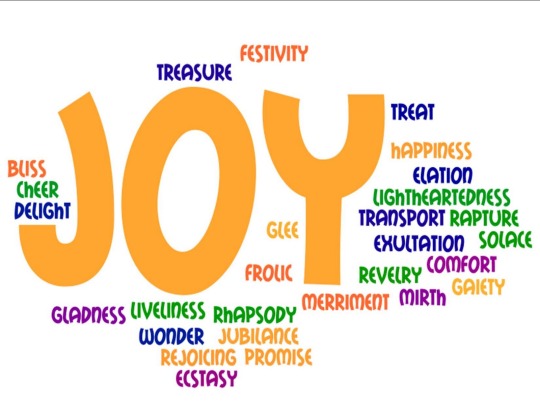
“Find Joy” based on  Isaiah 66:10-14 and Psalm 66:-19

  • July 21, 2019February 15, 2020
  • by Sara Baron

Weeping
may linger for the night,
but
joy comes with the morning.

–
Psalm 30:5b

I have a fondness for
… um… expressive language ;), and that fondness was significantly
stronger when I was in college.  However, in April during every year
of college I cleaned up my language to  pristine levels.  I did it so
that when I got to camp, I would not accidentally speak a word that
would harm, or offend, or get repeated by any of our campers with
special needs.  We were also careful then, as we are now, not to
offer too many hugs or to permit any loosening of manners – not to
allow anything at camp that would cause potential harm in the real
world.  

I did this because I
loved our campers, and I wanted them to be safe, secure, and at ease
both at camp and in the world.

During my second year
of seminary I started an internship with an urban church, one that
was doing important ministry with people who were homeless.  People
who are homeless are more likely to be assaulted – both physically
and sexually.  People who are homeless are often hungry, unable to
get clean, struggling with physical health, and most people who are
homeless for a long time end up with an addiction even if they didn’t
start out with one.  Being homeless is one of the hardest and most
vulnerable positions in our society, if not THE hardest.

The history I’d
learned in college about the closing of state hospitals for people
with disabilities, and the resulting (continued) failure of the
system to care for the most vulnerable people in our society suddenly
became very clear in reality.  People who were in the same population
as Sky Lake’s beloved special needs campers were homeless on the
streets of Los Angeles.  The disconnect between the intentional care
I’d been offering to God’s beloved people with special needs at camp
and the reality that people with special needs were being assaulted
every day on the streets of LA, and that society was doing NOTHING to
change it broke open my heart.

I have not recovered
yet.

Instead, over the
past 15 years, I’ve discovered more and more ways that the world is
fundamentally broken and been disillusioned repeatedly.  Some wise
ones have pointed out that is it because of the color of my skin and
the stability of my childhood that I was able to be so naive to begin
with, and they’re right.  Yet, for me seeing the world as it is, and
seeing clearly what its priorities are and are not, is painful.
Similarly, seeing the church as it is, and seeing clearly what its
priorities are and are not has been painful.

I believe that part
of the purpose of church is to offer a God’s vision for the world to
the people, and as such to offer hope that we can build the kindom
together.  Further, I believe that the pastor’s role is to be a
speaker of the vision, and of hope.  People NEED hope, and our faith
tradition offers it.  It has been hard at times, though, to have
integrity and be truthful about the brokenness, and simultaneously
offer real hope.  The challenge, I think, has been in my own
discomfort with reality.  Once reality is accepted, then it can be
worked on, but I’ve been struggling for years to accept that things
really are as broken as abundant evidence points to.

The realities of the
world, however, are exactly WHY we need to speak hope – real hope –
and be inspired by God’s visions of justice.  We can’t just let
ourselves wallow, we have to face reality, but we can’t offer weak or
trivial hope.  The world, and its people, NEED to know that another
way of being is possible, and we can create it together.

Family Systems theory
teaches us that when we are anxious, we get more close minded.  When
systems (groups of people) are anxious, they get more close-minded
too.  They take less risks.  They make worse decisions.  They create
anxiety in their people, and then people with raised anxiety tend to
revert to old ways of functioning and coping mechanisms that often do
more harm than good: gossip, triangulation, demonizing others,
consuming, addictive behaviors, lashing out, etc.  Anxiety can easily
become it’s own self-perpetuating cycle.

Dear ones, the
anxiety in our systems right now are at unhealthy levels.  I remember
reading articles during the 2016 election cycle about the impact the
election was having on our shared mental health (it was bad).  It has
gotten worse.  The injustices around us take a toll every day, and I
hear from all of us how much we want to create change.  It doesn’t
help right now to be part of the United Methodist Church, because
being part of a CHURCH that is an oppressor is really darn
depressing, and adds our anxiety and dismay.  Further, in this
particular congregation, we’ve been working on something that is also
really hard: we’ve been in conversations about balancing our budget,
which we have not done since 2004.  (And even that was a bit of an
anomaly.)  We have been living beyond our means for a long time.
Balancing the budget requires making difficult decisions about who we
are and what we do and what is imperative to our shared life
together, and it requires that we have really difficult conversations
where we don’t all agree – and that is anxiety producing as well.

It is tempting, in
these days, to give up:  to stick our heads in the sand, or to lash
out in anger, or to become comatose on the couch.  It is REALLY easy
to let the anxiety win.

But.

Dear ones, beloveds
of God, we aren’t going to do that.  We
aren’t going to give in and we aren’t going to lash out.  We aren’t
going to let anxiety take over.  We are going to keep on
keeping on, working towards the kindom, loving each other, spreading
love and goodness in the world, and trusting that God works with us,
through us, and when necessary despite of us.  We are going to find
the ways to let go of the anxiety, and find some trust and some hope,
and be sources of transformation.

We are going to break
out of the cycles, because anxiety is terrible for us, it is terrible
for the world, and it enables all the things we don’t want to see!
Now, here is the weird twist.  Given all the brokenness of the world,
it can feel really disrespectful, or trite, or privileged, or even
mean to …. have fun, seek joy, laugh, and play.  (Or even just to
take breaks and deal with reality for a bit.)  That’s real!  I know
how hard it can be to enjoy life when we know the awful things that
are happening, but I want to share with you wisdom that I heard
second hand.  This wisdom came from a person who was impoverished and
disenfranchised in a country with dictatorial rule.  That person was
asked, “Why are you so joyful when things are so bad!?” And they
responded, “Why would we let them take our joy too?  It is all we
have left.”  

Joy, it turns
out, is resistance.  Joy is OURS to claim, and we shouldn’t give
it up, because giving it up won’t help anyone – in fact it will
hurt everyone.  The world needs more joy.

Joy, unlike anxiety,
creates space for creativity, for connection, for hope.  Out of the
box thinking can happen when joy replaces anxiety, and the problems
of the world today REALLY need new solutions.  Joy makes space for
people to regain their humanity.  And laughter really is the best
medicine (trust me, I laughter until I cried at camp – twice –
and I haven’t felt so whole since before General Conference).
Whatever you do, dear ones, don’t cut out joy from your life.

And, if you need help
getting to joy – which is totally fair – most wisdom teachers say
gratitude is the way to get there.  So, practice advice here: keep a
gratitude journal, and take 5 minutes at the end of each day to
notice what you are grateful for in that day.  Putting our attention
on what is good is a great way to create more good, and to make space
in our lives for joy.

Now for the REALLY
good news.  Our God is a God who knows all about oppression, and has
worked to overcome it throughout all of history.  In all these years
where I have become further and further disillusioned with society
and the world, I have found great comfort in the Bible.  The Bible is
VERY WELL AWARE of the brokenness of the world, of the reality of
domination systems, AND of the power of God to break them open.  

The Bible tells this
story innumerable times, but there are three really big versions of
thie story:  (1) The Bible says that God knows about the oppression
of slavery, and moves to free the people who are enslaved.  (2) The
Bible says God knows about the oppression of exile, and moves the
people to restoration.  (3) The Bible says God knows about the
oppression of being part of empire because of the force of the
military, and moves the people to empowerment, to resistance, and
ultimately to freedom.  That is, the stories of (1) Exodus, of (2)
Exile and Return, and (3) of the ministry of Jesus.

The passage from
Isaiah today is a response to Exile and Return, and it speaks in the
language of God as mother of the people, nursing them and caring for
them.  After a WHOLE LOT of condemnation of the injustices of ancient
Israel, in the end of Isaiah we hear, “ Rejoice with Jerusalem, and
be glad for her, all you who love her; rejoice with her in joy, all
you who mourn over her– that you may nurse and be satisfied from her
consoling breast; that you may drink deeply with delight from her
glorious bosom.”  Rejoice with Jerusalem, despite it’s history of
oppression, despite its history of exile and destruction, none of
those are the final words.  The final words are that God cares for
the people and finds a way to nurture them and it brings great joy.
The final words in the book of Isaiah are God’s comfort, and care,
and the people’s JOY.  

I’ve told you before,
but this bears repeating: Our faith says that Love wins in the end,
and if Love hasn’t won yet, then it isn’t the end yet.  (In this case
Love and God are interchangeable.)  The brokenness of day is not
the final answer, God is still at work.  We are still partnering
with God to make things better.  So, in the meantime, practice
gratitude, find joy, allow for rest, and in doing so let go of
anxiety.  God is working, and looking for for open-hearted, loving,
partners to work alongside.  May we find MANY ways to be those
people, and encourage each other towards joy.  Amen

–

Rev. Sara E. BaronFirst United Methodist Church of Schenectady603 State St. Schenectady, NY 12305Pronouns: she/her/hershttp://fumcschenectady.org/
https://www.facebook.com/FUMCSchenectady

  • First United Methodist Church
  • 603 State Street
  • Schenectady, NY 12305
  • phone: 518-374-4403
  • alt: 518-374-4404
  • email: fumcschenectady@yahoo.com
  • facebook: https://www.facebook.com/FUMCSchenectady
  • bluesky: @fumcschenectady.bluesky.social
Theme by Colorlib Powered by WordPress