Skip to content
First United Methodist Church Schenectady
  • Lenten Photo Show
  • About Us
    • Meet the Pastor
    • Committees
    • Contact Us
    • Calendar
    • Our Building
    • The Pipe Organ
    • FAQs
    • Wedding Guidelines
  • Worship
    • Sermons
    • Online Worship
  • Ministries
    • Music Ministries
    • Children’s Ministries
    • Volunteer In Mission
    • Carl Lecture Series
  • Give Back
    • Electronic Giving
  • Events
    • Family Faith Formation
Uncategorized

Untitled

  • November 28, 2021
  • by Sara Baron

“The Future. The Past. Grief.” based on Jeremiah 33:14-16 and Luke 21:25-36

“There will be signs in the sun, the moon, and the stars, and on the earth distress among nations confused by the roaring of the sea and the waves. People will faint from fear and foreboding of what is coming upon the world, for the powers of the heavens will be shaken.”

I can just HEAR the me from two years ago whining about the weird Advent passages, and how dark and gloomy they are, and can’t we have a more thematic set of readings. I can hear her, but I’m NOT her anymore.

The 2021 version of me reads these passages with relief, glad that the dystopian realities of the past two years have expression in our Holy Scriptures. Because, truly, people have fainted from fear – and with good cause. The powers of heaven and earth have been shaken. Foreboding has become normal, and all the nations of the earth are distressed.

YES, thank you Luke for putting it words.

I almost wish he hadn’t switched topics quite so quickly. I find I’m not quite ready to believe that all of this is going to be fixed by Jesus returning on a cloud, and there have been far too many metaphorical green leaves sprouting without metaphorical figs arriving for me to read the signs quite like that anymore.

However, when the passages ends with Luke suggesting, “Be alert at all times, praying that you may have the strength to escape all these things that will take place,” I do find that wish I’d heeded that advice, because strength has sure been needed, and I wish I’d prayed more to find it before everything came to pass.

Now, of course, unlike the first generation of Christians, I’m not expecting the end of the world imminently, nor expecting that the signs I see today suggest that’s coming. However, I believe we have all lived an end of the world as we knew it, and that requires some time to process and accept it.

Advent is a time of longing, and waiting, and hoping. It is a time when we acknowledge how broken things are, and how desperately we need God’s help to make them better. It is a time when we join in the yearning of people of faith throughout the ages, waiting for righteousness and justice and the kindom of God, and noticing that IT IS NOT HERE YET.

Friends, it is not here yet.

It doesn’t feel very close.

It feels further away than ever.

And I don’t even want to tell you all the reasons why, because I know your hearts are already broken, and I don’t think they need any additional burdens.

So I’m not going to. I’m going to trust that you’ve noticed that things are NOT RIGHT, and VERY BROKEN, and it is NOT OK.

And now I’m going to ask you to do something that you may not want to do.

I’m going to ask you to stay with the brokenness, and how much it hurts, and how awful it is, and all the emotions that come with it. I’m going to ask you not to think of ways to fix it, or what books or articles to read about it, or what music or game could help you forget about it, or what little unrelated thing you could try fix just to feel like you still have some power in the world. I’m going to ask that you just let it hurt.

I’m going to ask that you let yourself hurt, let yourself grieve, let your spirit wander around lost – and sad – and angry – and confused – and … most of all that you let it be without trying to fix it or ignore it.

This, dear ones, is the Advent I think we need.

Because we lost the world as we knew it, and it has been so scary and awful and disconnected that we’ve just tried to keep on keeping on, and so we didn’t ever deal with it. And so it has been dealing with us.

When I sit with people who have lost dear ones, I advise them that their job is to sit on the couch and cry. I worry that if people don’t sit on the couch, stare at nothing, and cry intermittently, that the grief will just ache harder and longer.

I want us to do that. To be with the pain, like God is with us. Emmanuel is one of the words we come back to every Advent – “God with us.” God is with us, and we need to be with ourselves as God is with us.

Over the course of my leave, I found myself coming to the song “Come and Find the Quiet Center” again and again, and its wisdom deepened in me as the weeks past. This week it is the second verse that is speaking most strongly to me:

Silence is a friend who claims us, cools the heat and slows the pace, God it is who speaks and names us, knows our being, touches base, making space within our thinking, lifting shades to show the sun, raising courage when we’re shrinking, finding scope for faith begun.

I’ve chosen this hymn as our Advent song, hoping that some silence and slowed paces might be gifts to all of us (and not just me.) I don’t want us to rush to Christmas this year, I want us to slow down the pace, listen to ourselves, and listen for God. I believe that grief takes TIME, and we need to give that time.

I think of what it takes for wounds to heal: they need to be clean, and dry, and protected. They can’t continue to be agitated and still heal. And even when all those factors are taken care of, it just takes time. That’s true in bodies, but I think its true in our spirits and souls too.

It is EASY to feel anxious and act out in unproductive ways, trying to change that feeling. It is hard to sit with our anxieties, and listen to them.

God calls us to do it anyway.

So I ask you some questions for this Advent:

  • What grief needs time to be heard?
  • Where is it that we are waiting for God to break in?
  • Where do we see God with us?

And, I invite you into a time of waiting, in the midst of brokenness, of silence and stillness. I welcome you to Advent.

Amen

–

Call to Advent

Siblings in Christ,

I call you to seek quiet, to seek God,

To let pain be.

To name what you’ve lost, and what we’ve lost,

To name what is broken (at least for yourself)

To let God into the tender-most parts of your being,

to make space for darkness, and allow pain and darkness to set the pace.

God is with us, Emmanuel,

may we take the time to be with God. Amen

Rev. Sara E. Baron 

First United Methodist Church of Schenectady 

603 State St. Schenectady, NY 12305 

Pronouns: she/her/hers 

http://fumcschenectady.org/ 

https://www.facebook.com/FUMCSchenectady

November 28, 2021
Sermons

“Sheer Silence” based on 1 Kings 19:1-15a

  • June 23, 2019February 15, 2020
  • by Sara Baron

Elijah
had it rough.  In his time, the people were uncertain about their
loyalties.  Their shared story of being led out of bondage in Egypt
and to freedom in their own land by a God who cared about them and
how they treated each other… wasn’t primary anymore.  Their current
king was worshiping another gods.  Elijah was a prophet for YHWH,
called to speak out for justice, and for YHWH-God’s vision of people
treating each other well and creating a society where everyone could
survive AND thrive.

The
other gods weren’t into creating fair and equitable societies.  They
were into power, and control, hierarchy, and wealth – and most of
all they were into themselves.  They were easier to worship because
there felt like a direct correlation between sacrifices to those gods
and personal success.  (Aka, the prosperity gospel isn’t new.)

Worshiping
the God of our tradition isn’t always easy, and Elijah was proof of
that.  He was a prophet when neither the power structure nor the
people tended to want to hear him.  He was asked to bring bad news,
time and time again, and it was NOT appreciated.  For most of his
life he is presented as a very lonely creature.  He is said to have a
servant, but he seems to be on his own for the most part.  In the
preceding story he claimed a great victory for God over the other
gods  –  in a way I find utterly horrific – and gained the
attention of some of the people in doing so. He also upset the king
and queen, and was running away, certain of his impending death for
what he’d done, on the basis that the queen said she was going to
have him killed.

He
ran, by himself, into the desert.  It seems to me that he decided it
was better to control his own death than be tortured and shamed as he
died.  Running into the desert was claiming the right to at least die
alone.  The Bible, remember, thinks of the desert wilderness as a
place where there is not enough to survive without God’s help.

I
mention this, because I think there are a lot of deserts out there
–we have deserts of loneliness, we have deserts of grief, and
deserts of exhaustion, deserts of confusion, and deserts of
hopelessness, deserts of meaning, and deserts of beauty.  Research
says 45% of people in the US don’t have enough money for rent and
food1,
so there are a lot of people dealing with exactly the kind of deserts
that the Bible is talking about, no metaphor needed.  However, the
rest of the deserts also exist, both for people with enough money for
food and rent, and for those without.  For those of us who believe
that ALL people are beloved children of God, and who thus want to
work for a world where justice rolls down like waters, and mercy like
an every flowing stream, our country can feel like one big desert
of injustice and mercilessness.

Elijah
goes off into the desert by himself, too exhausted and scared and run
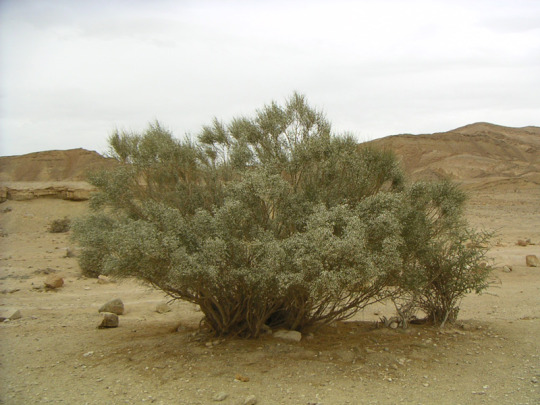
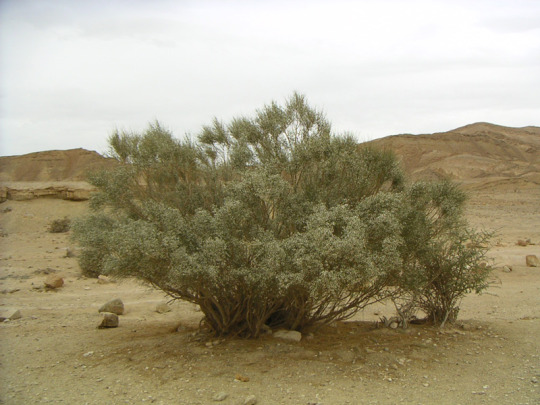
down to do anything but find a broom tree to lie under.  A broom tree
is a little desert shrub.  A devotional about broom trees says “Its
deep roots draw in the moisture of land that is otherwise barren.
…In the desert, water is invisible. It lies hidden beneath the
surface and is often too deep to reach on our own. But water
is there and the roots of a broom tree prove its existence. In the
same way, hope can be discovered even in the deepest moments of human
suffering.”2
Hagar also lay down under a broom tree to await oncoming death.
Hagar, too, was taken care of by God.  It seems that in the Bible
utter despair and hopelessness happen in the desert – and because
the desert is so HOT and the sun is so unyielding, the little shade
that the broom tree offers ends up being the place that people lie
down to give up their fight and let the despair win.

And,
in the Bible, that means that the broom tree, like the desert, is
where God steps in.  For Hagar, that meant helping her see the well
that was going to sustain her life.  For Elijah, it is a bit more
complicated.  He lies down under the broom tree to give up, and the
first thing that happens is … he falls asleep.  He stops fighting.
He lets the exhaustion win.

And
then, a messenger of God (I’d lean towards assuming a human one, but
that’s just me), delivers food and water – good food and water from
what I can tell – and wakes him up to eat it.  And then get gets to
go back to sleep.

I
like this part.  I may like this part best.

I
like that Elijah doesn’t have to do anything more.  He sleeps, he
eats and drinks, and he goes immediately back to sleep.  Sometimes,
friends, that’s all we have left when we’ve given our all to the work
of kindom building, and we have NOTHING left.  Sometimes finding food
and drink is too much, and someone has to help us, and even when they
do, all we can do afterwards is go back to sleep.  This is also
lovely encouragement for the people who tend to be messengers of God
who show up with food and drink.  The prophet may get a lot of glory,
but the prophet wouldn’t make it without those others who prop them
up.

Even
Elijah, even the one known for standing alone in his generation, even
he didn’t do it himself.  The food and water to sustain his life came
from outside his capacities.  They were gifts to support him.  The
work of building the kindom takes many people doing their part, never
just one standing alone.  In this church, we do some of those
“messenger under a broom tree” type ministries.  We support the
people of God by making the journey a touch easier, by seeing what is
needed and offering it.  Our breakfast is food and drink in some
people’s desert.  Sustain is too.  

This
passage is good to remember and see the valuable work of those who
are “messengers of God” with hidden, quiet support.    I think is
also honest about the times when life has drained EVERYTHING we have
from us, and that sometimes in life we sit under a broom tree without
any intention to ever get up again.  At those times, we don’t even
have a choice.  We can’t do any more.

And,
friends, I think that’s OK.  I think we’re allowed to be exhausted,
drained, horrified, and in despair.  Elijah is a pretty deal in the
Bible, and he gets just sleep under a broom tree!  I don’t want to
rush out from under this broom tree.  In the stories of the Bible,
sitting under them in despair is honest, and real.  It is a
reflection of what has happened, and what is happening, and that
there is no where else to turn.

AND
YET, God is the one who makes a way out of no-way.  God lets Elijah
sleep under the broom tree, BUT God also makes sure that Elijah gets
the sustenance he needs for the next part of the journey.  I guess
that means we get to sit under broom trees, we get to recover, we get
to be aimless, we get to rest and rebuild strength, but … it is
always a stop along the journey and never the journey’s end.
However, before anyone feels rushed out of their broom tree offering
shade in the desert, let’s note that he got to sleep, eat, drink, and
sleep again and eat again and drink again.  He got rebuilt before he
had to leave.  If you aren’t rebuilt yet, I’m not sure you have to
leave yet.

But,
leave the liminal space of the broom tree of hopelessness, we will.
God lets us be there, but not stay there.  Elijah gets awoken a
second time by a messenger, who has left food and drink again, and
then he gets kicked out from under the broom tree.  

It
seems to work for him.  On that rest, recovery, and sustenance, he is
able to complete his journey.  His journey is to Mount Sinai, where
Moses got the commandments from God.  Like Moses before him, Elijah
has the chance to know God more deeply there.  The story makes space
for Elijah to name his grievance and be heard, “I have been very
zealous for the LORD, the God of hosts; for the Israelites have
forsaken your covenant, thrown down your altars, and killed your
prophets with the sword. I alone am left, and they are seeking my
life, to take it away.” (verse 10).  And then and there, from a
cave on mountain far from home, Elijah experiences God.

The
story takes the time to clarify who God is and is not.  God is not in
the destruction, or the fear, or even the awe.  God is not in the
loud and extraordinary.  Instead, God is in the regular, the every
day, the silence.  There was probably silence under the broom tree,
but it seems Elijah needed the journey before he could hear its
significance.  So, Elijah emerges from the cave to stand in the midst
of sheer silence.  Teachers of Centering Prayer call silence “God’s
first language.”  In the midst of the presence of the Divine,
Elijah is again given the space to name his grievance and his grief.
God, who is in the silence, LISTENS to the one who has been
exhausted.

Now,
God’s response at first glance does not appear to be the very
empathetic.   Elijah repeats his claim that “I have been very
zealous for the LORD, the God of hosts; for the Israelites have
forsaken your covenant, thrown down your altars, and killed your
prophets with the sword. I alone am left, and they are seeking my
life, to take it away,”  and God replies, “Go to Damascus.”
Which, by the way, is like 500 miles away – through the desert.

See?
Isn’t it good there was some time under that broom tree before we
got to the cave?  I think it is because of the time to be, without
trying to do, that Elijah was able to hear God again.  And be ready
for the next steps of his journey.  By the way, Elijah was sent to
Damascus to anoint two new Kings (one for Aram and one for Israel)
AND to anoint his successor.  And, for a while, Elijah and Elisha got
to work together for justice, and Elijah didn’t have any more work he
did on his own.  After the broom tree, things got easier, and
there was more support.

Thank
God for broom trees, and prophets, and messengers (with food and
water), and rest, and restoration, and sustenance, and silence, and
companionship, and hope, and a God who cares for all people even when
we’re too exhausted to care for ourselves.  Amen

1https://money.cnn.com/2018/05/17/news/economy/us-middle-class-basics-study/index.html

2https://fivetalents.org/blog/2017/8/21/beneath-the-broom-tree-discovering-hope-in-the-deepest-moments-of-suffering

–

Rev. Sara E. Baron
First United Methodist Church of Schenectady
603 State St. Schenectady, NY 12305
Pronouns: she/her/hers
http://fumcschenectady.org/

https://www.facebook.com/FUMCSchenectady

June 23, 2019

  • First United Methodist Church
  • 603 State Street
  • Schenectady, NY 12305
  • phone: 518-374-4403
  • alt: 518-374-4404
  • email: fumcschenectady@yahoo.com
  • facebook: https://www.facebook.com/FUMCSchenectady
  • bluesky: @fumcschenectady.bluesky.social
Theme by Colorlib Powered by WordPress