Skip to content
First United Methodist Church Schenectady
  • Lenten Photo Show
  • About Us
    • Meet the Pastor
    • Committees
    • Contact Us
    • Calendar
    • Our Building
    • The Pipe Organ
    • FAQs
    • Wedding Guidelines
  • Worship
    • Sermons
    • Online Worship
  • Ministries
    • Music Ministries
    • Children’s Ministries
    • Volunteer In Mission
    • Carl Lecture Series
  • Give Back
    • Electronic Giving
  • Events
    • Family Faith Formation
Sermons

“A Nameless Wordless Woman” based on Judges 19
  • September 17, 2017February 15, 2020
  • by Sara Baron

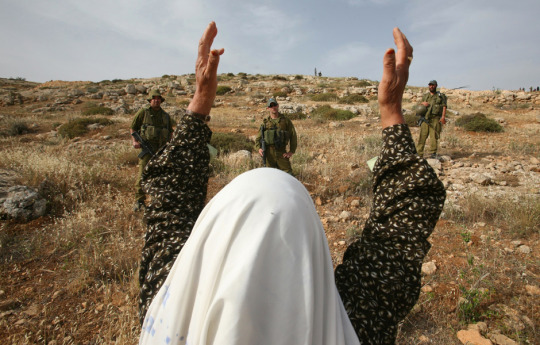
Today we conclude the Subversive Women of the Bible Sermon series with this, the absolutely worst story in the Bible. Unfortunately the story doesn’t really end where we leave it, and it does keep getting worse. Our heroine is certainly subversive, but unfortunately her subversion is not the final word; the final word is violence.

Phyllis Trible is a feminist Biblical Scholar whose career included teaching at Union Theological Seminary in New York and Wake Forest University School of Divinity in Winston-Salem, NC. In 1984 she published Texts of Terror: Literary-Feminist Readings of Biblical Narratives in which she carefully explains and comments on four “texts of terror” in the Bible. This is, of course, one of them. She opens the chapter on this story with these words:

“The betrayal, rape, torture, murder, and dismemberment of an unnamed woman is a story we want to forget but are commanded to speak. It depicts the horrors of male power, brutality, and triumphalism; of female helplessness, abuse, and annihilation. To hear this story is to inhabit a world of unrelenting terror that refuses to let us pass by on the other side.”1

Unrelenting terror is a reasonable description of this story. I think that she oversimplifies the gendered aspects of power and abuse, but only from a modern perspective. From within the story her description is right on, from within life in the United States now it is both true and untrue. We want to be careful with that today, because this story is strikingly relevant to life. Trible ends her chapter on this story saying:

“Violence and vengeance are not just characteristics of a distant, pre-Christian past; they infect the community of the elect to this day. Woman as object is still captured, betrayed, raped, tortured, murdered, dismembered, and scattered. To take to heart this ancient story, then, is to confess its present reality. The story is alive and not all is well. Beyond confession we must take counsel to say, ‘Never again.’ Yet this counsel is itself ineffectual unless we direct our hearts to that most uncompromising of all biblical commands, speaking the word not to others but to ourselves: Repent. Repent.”2

Let’s take a little bit of time to highlight the big questions in this story and clarify some of the confusing parts. To begin with, a “concubine” is a second class wife. Trible says, “Legally and socially, she is not the equivalent of a wife, but is virtually a slave, secured by a man for his own purposes.”3 Other famous concubines in the Bible include Hagar, and the maidservants of Rachel and Leah. Our heroine’s status as concubine leads to the subversive action that takes place, one that is so radical that no one even tries to figure it out.

The concubine leaves. She leaves her husband, but that wasn’t done. It couldn’t be done. At that time, and by later Torah regulations, only men had the right to initiate divorce. A wife couldn’t leave. This feels way MORE true for a concubine, a second class wife, one who lacked even the dignity and respect given to first class wives who had close to no power to begin with. Leaving husbands wasn’t a thing. And the story says she left, got to her father’s house, and stayed for FOUR MONTHS. This heroine left her husband.

I’m not really sure why her father sheltered her, doing put him into a power battle with her husband when her husband had the legal upper hand. It is possible that this woman lied to her father and told him that her husband had divorced her, or even that her husband HAD divorced her and changed his mind. The father seems to be trying to buy her time when her husband arrives. Her father seems to be trying to keep her sheltered. That’s notable.

I don’t know what it would take for a woman, a concubine, to leave her husband at that time. It seems likely that many concubines were raped and abused, particularly since most women got no choice in their marriages. It seems fair to assume she was being abused, yet most women accepted the social norms that kept them in place and didn’t leave to try to stop it. The biggest question is why this woman was so brave! She left. And it seems like it almost works, but eventually he decides he wants her back. This whole things feels like the cycle of abuse. Likely the motivation for this woman to leave was that the last incident of abuse was so terrible that the next one was going to be deadly. (Terrifying how powerful the norms were that only she is said to leave.)

Trible points out that in Hebrew the woman’s “master” (her word) is said to come after her to “speak to her heart, to bring her back.”4This, too, is part of a cycle of abuse. The text never says he actually does so, but the speaking kindly after abuse is part of the cycle. When the husband/master gets to his concubine’s father’s house, he seems open to flattery and being treated well. The woman’s father is able to keep them for several days, I suspect at great expense. If her father had been wealthy, she would not have been a concubine. Yet the food and wine flow freely, and the husband/master struggles to leave the comfortable living.

Finally he breaks free, but does so too late to complete the journey in one day. This seems like a good point to acknowledge that some parts of this story are mean to villify King Saul. This is yet another piece of “David is God’s choosen King” propaganda. The strongest theme in the book of Judges is that the people do evil things without a King, and they need a King. However, multiple parts of this story connect King Saul to the terror and evil of this story: he is said to be from the Tribe whose lands it happens on, his capital is in the city it happens in, a village named later is also relevant in his leadership. Some of this story is anti-Saul propaganda, but it isn’t at all clear which parts. I’m choosing to assume that the propaganda is ONLY in connecting Saul to the story, because I find the story uncomfortably plausible.

The man, his servant, his donkeys, and his concubine arrive in the Benjaminite village of Gibeah rather late and no one invited them in to their homes. This is already evil in the eyes of people for whom hospitality was the highest form of morality. Finally, another outsider, an older man, acknowledges them and the two men talk. Terrifying, as Trible points out, the husband/master “refers to his own concubine as the old man’s property, thereby offering her as bait”.5 Once they are in, the story starts to sound strikingly like the story of Sodom in Genesis 19. They eat, drink, and are merry until an angry male mob appears at the door and demands the opportunity to rape the newcomer. It continues with the resonance of Genesis 19. The host offers women instead. In Genesis it was two virgin daughters, here it is one virgin daughter and the concubine. The host negotiates, and it is terrifying. Trible writes:

“No restrictions whatsoever does this lord place upon the use of the two women. Instead he gives the wicked men a license to rape them. His final words of negative command emphasize again the point of it all. ‘But to this man do not do this vial thing.’ If done to a man, such an act is a vile thing; if done to women it is ‘the good’ in the eyes of men. Thus the old man mediates between males to give each side what it wants. No male is to be violated. All males, even wicked ones, are to be granted their wishes. Conflict among them can be solved with the sacrifice of females.”6

In Genesis, the messengers of God intervene and no one is harmed. In Johnathan Kirsh’s book The Harlot at the Side of the Road, he writes, “From what we recall about the intervention of the angels in Sodom, we do not really expect the young women in Gibeah to be cast into the arms of the mob – something, angelic or human, will spare them at the very last moment.”7 Nothing does.

Instead, the husband/master seizes the concubine and throws her out to the men who rape and torture her until sunrise. As light dawns she summons all of her remaining strength to find her way back to the home where her husband/master was, and fell on the threshold of the home. The story indicates he slept just fine, and when he woke up he decided to go on his way. He seems a bit annoyed to find her blocking his way on the doorstep, but he doesn’t let it slow him down. To this woman who he had pushed out the door, who fought her way back after an unspeakably terrible night, he says, “Get up, we are going.” There is no answer. The text seems intentionally vague about when she dies. Trible says, “Her silence, be it exhaustion or death, deters the master not at all.”8 Her death may be after she gets to the threshold. It may be on the journey. It may not be until he takes his knife to cut her into pieces. At the end of this harrowing story, she is dead. It seems to me that if she hadn’t left, this would have been her fate. In leaving she gained herself months of freedom from abuse and hope. Her husband/master was going to kill her. As it happened, he used her to protect himself, nonchalantly. That protection she offered him either killed her, or he did anyway in the end. Their reunion was only a source of violence and terror for her.

Afterward he sends out the pieces of her body to the 12 tribes and call them together to tell his story, but he tells it quite differently than Judges 19 does. When he tells it, he looks better. In both his telling and the responses of the tribes, it is clear that the objections are to: the lack of hospitality, the threat to the man’s well-being, and his loss of property with what was done to the concubine. The horror and the response in the text are not because of what SHE lived through. (Mine is.) In fact, the next two chapters continue the story with civil war, massacre, and at least 600 more women being raped. Still, the narrator remains unconcerned about the women.

The story says that when her body is sent out the Israelites are instructed to “consider, take counsel, and speak out.” Trible responds, “’Direct your heart to her, take counsel, and speak.’ From their ancient setting, these imperatives move into the present, challenging us to answer anew. … Truly, to speak for this woman is to interpret against the narrator, plot, other characters, and the biblical tradition because they have shown her neither compassion nor attention.”9

Another feminist author writes, “The ideologies expressed through these [stories] are both degrading and deadly for women.”10 This is the problem. If this story had happened once, it would be enough to be an atrocity. However, this story is common enough. According to research done by the Center for Disease Control, “Intimate partner contact sexual violence, physical violence, and/ or stalking was experienced by 37.3% of U.S. women during their lifetime…and 30.9% of U.S. Men.”11 At its extreme, it is as deadly as this story.

This man used his partner’s body for his own protection. It seems almost certain there had been previous violence toward her, and the way he treats her during and after this episode is a further experience of abuse and violence. While he didn’t get financial gain from it, only protect, I think it is fair to say that this man sexually trafficked his concubine. He used the power he had over her and her body for his well-being.

Sexual trafficking hasn’t stopped since those ancient times. According to The Atlantic, sexual trafficking today is a business worth $150 billion worldwide, and most of those who are trafficked are minors.12 Worse yet, the laws and the ways they’re implemented make those who are trafficked more vulnerable to arrest than those who traffick them.

This is a modern story set in a far away time. This text of terror to this one nameless wordless woman is a terrifyingly common and universal story. And, to the depth of my being, I believe that God is horrified. And when God is horrified, God’s people are being called to change horrible realities. While my heart is with this nameless heroine, much of my curiosity focuses on her husband. Like many people who are human trafficked, she used all the power she had to get free and the system pulled her back in. I want to know why her husband so deeply devalued her, and what was so broken in him!

Similarly, I want to know what would have stopped that mob in Gibeah from wanting to rape? In today’s terms, what would stop adult men (it is nearly always men, but not always always men) from paying money to rape children? I don’t entirely know, despite pontificating about this for most of a year. If we want a final word other than violence, these are the things I know: taking women’s points of view in stories helps us understand their experiences and moves us toward gender equality; cultures that have more respect for woman and greater gender equality have fewer instances of intimate partner violence and rape; talking about texts of terror and horrifying realities is imperative if we want to be part of changing those realities.

This sermon series has been LONG. I think many of us have been tired of it at points, and I don’t mind if you celebrate its end. This feels like an odd text to end with, but I’m still trying to respond to Pete Huston asking about the women whose stories aren’t told. Those women are all too often reflected in this nameless and wordless woman’s story. They are all a call to action for us, a reminder that while it may get annoying to talk about women, sexism, and misogyny for a WHOLE YEAR, taking up our part in addressing and working toward ending such injustices necessitates that we talk about and acknowledge them.

Over this year, it has been through taking the points of view of biblical characters that we have been trained and conditioned not to notice, that we have have been able to see and learn so much from stories we thought we knew! For me it been a transformational opportunity to hear the Bible anew, and to finally meet heroines who have been hiding in plain site all along. I hope transformation will stay, even as we leave the sermon series behind.

There is, of course, plenty of work still to be done in relation to the injustices created by sexism, misogyny and patriarchy, and it still very much matters. May God guide us all to do the work. Amen

1Phyllis Trible, Texts of Terror: Literary-Feminist Readings of Biblical Narratives (Fortress Press, Philadelphia, 1984) 65.

2Trible, 87.

3Trible, 66.

4Trible, 67.

5Trible, 72.

6Trible, 74

7Jonathan Kirsch, The Harlot By the Side of the Road: Forbidden Tales of the Bible (Ballantine Books: New York, 1997) 244.

8Trible, 79.

9Trible, 86.

10Kirsch quoting Tapp, 253.

11Centers for Disease Control and Prevention, The National Intimate Partner and Sexual Violence Survey 2010-2012 State Report tps://www.cdc.gov/violenceprevention/pdf/NISVS-StateReportBook.pdf

12Pricilla Alvarez, “When Sex Trafficking Goes Unnoticed in America” in The Atlantic (Feb. 23, 2016) found at https://www.theatlantic.com/politics/archive/2016/02/how-sex-trafficking-goes-unnoticed-in-america/470166/ on September 14, 2017. Statistic comes from International Labour Organization http://www.ilo.org/global/about-the-ilo/newsroom/news/WCMS_243201/lang–en/index.htm

–

Rev. Sara E. Baron

First United Methodist Church of Schenectady

603 State St. Schenectady, NY 12305

Pronouns: she/her/hers

http://fumcschenectady.org/

https://www.facebook.com/FUMCSchenectady

September 17. 2017

Sermons

“A Choice of Three”based on Exodus 1:22-2:10

  • July 30, 2017February 15, 2020
  • by Sara Baron

All
the way back in October, we talked about the Hebrew midwives of
Exodus chapter 1, Puah and
Shiphrah.  Those two subversive women had pulled out all the stops.
The Pharaoh told them to kill Hebrew boy babies at birth.  Puah and
Shiprah disobeyed direct orders from the Pharaoh and used his biases
against the Hebrew people to justify it. Their courage and wisdom had
saved the boys!  But only for a moment, after they refused to follow
unjust orders, the orders changed.  

And
that’s where today’s story starts.  Pharaoh is said to be worried
that the Hebrews are going to overtake the Egyptians (a common way
that oppressors justify inhumane treatment).  Since the midwives
won’t kill the baby boys at birth, he orders that all Hebrew baby
boys be thrown into the Nile at birth.  As I mentioned when
discussing the midwives, “It took me entirely too long to figure
out why the boys were to be killed.  I was thinking of males as
especially strong laborers in the fields, and wondered why you’d want
to have fewer of them.  If you wanted fewer descendants, I thought,
why not kill the girls who have the babies and leave the workers?
Our Bible Study participants responded that the death of the male
babies meant that the females would be sexually available to the
Egyptians, and they’d presume that as half-Egyptian – the next
generation would be more pliable and ‘better.’  The participants in
the Bible Study figured this out by considering American slave
history.”1

This
story is an old story.  Order than even the version we have.
Scholars say this story about the birth of Moses is an adaptation of
a story that was already ancient in his time.  Sargon
of Akkad, believed to live in the 23rd
or 24th
century­ before the common era, was a ruler of the Akkadian
Empire.  According to Wikipedia (which is sometimes much pithier in
explaining things than any other format),  “A Neo-Assyrian text
from the 7th century BC purporting to be Sargon’s autobiography
asserts that the great king was the illegitimate son of a priestess.
Only the beginning of the text (the first two columns) are known,
from the fragments of three manuscripts. The first fragments were
discovered as early as 1850.”2
So this story was ALSO written down many centuries after it
happened, which means we can’t be certain what it sounded like in the
time of Moses, but it is the best piece of comparison available. The
text is found the book “The Ancient Near East” and reads:

“Sargon,
the mighty king, king of Agade, am I.
My
mother was a changeling, my father I knew not.
The
brother(s) of my father loved the hills.
My
city is Azupiranu, which is situated on the banks of the
Euphrates.
My
changeling mother conceived me, in secret she bore me.
She
set me in a basket of rushes, with bitumen she sealed my lid.
She
cast me into the river which rose not (over) me,
The
river bore me up and carried me to Akki, the drawer of
water.
Akki,
the drawer of water lifted me out as he dipped his e[w]er.
Akki,
the drawer of water, [took me] as his son (and) reared me.
Akki,
the drawer of water, appointed me as his gardener,
While
I was a gardener, Ishtar granted
me (her) love,”3

It
seems likely that the myth of Sargon’s birth was adapted to explain
the birth of Moses.  The similarities are pretty obvious, including
naming that Moses came from a family of Levites, the holy tribe from
which later priests would emerge, while Sargon was the son of a holy
priestess.  The whole thrown in a river part is obviously similar,
as is the emphasis on “drawing out” the child from the water,
and raising him as the son of the one who drew him out.  The Sargon
story explicitly states that he was loved by a powerful goddess, the
Moses story is the opening to a long narrative about being specially
chosen by YHWH.

However,
when we have likely source material, the interesting part is not the
similarities, it is the differences.  The differences here are
astounding.  Of course, the Moses story feels more complete, for one
thing.  It is since the stone on which the Sargon birth story is
written is incomplete.  But we also have a reason for Moses being
put in the river (the decree of Pharaoh), and a masterful turn at
the end that the one who decreed that baby Hebrew boys be put in the
river is the one in whose household the baby is raised.  The format
of the story that we have now was polished over many years into an
excellently crafted final form.

Also,
the Sargon birth story has a more limited role for human women: his
mother gives birth and puts him in the basket.  The Moses birth
story is an intricate weaving of the actions and intentions of THREE
women, and of whom could easily be “the” subversive woman of the
today’s story.  Moses’s mother is not just the woman who birthed
him.  She is the one who notices he is an especially fine baby, and
decides to try to save him. She keeps him hidden at home for three
months.  And then she carefully crafts the waterproof basket she
lays him in.  To this point the story is similar enough to Sargon’s,
but at the same time, the story seems to want us to believe that God
takes care of where the basket floats off to, and wants us to deduce
that God put the basket in the sight-line of the Egyptian princess.
Personally, I think that loving mother who risked her own life for
her son and carefully crafted the basket ALSO would have tried to
make sure the basket went to a good place, but I do think the faith
tradition tells it so we think of it as God’s hand at work.  On a
related note, I think this proactive mother might have instructed
her daughter to watch over it!  

The
story doesn’t tell us if babies in waterproof baskets were often
floating down the Nile, but the constraints of the story (that is,
the command from the one in charge to put baby boys in the river)
seem to make it likely.  It seems like the other women would have
taught her how to weave the basket and how much tar to use.  It even
seems likely that for the first 3 months Moses’s mother pretended
she’d had a girl and everyone just played along.  I don’t think the
story really believes that Moses was the only baby whose mother
tried to save him, even though the story is designed to help us
believe that Moses was specially cared for by God.

Whether
instructed to or not, Moses’s sister (maybe Miriam) stays at hand
and watches where the basket goes.  I imagine her to be at a very
good age for this: young enough not to be noticed by grown ups and
to be free to play as she wished, yet old enough to understand the
importance and be able to convincingly play her role.  And she
played her role to perfection!  Nothing like this is in Sargon’s
story.

Meanwhile,
in Moses’s story one of the princesses has gone down to the river to
bath, attended by handmaidens.  She sees the basket, she sends a
maid to get it, she opens it. She sees a crying baby, and has
compassion for him.  I’m told the Hebrew word for compassion
connotes the womb, so this may have some connotations of “and her
womb leapt.”  She knew what was happening, what her father’s
decree had been, and she decides to ignore its intentions.  She uses
the power she has to adopt him, bring him into the palace, make him
a part of the Pharaoh’s family.  She has money that she controls in
order to pay for a wetnurse.  We spent some time in Bible study
wondering if she was her father’s favorite, or if there were so many
princesses that no one really noticed her, if she was defiant, if
she was above the law, or if she had special circumstances.  By her
presence in the palace, I think it is likely she was unmarried, and
that may well imply she was quite young as well.  However, there are
other explanations that might also suffice.  Her story is mostly
missing, but her actions are direct and subvert the law of the land.
That’s unique to this story.

Moses’s
sister steps back in with the most brilliant possible solution,
asking the princess if she’d like the baby nursed by a woman of his
own community.  Then she brings her brother back to their mother to
be nursed!  In fact, it makes me wonder if the whole family moved
into the palace.  (maybe, maybe not).  But Moses gets fed by
mother’s milk and fed by his family’s story and identity at the same
time.  He also gets the privilege of being in the royal family and
the knowledge of how the political system works.  The way this story
is used to explain Moses’s identity and compassion for his people
AND his insider knowledge of the Pharaoh and his political system is
a unique part of the Hebrew story – as is the attention to nursing
the baby and the brilliant move by the women of his family to keep
caring for him while also making money to care for their own needs.
All of this is in the portion of the story the Hebrews adapted.

In
fact, given the way the story is adapted, and given the dominance of
human women in it, I’ve started to wonder if it is implied that they
are all working together.  Perhaps many people thought the Pharaoh’s
decree was immoral and were working together to subvert it.  Maybe
these women had devised this all as a plan, and made it flow so
seamlessly because it was well-rehearsed.  Maybe they thought that
the care of babies was more important than decrees of politics.  Or
maybe it doesn’t go this far, but maybe there was just a lot of
winking involved when it really happened, and that princess knew
EXACTLY who she was hiring to feed “her” baby.

This
is, after all, a story about saving the baby who would save the
Hebrew people.  It is also a story of interdependence.  No one of
the three women in it could have pulled off saving Moses alone.  The
choice of heroine is any one of the three, but perhaps it isn’t much
of a choice when they all need each other and Moses needs all of
them.  The story the Hebrew people tell also says that they needed
Moses, and his cross-cultural competencies, to be free.  That means
they needed all three of these women – including the Egyptian one
– to be free from Egyptian oppression.

So,
the Hebrews took an old myth and reworked it in genius ways.  They
added several heroines, more intrigue, and a broader context.  The
premise that the Hebrew people benefited from the skills Moses had
as someone stuck in-between worlds strikes me as interesting.  I
hear a lot about the struggles of being in-between: particularly for
people who have two or more racial identities, or for those who live
between the values of different countries due to immigration in
their family’s recent past, or even those whose social class changes
over their life times.  Many people are in-between and it is often
very uncomfortable. Is also a position that enables translations
between groups to be possible, and it can be a position of
incredible power when circumstances emerge in particular ways.

The
liberation of the Hebrews is a meta-narrative of the Torah, and a
story with resonance well beyond the Hebrew people.  It was a
primary narrative for African American slave communities in this
country, and is often source of hope for oppressed communities
seeking liberation.  I love that it took collaboration, rule
breaking, deep compassion, and connections between unexpected
partners to make it all happen.  May we keep noticing the strange
ways God is up to making liberation happen – including by
connecting unexpected partners and using people who stand in
in-between places!  Amen

1  Sermon
10-6- 2017.

2https://en.wikipedia.org/wiki/Sargon_of_Akkad#cite_ref-46
accessed July 20, 2017

3 J.B.
Pritchard’s The
Ancient Near East,
Volume I, page 85.

—

Rev. Sara E. Baron

First United Methodist Church of Schenectady

603 State St. Schenectady, NY 12305

Pronouns: she/her/hers

http://fumcschenectady.org/
https://www.facebook.com/FUMCSchenectady

July 30, 2017

Sermons

“On Not Being Silent in Church” based on 1 Corinthians…

  • July 16, 2017February 15, 2020
  • by Sara Baron

This passage starts out so well. It starts out reminding me of the good things about Paul, including that Paul would have made a good Wesleyan since he really likes order. His suggestions are sensible, and aimed at creating a positive experience for everyone present. He suggests that worship should be communal, that all who show up should have something to offer. For a small house church, that’s a great model! Even for a larger community, it serves to remind all of us that being the Body of Christ is an active thing, that each of us have things to offer and the Body is at its best when we receive gifts from many people and use them together!

Paul reminds the church in Corinth that the purpose of their shared time of worship is to build each other up. The book of First Corinthians has a whole lot of suggestions like that, and most scholars think that’s because the church in Corinth was spending a lot of time fighting with each other.

Paul seeks to limit the gift of tongues, which he does a lot in his letters. Paul is said to have the gift of tongues, but in the early church there were those who believed speaking in tongues was the best gift of the Spirit and the most faithful people all had it. Paul spends a lot of time fighting that, including in this passage. Here he limits the number of people who should do so at any one gathering AND he says that unless a partner in ministry is present who can interpret tongues, they shouldn’t be spoken out loud. That is a very inclusive perspective, it means that no one present would end up just listening without getting anything out of it.

Paul gives instructions to those who speak prophecy too, also very practical stuff. He tells the church to carefully weigh what is said, not to take it as truth without discussion. Furthermore, he suggests that if two people are getting the same message, only one of them has to say it. That suggestion feels very much like a response to a direct complaint, and a reasonable response at that. He returns to the reminder that the work is to build each other up, and encourage each other. He says on theme in the end of the first paragraph, still responding to a direct issue. I imagine he was told, “They say that they can’t prophesy one by one because the Spirit is moving in them!” As if in direct response, Paul says, “the spirits of prophets are subject to the prophets, for God is a God not of disorder but of peace.”

Beautiful. Uplifting. Profound. Reasonable. Paul is building up the church, he is guiding the people, he is dealing with the reality of human struggles, he is doing it all.

And then.

And then I want to duct tape his mouth shut. The rather interesting passage offering insight about the early church and the sensible solutions of Paul takes a turn for the worse, or more precisely it falls off a cliff. We’re going to see if we can find a safety net for it in a moment, but first I feel the need to convince you to take it seriously. Those of you in the room who join me in wanting to duct tape Paul’s mouth shut may also want to just ignore this passage as irrelevant, or even use it as proof that the Bible is irrelevant. You may not want to talk about it, and you may not think it is worth your time to bother with it.

The issue is that this passage has been used to silence women since the time it was written (which itself is unclear) and is STILL used today. So we need to face the passage and its role in our broken body of Christ, like it or not. The numbers aren’t entirely clear, but in the United States about 11% of religious communities over all, and 10% of Christian faith communities have female clergy leading them. If you want to feel good about your denomination, you can here. The highest number of female clergy in any denomination in the USA is in the UMC 🙂 However, that’s still about 1/3 of UMC clergy. The numbers of clergy women are low in part because of the many denomination that don’t allow clergy women including the Roman Catholic Church, the Orthodox Traditions, most of the Southern Baptist Convention, the Lutheran Missouri Synod, the Church of Latter-Day Saints and a whole lot of non-denominational churches.1 They quote this passage as justification.

Furthermore, you don’t want to know how many times I’ve gotten this text quoted at me, and been asked to justify my calling. Nor do I really want to relive all of it. This is a safe congregation where the love of God prevails and we all work together to minimize the impact of sexism in our community and our world. The very few overtly sexist comments I’ve received here have resulted in incredible support coming my way. (Thank you all!) However, as is true for other issues as well, this community of faith is like a well protected and vibrant tidal pool – and the rest of the Christian ocean seems very far away and unimportant. However, the rest of the Christian ocean doesn’t actually go away when we ignore it.

People still quote this terrible text, and they still follow its instructions. These simple words are used to justify the institutional sexism of the churches, which are as a whole much more sexist than the culture at large.

So, while I believe that all of you already have ways to respond to this text, I want to make sure we all have a quiver-full of them. You never know when you might want one. Here are a whole lot of ways that a reasonable human could approach this text without assuming that their female pastor should be out of a job, without just ignoring it:

1.  If you read along in the NRSV you’d notice that this text is put in parenthesis. That’s because the majority of Biblical scholars believe that it is not an original part of Paul’s first letter to the Corinthians. Rather, they think a later scribe wrote this into the margins to reflect the common practice of his time and it got accidentally moved into the primary text over time. This belief is justified by the fact that in our most ancient manuscripts this paragraph is in two different spots. It is also supported by the fact that in the rest of the 6 authentic Pauline letters, there are ABSOLUTELY NO LIMITS put on the activities of women in churches. To the contrary, in chapter 11 of this letter, women are instructed about how to pray and prophesy in church. There are MANY more examples of Paul speaking to, or about, women leaders of churches and supporting their work, but I think the point is already made: This particular text is unlikely to have been written by Paul, and does not reflect his thinking about women. Instead it looks like the conservative reaction of a later generation of thinker who distrusted women.

2.  If, for some reason, you or someone you are in conversation with doesn’t think that is convincing, then we have some ways to work with the text assuming it is authentic to Paul.

a.  If Paul said it, then it said it to one particular community in one place in one time. Since it doesn’t fit with other things he said, it seems like he was offering a solution to a particular problem. As no other faith community is the first century Corinthian church, the solution doesn’t apply to all of us. (As an amusing aside, the “women” told to be silent in church are ACTUALLY “married women” according to the word used. This would suggest that if I took this text literally and believed it to be God’s will then I shouldn’t have gotten married this spring.)

b.  If this text is assumed to be authentic to Paul, then perhaps it fits into the argument he is already making in this passage. He has given subgroups limits in order to benefit the whole. He told those speaking in tongues to limit their gift, so as not to take over. He told those prophesying not to repeat each other, so as to respect the time of the others gathered. Many commentators have suggested that the women in the Corinthian church were really excited about Jesus and the chance to learn all they could. Because intensive Torah study had been limited to men in Judaism, the women may have been overwhelming the worship services with their questions. Thus, in order to not take over, Paul suggests that they work those questions out in private. It fits with his reactions to overwhelming subgroups AND his tendency toward practical solutions.

c.  Because of the lack of punctuation, it is not clear if Paul is actually speaking the words OR if he is quoting the men of the church! (This hypothesis holds a surprising amount of water.) In that case Paul is quoting that women should be silent, that they should be subordinate, and even that they should ask their husbands, that it is shameful for a woman to speak. But then HE is responding to those men who said so with, “Or did the word of God originate with you? Or are you the only ones it has reached?” (1 Cor 14:36, NRSV)2

Great. So, there are 4 reasonable responses to this passage which do not require that I sit down and stop talking. Amazingly a lot of Bible Commentaries don’t come up with any of them though. One of them (that we own) tried to make this passage about keeping women from publicly embarrassing their husbands, and another (that we also currently still own) suggested that Paul was just making a good point about gender differentiated roles. Sometimes I think the Bible is one big ink blot test, something we all just project our already established biases onto. This serves as a commercial for the evening Bible Study: where we together read, question, learn, question, wonder and still question. We do our best to get information from many sources so we aren’t led astray by other people’s biases or our own.

Speaking of biases, this text has been used to weaken the Body of Christ throughout history. The Body is ALWAYS weaker when it represents less diverse voices. It takes the fullness of humanity to best be the Body of Christ, and the way this text has been used has stood in the way of that. The church has been weakened for nearly 2000 years because of misinterpretation of this passage. Let’s be part of turning that around! Everywhere we go we can attend to who is at the table and who isn’t. We can be voices that speak when groups of people missing (women, people of color, people living in poverty, members of the LGBTQIA community, younger or older people, etc), and in doing so heal the Body of Christ and the world. Thanks be to God it isn’t yet too late. Amen

1 http://www.pewresearch.org/fact-tank/2014/09/09/the-divide-over-ordaining-women/ and http://hirr.hartsem.edu/research/quick_question3.html  These numbers are a bit dated, but I don’t believe much has changed, unfortunately.

2 Summary worked from the insights found in “First Corinthians” in The New Interpreter’s Bible Vol. IX, Leander Kirk, general editors (Abingdon Press, 2002)

–

Rev. Sara E. Baron

First United Methodist Church of Schenectady

603 State St. Schenectady, NY 12305

Pronouns: she/her/hers

http://fumcschenectady.org/

https://www.facebook.com/FUMCSchenectady

July 16, 2017

Sermons

“Young, Widowed, Sisters-In-Law” based on Ruth 1

  • June 12, 2017February 15, 2020
  • by Sara Baron

Life didn’t go well for Naomi. I mean, it didn’t go terribly to begin with: she married, she had two sons. Compared to most heroines of the Bible, that’s saying something! She didn’t go through the long barren years we’re used to hearing about with the matriarchs.

We don’t know how her marriage was, but we usually don’t. She got married, she had two sons. All that is OK, good even.  If feminine expectation was fulfilled in the procreation of sons, she was successful. Then there was a famine. For ancient Israel that really meant that there was a drought, and food couldn’t be grown. In response to that desperation, Naomi and family left their homeland and went in search of place where there was food.

They ended up in the land of Moab, east of the Dead Sea. The book of Genesis tells us that Moab was Lot’s son/grandson. I find it interesting that the Bible always identifies enemies as extended family. Throughout much of ancient Israelite history the Moabites were on the opposing sides of wars. Today the land that was called Moab is a part of the nation Jordan, and the boundary lines still run down the middle of the Dead Sea.

Naomi was a refugee, forced to leave her country because of lack of water. This was in the era before climate change, there are many more people in her situation today than there were then.

In ancient Israel, Naomi’s family had access to their own land.  They were farmers. Things were so desperate that they left the land they had, that they freely owned, so that he could be a day laborer in a foreign land, because they thought it was more likely that they’d survive the lack of water THAT way. Since this story predates currency, I suspect they left their country without any wealth, with just the clothing on their back and maybe a few farm tools. They were desperate, hungry people, trying to survive when the land they lived in couldn’t provide for the people who lived on it.

It seems likely that they lived a live of poverty in Moab. It seems like there WAS enough food, or at least enough MORE food that it was worth stopping there. I’m not entirely convinced there was fully enough food, since we aren’t told how all the men die, and malnutrition is an open option. Ancient Israel had some laws in place to minimize the hunger of foreigners, but I don’t know if Moab did. Most likely Naomi’s husband and sons were day laborers, struggling to make enough for the family to eat day by day.

I point this out, in part, because I want to acknowledge that Ruth and Orpah were likely also from very poor families, because I can’t imagine that any family with any sustainable income would have married their daughters off to an impoverished refugee family. (This was not a time when marriages happened because of love.) And Ruth and Naomi WERE married into this family. They were also married into this NUCLEAR family, when that wasn’t the norm yet either, and when that would have been a reason to distrust the foreigners further.

Now, as we all know, poverty and wealth do not define happiness. There are very happy, healthy families who live in poverty and very sad, mad, and dysfunctional families who have great wealth. In fact, studies say that money only increases happiness when it makes the difference between being homeless and hungry and being terribly housed and having just enough to eat (even if it isn’t that good). After the point when there is housing and food, money doesn’t increase happiness. (Though I do wonder if it decreases stress.)

I’m proposing that Ruth and Orpah likely came from families in poverty. We don’t know if they came from healthy, happy, loving homes. They seem especially fond of Naomi and well bonded to her. It makes me wonder if she’d been kinder to them than others in their life had been.

On the other hand, perhaps they were just following convention. It is hard to know. The convention at that is defined by levirate marriage. That is, if a married man died before producing an heir, his brother would be responsible for marrying his wife and thereby producing the heir. With both brothers dead, this was a problem. The women were still bound to the family they’d married into, but no spouse was forthcoming. In those days the most vulnerable people in society were the ones who didn’t have a NATIVE male to take care of them, including by making a living. The Hebrew Bible of speaks of the vulnerable in society as the widows, orphans, and foreigners – with a note that an orphan was a person without a FATHER. These were the ones for whom special laws existed as protection. All groups of people without a native male who had power in the system and access to land in Israel.

These women qualified. All they had was each other, and none of them had a path to care for themselves much less the others.

Naomi frees the younger women from their bonds to her. I suspect that couldn’t really be done without a man doing it, so it sort of didn’t count, but they didn’t have any men around to do it. I wonder if her lack of authority in the system is part of why Ruth felt she had the freedom to disobey Naomi’s instructions.

In any case, both Ruth and Orpah, who made opposite decisions, were disobeying the rules of society. Society didn’t have a way to care for them at this level of brokenness. Oprah abandoned the family she’d married into. Ruth disobeyed her elder. They both broke the rules, because there wasn’t a way forward within the rules.

Naomi had one what was expected. She’d married and procreated, and then she’d gone with her family to seek enough food to survive, she’d grieved for her husband and children. Her choices were, seemingly, exhausted. Either she could stay in a foreign land with NO ONE to take care of her or she could go home and HOPE that someone still lived who might take responsibility for caring for her. Or, if not, she would at least die at home. She decided to go home.

That left her daughters-in-law to either abandon her (presumably the only family they still had from their so-called adulthood) or their country of origin and all they’d ever known.  They seem to genuinely like, to want to stay with her. Maybe I’m missing cultural memos, but it FEELS like they want to stay with her. This mother-in-law had been good enough to them that they wanted to stay with her rather than return to their own mothers’ homes.

We don’t know why, and while I could project things, they wouldn’t be accurate. But they both said they wanted to go. It was only after Naomi pointed out that staying with her likely meant a life of barrenness without any hope for the future that Orpah reluctantly returned to her family of origin.

We don’t know what happened next for Orpah. She’s never mentioned again. I don’t think anyone would have had a way to know. Perhaps she returned to her mother’s house and quickly found a new husband and lived a pretty normal life. Perhaps she was tainted by her first marriage to a foreigner and lived and died a widow. Maybe life changed for her and she had a taste of existence beyond hard work and poverty, although it isn’t very likely. In that moment, standing on the road that returned Naomi to Judah, Orpah had no way of knowing how it would end either. She had two terrible choices before her and she picked one, hoping that it would work out.

So did Ruth. She decides to leave family, country, language, culture, and even her faith to follow her mother-in-law to a foreign land. I’ve often used this text at weddings because it comes from a woman freed to make her own choice, and in that freedom she chooses to bond her life to another’s.

“Where you go, I will go;
  where you lodge, I will lodge;
your people shall be my people,
  and your God my God.
17 Where you die, I will die—
  there will I be buried.”

With the saying of those words her life changes. She becomes an immigrant, and enters Israel as a foreigner and a widow. She doesn’t have a reason to expect that she’ll find anything easier there, and many things will be harder. Yet, it seems clear, she genuinely loves Naomi and wants to spend her life bonded to Naomi’s life.

The book goes on to tell Ruth and Naomi’s story, and presents Ruth as a heroine and matriarch of the Davidic line. It seems to suggest that Ruth “choose correctly” but I don’t think that conclusion is sustained by the story. These three women were stuck without a clear way forward, with good reason to worry about how long they could live. Each made the best choice she could given the knowledge she had, and given the constraints of her world. I don’t think the story would have ended as well if all three went back to Israel, it would have been harder to feed three mouths. I don’t think it would have ended as well if only Naomi had returned home, I don’t think anyone would have noticed or cared about her. The story ends with a male relative noticing Ruth and deciding to care for them both. What happens when there isn’t one?

This story acknowledges the struggles of women without male support in patriarchal systems, it points out the vulnerability of women dependent on men, and makes clear that women end up making impossible decisions to survive – even ones others might want to judge. The story assumes that refugees and immigrants are more vulnerable than natives in their own lands. It also makes it clear that some people have WAY more power than others – that without a native male to care for them, the women had no legal recourse nor means of survival. The story also points out, clearly, that without water, people can’t survive. The changing weather patterns of the world are creating more and more Naomis.

The world today has more displaced people than it ever has before. Climate scientists tell us that this is a number that will keep rising. Until we can hear Naomi, Ruth, and Orpah’s stories as universal, we may miss the plight of many of God’s children. Can we imagine Naomi as a refugee from Yemen today, because of the drought there? Can we imagine Ruth walking “home” with Naomi across the desert to start a new life in a unfriendly foreign land? Can we hear in them refugees from Syria, Somalia, or South Sudan?

I suspect God can hear the echoes. This story speaks through the ages of the difficult choices vulnerable people, particularly refugees and immigrants, make to survive. It reminds us to pay attention to who in our society and world lack access to the means of survival and/or justice.

May we be brave enough to keep listening. Amen

–

Rev. Sara E. Baron

First United Methodist Church of Schenectady

603 State St. Schenectady, NY 12305

Pronouns: she/her/hers

http://fumcschenectady.org/

https://www.facebook.com/FUMCSchenectady

June 11, 2017

  • First United Methodist Church
  • 603 State Street
  • Schenectady, NY 12305
  • phone: 518-374-4403
  • alt: 518-374-4404
  • email: fumcschenectady@yahoo.com
  • facebook: https://www.facebook.com/FUMCSchenectady
  • bluesky: @fumcschenectady.bluesky.social
Theme by Colorlib Powered by WordPress