Skip to content
First United Methodist Church Schenectady
  • Lenten Photo Show
  • About Us
    • Meet the Pastor
    • Committees
    • Contact Us
    • Calendar
    • Our Building
    • The Pipe Organ
    • FAQs
    • Wedding Guidelines
  • Worship
    • Sermons
    • Online Worship
  • Ministries
    • Music Ministries
    • Children’s Ministries
    • Volunteer In Mission
    • Carl Lecture Series
  • Give Back
    • Electronic Giving
  • Events
    • Family Faith Formation
Uncategorized

Lament / Prayer / Dreaming

  • July 24, 2022
  • by Sara Baron

“A
History Lesson”

In 1968
the Methodist Church merged with the Evangelical United Brethren
Church  to form The United Methodist Church.  Both of the predecessor
denominations had social creeds, statements about what justice looked
like.  This had started in 1908 when The Social Creed was passed in
the Methodist Episcopal church calling for end to child labor, a fair
wage, and safety standards.1
Initially, the statements of both churches were included in the
Discipline, but the 1968 merging conference created a study committee
to create a unified statement, the first edition of the Social
Principals which state where we – as a church – stand on a wide
variety of issues.2

The
committee came to the 1972 General Conference with language that
said, “homosexual persons no less than heterosexual persons are
individuals of sacred worth.” (It seems worth noting that the
Stonewall Riot was in 1969, and may well have influenced the
intentional inclusion of this statement.)

However,
General Conference fussed over the language, and Don Hand, a delegate
from Southwest Texas suggested that the period be turned into a comma
followed by the phrase “though we do not condone the practice of
homosexuality and consider this practice incompatible with Christian
doctrine.”3
It passed.

Thus
began the 50 years of EXPLICIT homophobia in The United Methodist
Church – 50 years and counting.  The next General Conference –
1976 – added funding bans to prevent church funds from being used
to “promote” homosexuality.  The 1984 Discipline Adopted as the
standard for ordained clergy, commitment to “fidelity in marriage
and celibacy in singleness” and “self‐avowed practicing
homosexuals are not to be accepted as candidates, ordained as
ministers, or appointed to serve in The United Methodist Church.”  
I remain particularly horrified that the church wrote in “fidelity
in marriage and celibacy in singleness” in order to attack LGB
people, while claiming to do otherwise.  It took until 1996 to ban
clergy from presiding at “homosexual unions” and to tell churches
they couldn’t host them.  

At the
same time, occasionally, the UMC would make attempts to remind others
that they should be in ministry “for and with all persons” (1996)
and ask “families and churches not to reject or condemn their
lesbian and gay members and friends.”  (2000.)  Isn’t is great the
church asked people not to reject people while actively rejecting
people?  In a great turn of irony the 2008 General Conference adopted
a resolution to oppose homophobia and heterosexism.  (FACEPALM.)  You
can’t make this stuff up, can you?

Meanwhile,
over the course of these years, the AIDS crisis raged, suicides
stayed common, and LGBTQIA+ kids were kicked out of their homes and
onto the street.  Clergy were defrocked, and people called by God
kept their calls quiet (or lived in death spiral closets),
individuals were rejected from their churches and families, and the
church’s attention remained on an odd definition of sexual purity
INSTEAD of focusing on income inequality, poverty, colonialism,
sexism, racism, or climate change.

In 2012
there was an attempt to acknowledge that people of faith disagree
about homosexuality.  It failed.  49% to 51%.  

Meanwhile,
as you may well know, individuals, churches, communities, and
sometimes even Annual Conferences refused to obey unjust laws.  Many
organizations were founded by people who worked for inclusion, many
churches became Reconciling (26 years ago here), clergy refused to
obey rules about homosexual unions and marriages, Bishops refused to
deny people ordinations, people of God simply refused to obey unjust
laws.

And
those who wanted control, those who wanted to have authority over
OTHER people’s bodies, other people’s love, other people’s sex lives,
were really, really upset that they could pass the laws but they
couldn’t crush the dissent.  

In 2016
this came to a boiling point at General Conference, and instead of
passing more laws from both sides of its mouth, the church created a
Commission to create a new way forward, and called for a Special
Session of General Conference in 2019 to receive and act on their
report.  The Commission called for a moderate way forward, “The One
Church Plan” which let Annual Conferences, Bishops, clergy, and
churches be led by their own consciousness and faith.  It aimed to
remove explicit homophobia from church policy but protect those who
wished to live it.  Meanwhile progressives called for a FULL end to
homophobia with the “Simple Plan” and conservatives to a doubling
down on it all with the “Traditional Plan.”  (While I’m teaching
this history lesson, I still can’t  make myself explain all the
horrors of the Traditional Plan.)

The
2019 General Conference passed the Traditional Plan.

And, as
you may know, there was general outrage and horror, and even the
moderates in the USA got upset, and it became certain that The UMC
was headed to divorce, with the only questions being which side would
exit, where the moderates would land, and how the money would be
divided.  And then, and I’m pretty sure you DO know this, there was a
pandemic, and here we still stand.  50 years of death and
destruction.  And so, we lament.  

“Where
are We Now?”

The
United Methodist Church these days is stuck.  We’ve realized that we
cannot stay together – not when some of the church says that the
most important litmus test of faith is fidelity to homophobia at all
costs — and the rest of us … I don’t know, exist and don’t agree
with that immoral and theologically bankrupt assessment.  On May 1st,
after years (decades?) of planning, the “Global Methodist Church”
(GMC) launched, inviting churches and clergy to leave The United
Methodist Church and join the GMC.  That church  is designed for
those who think homophobia is faithfulness to God, although oddly
that isn’t on their website.  Slowly, but rather consistently, some
churches are “disaffiliating” from The United Methodist Church
and joining the GMC.  I wouldn’t call it a mass exodus, perhaps
because leaving involves paying a fair share of debts owed, ministry
shares, and shared pension liability, and perhaps because their
theology is shallow and deviates wildly from Jesus’s.  

There
was a hope among many that the 2020 General Conference would pass
legislation to allow a mostly graceful way forward, allowing
churches, clergy, and even Bishops to leave The UMC.  However, the
next General Conference is now scheduled for 2024, (2020 never
happened) and things keep changing.  There is, unfortunately, little
hope that the denomination’s official homophobic stances will change
in 2024, but there is SOME hope that our Annual Conference might
become a part of the church that refuses to acknowledge such laws.

In the
meantime, we HERE remain committed to the Reconciling statement:

“We celebrate God’s gift of diversity and value the
wholeness made possible in community equally shared and shepherded by
all. We welcome and affirm people of every gender identity, gender
expression, and sexual orientation, who are also of every age, race,
ethnicity, physical and mental ability, level of education, and
family structure, and of every economic, immigration, marital, and
social status, and so much more. We acknowledge that we live in a
world of profound social, economic, and political inequities. As
followers of Jesus, we commit ourselves to the pursuit of justice and
pledge to stand in solidarity with all who are marginalized and
oppressed.”

We
continue to celebrate love and weddings for God’s beloveds, with no
boundaries around gender or sexual orientation.  We continue to
welcome into membership all of God’s beloveds, and invite people to
be in leadership in the church when they are willing and able.  We
work in regular and consistent opposition to both the unjust laws of
the church, the implementation of those laws,  the homophobia and
transphobia of the country and the world, and the patriarchal, white
supremacist narrative that only some people matter.

And, we
know that there are beloveds of God who cannot stomach being with us
because we are a part of The United Methodist Church, and/or
Christianity, and the harm they’ve experienced from one or both.  

We are
in-between.  Clear on what we believe, but stuck without a good way
forward, aware of harm happening in the meantime, and yet still
hoping God can help us find a way forward.  That’s what this time of
worship is about – praying for help in the midst of all that is
“where we are now.”

“A
Glimpse of God’s Vision”
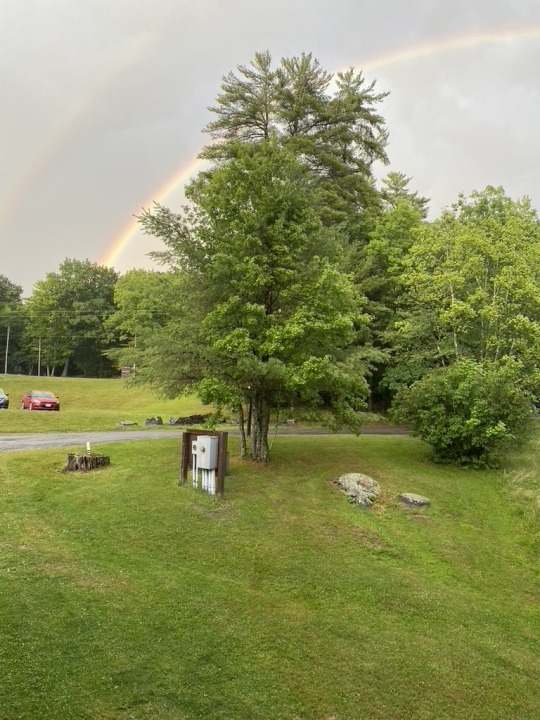
I know
that no local church, no denomination, and no clergy person will ever
be perfect.  We’re human, we’re finite, our perspectives are limited,
and our needs differ from those around us.  

But
sometimes I let the perfect be the enemy of the good, and I forget to
even dream with God about where God wants the church to go (because
if we can’t be perfect, why bother???)  I don’t have the full vision
of God wants, no one person does, but I am going to share with you
what I can see, so that it becomes part of the conversation that can
become whole.

I
believe that the GMC is predominated by wealthy, cis, straight, white
men who are angry they couldn’t control the movement of the Spirit.
That helps me see what I want the church to look like:  economically
diverse, and careful to center the voices of people living in
poverty; diverse in gender expression and careful to center the
voices of those who are trans and non-binary; diverse in sexual
expression and careful to center the voices of those who are
LGBTQIA+; racially and ethnically diverse and careful to center the
voices of people of color and immigrants; with men, women, and
non-binary people, with carefulness in centering the experiences and
needs of women and non-binary people.  My language here is very
careful, because I believe in community where all are welcome and
fully engaged members, but the hierarchies of the world enter the
church with us and unless we INTENTIONALLY invert the power dynamics
of the world, they’ll replicate themselves in the church.

And, of
course, I want to be a part of a community open the radical movement
of the Spirit.  The GMC uses scripture as a means of control, to
limit people and prescribe their lives.  I hope to be part of a
church that sees scripture as an invitation to dialogue about what
matters, what justice looks like, and how we might work together for
the common good of all of God’s beloveds.  

When I
listen to Jesus, I hear a lot of intentional inversions of the power
dynamics of the world, so I’m pretty sure he’s into that.  I also
hear an amazing amount of empowerment, and reminders that together,
the people have enough to care for each other.  The world believes in
scarcity, but the church is called to believe in abundance.

At this
moment in time, I see several intersecting crises that I believe we
are all called to be attending to:  poverty and income inequality,
climate change, militarism and escalation of violence, and an
epidemic of loneliness.  (In terms of analysis, the way we practice
capitalism seems fundamental to all of these concerns.)  I hope that
when the church stops infighting about who is lovable in God’s eyes
(eyeroll) and acknowledges the answer “everyone” we might put our
energy and attention to enacting that by working on the current
crises.  (I know, all too well, than when we move from explicit
homophobia to implicit homophobia and transphobia not nearly enough
will change.  I know that, and I’ll keep working on it.  But the care
of all people includes these pieces TOO.)

At its
worst, religion is the set of myths that empower the societal systems
that create injustice, inequality, hierarchy, and despair.  I think
one of the tells of this use of religion is when it is focused on
control.

BUT, at
it’s best, religion lives out the love of God for all people,
dreams of a society of equity, justice, equality, and hope.  I think
one of the tells of this use of religion is SHARED power.

While I
hope we will speak, act, live out, and advocate for justice in all
the crisis areas, I think we are best set up to change the world is
by being a place for humans to really connect,
to God and each other, and therefore changing the

epidemic
of loneliness.  We are already a community.  We already have a
building that can help people gather.  We are already practicing
caring, and listening.  Many among us have already have lives
transformed by being a part of this community, that is, by God and by
each other.  Seeking to use our gifts and resources to connect with
others, and transform loneliness would ALSO increase our empathy and
lead us towards more valuable work in KNOWING that our well-being is
interconnected.  I dream of a church where people are loved exactly
as they are, and listened to, and thus healed, and thus a source of
healing and love for the world around them.  I think it is possible,
too!

To do
this, though, would require a rather different way of “being”
than we are now, and I am waiting to see how the Spirit moves in
others, to learn how we will move forward together.  

1https://www.umc.org/en/content/methodist-history-1908-social-creed-for-workers

2https://www.umc.org/en/content/ask-the-umc-why-do-we-have-social-principles-where-did-they-come-from

3https://en.wikipedia.org/wiki/Homosexuality_and_Methodism#United_Methodist_Church,
the word “doctrine” was changed to “teaching” by friendly
amendment before the amendment and statement passed.

Worship 7/24/2022

Uncategorized

“A Vision, for Us Together” based on Isaiah 61:1-4…

  • January 30, 2022
  • by Sara Baron
image

Do you have a Bible verse you claim as your own, one that reminds you of who you are, who God is, and how you want to live. (Possibly three versions of the same question). I’m going to try to guess:

Maybe Micah 6:8:

[God] has shown you, O mortal, what is good.
And what does the Lord require of you?
To act justly and to love mercy
and to walk humbly with your God.

Maybe Amos 5:24,

“But let justice roll down as waters, and righteousness as a mighty stream.”

The Golden Rule from Matthew 7:12?

“In everything do to others as you would have them do to you; for this is the law and the prophets.”

The Shema from Deuteronomy 6:4-5?

“Hear, O Israel: The Lord is our God, the Lord alone. You shall love the Lord your God with all your heart, and with all your soul, and with all your might.”

The great theology of 1 John 4:7-8?

Beloved, let us love one another, because love is from God; everyone who loves is born of God and knows God. Whoever does not love does not know God, for God is love.

Maybe the simple repeated theme from Genesis 1:

“And God said it was good”

Or the Hebrew Bible theme of who God is

“God’s steadfast love endures forever"

Or the great equalizing in Christ from Galatians 3:28?

“There is neither Jew nor Greek, slave nor free, male nor female, for you are all one in Christ Jesus.”

Or maybe a more particular call from Isaiah 40:1?

“Comfort, O Comfort my people, says your God.”

Or the wise challenge given Esther (4:14) that helps with courage?

“For if you remain silent at this time, relief and deliverance for the Jews will arise from another place, but you and your father’s family will perish. And who knows but that you have come to your royal position for such a time as this?”

Or, perhaps, the deceptively simple instructions from Paul in Romans 12:7-8 (The Message)?

Love from the center of who you are; don’t fake it. Run for dear life from evil; hold on for dear life to good. Be good friends who love deeply; practice playing second fiddle.

Or, just maybe, the Jesus theme from Mark (1:5)?

The time is fulfilled, and the kindom of God has come near; repent, and believe in the good news.’

Did I get it? Let me know in comments or an email! If you didn’t have one before, there are some good options, and if you wanted to know more about how I see the Bible, you just learned a lot. I don’t have ONE passage, but all of the above are incorporated into how I try to live, how I understand God, how I understand the vision of the Divine and the work of being a follower of Jesus.

Given the depth and breadth of the Hebrew Bible, there are a LOT of options to choose from to pick a passage to define one’s life and/or ministry. And that’s why I think it is so interesting and notable to hear the one Luke uses to define Jesus. It is a Jubilee passage from third Isaiah, and – perhaps I don’t have quite enough hope, it wasn’t on the list I just shared. This one is BIGGER, broader, more radical, more extreme than any I’d claim for myself. For Jesus, though, it fits.

61The spirit of the Lord God is upon me,
because the Lord has anointed me;
he has sent me to bring good news to the oppressed,
to bind up the broken-hearted,
to proclaim liberty to the captives,
and release to the prisoners;
2 to proclaim the year of the Lord’s favor,
and the day of vengeance of our God;
to comfort all who mourn;
3 to provide for those who mourn in Zion—
to give them a garland instead of ashes,
the oil of gladness instead of mourning,
the mantle of praise instead of a faint spirit.
They will be called oaks of righteousness,
the planting of the Lord, to display his glory.
4 They shall build up the ancient ruins,
they shall raise up the former devastations;
they shall repair the ruined cities,
the devastations of many generations.

Walter Brueggemann makes a number of great points that help me make sense of this passage, and I’m going to share them with you, largely in my own words.1 It helps to remember that Isaiah 56-66 is considered “Third Isaiah”, distinct from what came before it in both themes and in timing. Isaiah 60 predicts a change for ancient Israel, a reversal of fortunes. It speaks to a people RETURNED from Exile, but struggling in the rebuilding stage. Brueggemann says these chapters are “primally concerned with the future of Jerusalem. It is urgent to determine if the new Jerusalem, which epitomizes new heaven and new earth, will or will not be a place of inclusion, will or will not be a place of neighbor ethic, will or will not manifest a passion for justice.”2

Isaiah 60 predicts that things are going to get better in Jerusalem, that God is going to make things better, and glory and prosperity are on the horizon. Isaiah 61 has a pretty big switch in that there is a HUMAN speaking, as God’s agent, one who is anointed with God’s spirit to MAKE IT HAPPEN.

This human is “authorized and energized to do Yahweh’s deeply transformative work in the community of Yahweh’s people.”3 And what the human-actor is going to do is create a NEW thing.

And the “new thing” is a creating justice for those who are weakened, disempowered, and marginalized. The verbs of what will happen to them speak volumes. The human acting on behalf of God will bring, bind up, proclaim, release, comfort, provide,

give. That is, a whole lot of action aimed at restoring “them to full function in a community of well-being and joy.”4

I know I’m going pretty deep into this passage, but when Luke claims this as Jesus’s vision for his ministry, and when it gives me the shivers like this to see how claiming this historical vision for Jesus fits both in his time and in ours, I think it is worth digging pretty deep.

Because, there are A LOT OF PEOPLE who are weakened, disempowered, and marginalized. And there is a lot of need for restoration, particularly restoring people to a good relationship within a healthy community of mutuality and JOY. Right? This speaks to the return of the exiles, and it speaks to the largely disempowered masses of Jesus’s day, and it speaks right into our day too. Our day, where corporate greed and epic income inequality along with racism and other forms of de-humanizing others prevent the fullness of God’s vision from being lived in people’s lives. A restoration to full function in a community of well-being and joy is another way of talking about God’s kindom, the one we’ve committed our lives to building, and it requires a lot of CHANGES.

Another important theme in this Isaiah passage is the concept of Jubilee. Jubilee is a Torah vision and commandment aimed at preventing generational poverty, and creating an equitable society. I’m currently reading David Graeber’s new book (with David Wendrow) “The Dawn of Everything: A New History of Humanity” in which the professors examine many ways that human societies have organized themselves in order to consider why some societies carefully maintain equality and care for all, and why some create and maintain inequality and hierarchies of privilege.

It helped me see that the careful Torah provisions aimed at creating a just and equitable society were one of many ways of doing so, many of which have been successful for centuries. (Some archeologists see evidence that the lands of ancient Israel maintained a lack of hierarchy and care for all during the period of the Judges, some 300-400 years- which I think is a notable period of time!)

Pragmatically, practicing Jubilee is laid out in Leviticus 25 and relates to regular forgiveness of debts and restoration of land to original owners. Brueggemann says, “There is no doubt that a vision of jubilee -that is, a profound hope for the disadvantaged – is shockingly devastating to those who value and benefit from the status quo.”5 So, add in another element to what it means to have Jesus claiming this passage in his ministry. It names that he is upending the status quo for the sake of the disadvantaged. AND, it puts the advantaged on notice. There is a VERY good reason the Poor People’s Campaign is also claiming Jubilee as a platform, this Biblical concept still has power today.6 It is still NEEDED today.

I cannot resist the recommendation to reflect on Brueggemann’s quote “is shockingly devastating to those who value and benefit from the status quo.” We are, all of us, a complicated mix of powerful and powerless, we are those who benefit from the status quo and those who are held back by it. And it is of great value to our capacity to build the kindom if we are able to become clearer on where we benefit from the status quo, so we can change how we respond to those who are harmed by it. I suspect that this reflection is easiest accessed by attending to when our bodies “tighten up” at some suggestion for justice or another. What do we instinctually respond to as “that’s too far” OR “but, that would be scary (for me!)”? The work of building God’s kindom often requires us to pay attention to the clues from our bodies of what scares us, and then use that as a source of wisdom to listen to and empathize with people who lack whatever power we’re afraid of losing.

OK, a final point on Isaiah 61 (for now), The passage moves the community from sorrow and grief to gladness and praise. As the disempowered and marginalized are restored to full community, the community itself is healed.

So, when Luke tells us about Jesus reading a passage from Isaiah and claiming it as his own, there is A LOT going on there, a lot about God, a lot about the history of a people devoted to God, a lot about who Jesus is, and a lot about what God is asking of us.

Because, the gospels make it clear, the work that Jesus did during his life time is the work that the followers are Jesus are asked to continue in ours.

Which, rather uncomfortably suggests that I should have put Isaiah 61:1-4 on my list of verses to live by. Isn’t THAT a challenge?

Thank goodness we have each other and God: none of us are asked to be the single-human-actor. Instead, we TOGETHER have gifts sufficient for the tasks, and we TOGETHER have vision of justice, and we TOGETHER have power to build the kindom. We, TOGETHER, along with many other workers in the kindom, are given this time of upheaval in the world as a time to re-vision and to seek justice anew. May God help and encourage us along the way – there is a pretty long journey from where we are to where God dreams we will be. Amen

1 Walter Brueggeman, Isaiah 40-66 (Louisville, Kentucky: Westminster John Knox Press, 1998) 212-215.

2 Ibid, 167.

3 Ibid, 213.

4 Ibid 213.

5 Ibid, 214.

6 https://www.poorpeoplescampaign.org/about/jubilee-platform/

Rev. Sara E. Baron 

First United Methodist Church of Schenectady 

603 State St. Schenectady, NY 12305 

Pronouns: she/her/hers 

http://fumcschenectady.org/ 

https://www.facebook.com/FUMCSchenectady

January 30, 2022

Sermons

“Bread for the World” based on Isaiah 25:1-9

  • October 16, 2017February 15, 2020
  • by Sara Baron

In 2005 I was commissioned as a probationary Elder in The United Methodist Church, and immediately thereafter I went to Cuba on a Volunteer in Mission Trip (VIM). Cuba was fascinating and the trip was meaningful and educational. We started and ended our time in Cuba at the Methodist Hospitality House in Havana. On our last night, we were to have closing worship and the other clergy on the trip informed me that I was to preside at the communion table (for the first time). As a seminary student, I’d been involved in a lot of conversations about bread and grape juice; particularly around the idea that the the bread and wine that Jesus had used were the common elements of food for the people of his day, and that in places where bread and grape juice are not common food, perhaps they should not be the elements of communion. I found it convincing, particularly after having learned that grape juice is SUPER expensive in Cuba as grapes are not native and embargoes limit trade.

Thus, I decided to preside over the table with the elements of the people: salines and mango juice. Once our Cuban hosts heard about this, they wanted to partake as well. So, in one of those strikingly holy moments of life, I stood as an American woman in a rooftop in Havana, and presided over a bilingual communion service with salines and mango juice.

Not so long after that, I was back at school and back at my pastoral internship, helping to serve a Thanksgiving meal at the Hollywood UMC. It was a Sunday night, and the large room was filled with tables and the tables were filled with people. After serving most of the crowd, I looked up. What I saw took my breath away. It was the church’s Thanksgiving Dinner, so many of the people who were present were church members; but they also made all meals open to the community, so many of those present were people who were homeless and hungry. The two crowds were intermingled at each table, sitting together and sharing a meal. The tables were diverse in other ways as well: age, race, country of origin, sexual orientations, gender identities, and even religious faith. On that day when I looked up and saw God’s beloved people talking, laughing, and eating together I knew I’d seen the kin-dom of God on earth (if only for a moment).

Somewhere along the line, those two powerful moments have bonded in my brain, the communion meal intermingled with the shared meal of church fellowship that also fed the hungry. Perhaps they were tied together by the reflections of Rev. Dr. Barbara Thorington Green, who often speaks about the ways that God’s Table (communion) invokes and also blesses the tables we share fuller meals at. Food is sacred, shared food even more so, and whether it is meals that fill the belly or tiny pieces of bread meant to satiate the soul, they matter.

Isaiah shares a vision of God in our reading today, and it is one that invokes and expands both of the stories I just told you. In this passage God prepares a table, a feast actually, of rich foods that would nourish bodies, and invites ALL people from ALL nations to the feast. God makes the food, for God’s people, and all can eat together. It is so spectacular, so marvelous, that it makes sense that within such a God-drenched experience that God would also bring an end to death and bring God’s presence fully to the people.

Abundant, life-giving food, prepared for ALL people by God’s own self is equivalent, it seems, to swallowing up death itself.

This is not the world we live in. (Sorry to break it to you.) Death is here, still. Abundant, life-giving food is not available to all of God’s people, and while the presence of God may be here with us, we often don’t feel drenched in its goodness. According to the resources provided by Bread for the World, “Nearly 15 percent of U.S. households — approximately 49 million Americans, including 15.9 million children — struggle to put food on the table.”1 The problem is not limited to the United States. They also share, “The number of hungry people in Asia has also declined substantially, by 217 million between 1990-92 and 2012-14, according to the U.N. Food and Agriculture Organization. Yet Asia still has to two-thirds of the world’s hungry people.” Specifically, “More than 40 percent of children in India are stunted (being too short for their age group) due to malnutrition.” The other area of the world in greatest need is sub-Saharan Africa, “Just over a quarter of the world’s undernourished people live in the countries south of the Sahara Desert in Africa. Progress against hunger has been slow in this region. In 1990, one in three people in the region were undernourished. Today, one in four suffer from hunger”.2 “All added up, worldwide, 1.2 billion people still live in extreme poverty—on less than $1.25 per day.”3 This is WAY down from the recent past, but still unacceptable.

Bread for the world links to the United Nations Sustainable Development goals, which include the information that “In 2016, an estimated 155 million children under age 5 were stunted (low height for their age), down from 198 million in 2000, ”4 and “The proportion of undernourished people worldwide declined from 15 per cent in 2000-2002 to about 11 per cent in 2014-2016. … Globally, about 793 million people were undernourished in 2014-2016, down from 930 million in 2000-2002.”5 The decline in global hunger is a great thing, but it is still way too much.

We don’t live in a world where abundant, life-giving food is available to all of God’s people, not at all. And while global poverty and hunger was on the decline this year (praise God!), within the United States it rose, and is expected to keep rising. In previous years we have participated in the Bread for the World offering of Letters, asking our state and federal elected officials to pass expansive legislation to make food available to hungry people, this year we are aware that it will fall on deaf ears. We aren’t fighting to expand programs to hungry people anymore, we are now fighting to keep resources that exist, insufficient though they are.

It is especially difficult right now, in the US and in the world, because the impacts of Global Climate change are drastically impacting food production, droughts and floods, wars and migration, transportation and food prices. All of this means that access to abundant, life-giving food is very difficult for many. Thanks be to God for the many organizations committed to finding ways to get food to hungry people, and thanks be to God that in the world at large there was a DECLINE in hunger despite these extra challenges!!

Isaiah’s dream, however, still feels far off. I want to retell you the dream, in slightly different language, because I think we all need to soak in it a bit.

Our God, the one who never abandons us, the one who holds us together,
We remember all that you have done,
all the acts of liberation, and justice,
all the ways you’ve sparked creativity, nurtured love, and healed brokenness.
You have acted, and you have guided us to destroy the fortresses of oppression,
and you ensure they will never be rebuild.
The powers that deny anyone’s humanity are over.
The systems that privilege one over another are no more.
Awe has struck all of us, the strong and the weak alike, at what you can do.
You have reminded us of your values, and brought them to life.
You are the sanctuary for the poor,
the one who is safe shelter to those in need and in despair,
protection from from hurricanes and rainstorms,
a fireproof haven from the sun and from the fires,
a sturdy foundation that not even an earthquake can harm.
When the powerful attacked the weak,
like a blizzard attacking a disintegrating home,
when the cries of those calling for injustice
seemed to drown out the voices calling for justice,
you acted.
You provided reinforcements and insulation for the homes,
you reminded those calling for injustice of their own needs,
and they stopped yelling and started listening.
Here, here in this place,
this place that has known such tragedy,
fear, anger, sadness, and despair,
here in this place you will give gifts to all your people.
One will sit by another, and no characteristic of humanity will separate them.
Here, in this place, you feed us all with delicious food,
nourishing us, healing us, reminding us of goodness once again.
Here, in this place,
comfort will be shared,
tears will be dried,
shame will be destroyed,
and death itself will lose its power to frighten us or bring us pain.
Knowing that this will happen, let us be glad and rejoice in the goodness.

Commentators say that this vision won’t necessarily come true exactly as written. #spoileralert Yet, I’m told that we can’t be part of creating what we can’t dream of, and we can’t see what we can’t conceive of. In the midst of the brokenness all around us, we need reminders of what goodness looks like, what hope would create if it could, what dreams God is dreaming over the long run. Some of us (me included) are so busy being concerned about the present that we lose sight of the idea that God is very good at playing a very long game.

So, bread for the world, that’s the dream. All people being fed with abundant, life-giving food. Isaiah says not just bread but delicious soups and sauces, not just food but drink as well. No one going hungry, no one in need, not in body nor in soul.

That’s one of God’s dreams, and it is surely a God sized dream.  Bread for the World and the United Nations are actually dreaming it with God, the goal is to eliminate hunger in the world by 2030. They say it is going more slowly than the hoped – but it is GOING. God’s dreams might just be in reach, this one and all the rest as well. May we take the time to soak in the goodness of God’s dreams, to trust in the visions God has for an abundant and just world, and give our attention to what might be – God is so good the dreams and visions are nourishing for us. Amen

1Bread for the World “About Hunger” http://www.bread.org/where-does-hunger-existaccessed on 10/12/17.

2Grassroots Advocacy Resources, Facts on Hunger and Poverty,http://www.bread.org/sites/default/files/downloads/gar-issues-poverty-hunger-us.pdfaccessed on 10/12/17.

3Grassroots Advocacy Resources

4United Nations, The Sustainable Development Goals Report 2017,https://unstats.un.org/sdgs/files/report/2017/TheSustainableDevelopmentGoalsReport2017.pdf accessed on 10/12/17.

5United Nations

–

Rev. Sara E. Baron

First United Methodist Church of Schenectady

603 State St. Schenectady, NY 12305

Pronouns: she/her/hers

http://fumcschenectady.org/

https://www.facebook.com/FUMCSchenectady

October 15, 2017

Sermons

“Persistent” based on Luke 18:2-5

  • October 2, 2016February 15, 2020
  • by Sara Baron

I recently heard a story,
it was the story of the person who told it to me, but it struck me
that it was also  many peoples’ story.  There was much to celebrate
in the story, and also a lot to be frustrated by.  The person who
told me the story was someone who lacks access to sufficient
financial resources.  That is, in the colloquial – he is poor –
although I think poverty is more complicated than that!  The man is a
father, and his daughter got into a VERY good college, despite the
challenges the family faced and the challenges their school district
faced.  As you might hope, the very good college offered this young
woman a financial aid package to make it possible for her to attend
the school.  However, when the young woman got the financial aid
package and read it over carefully, she realized that the loans she
was being offered were predatory loans that would be verging on
impossible to ever be able to pay back!  She contacted the school.
They ignored her.  She kept pestering.  They kept ignoring her.  Her
father started calling, and he started calling up the chain of
command.  He was told to stop calling.  When I heard the story,
that’s where it ended – they were unsure if the young woman would
attend the very good college because she was WAY too smart to do so
at risk to her financial future.

She sounds like the
persistent widow.  I’ve been told that the persistent widow is a very
strange character with which to start a sermon series on subversive
women – and not just because the Bible presents her as fictional.
The bigger issue is that her subversiveness isn’t very obvious.  To
the naked eye, she just looks like an annoying nag!  Actually, even
that may be projection.  This is a SHORT story, there isn’t that much
to it!  

In our study of the text
though, we found a lot to discuss about this short-storied,
fictional, persistent widow.  It is helpful to remember that the
Torah, the laws of community life that the Jewish people understood
to have come from God, were very clear about the care for widows,
orphans, and foreigners.  That would be, people who did not have the
protection of an adult male who was a member of society and were thus
vulnerable.  The system was designed so that even the vulnerable
could find ways to survive.  The Torah was also very clear about the
threat to society created by an unjust justice system, and
articulated frequently, in no uncertain terms, the need to have
judges who made rulings based on JUSTICE and not on who had more
money or influence.  

That is, the persistent
widow is stuck in a situation she shouldn’t be in.  She should be
cared for.  She isn’t!  It is likely that her “opponent” is the
person who should have been taking care of her and providing for her
livelihood, and wasn’t!  The justice system was supposed to help her
find a way to justice.  It didn’t.   She was stuck in a situation
which was untenable for her survival without a means of recourse
because of the immorality of the judge.  There was no other means by
which she could get justice.  The system was closed to her, and the
only option left to her was to agitate the system.

The judge is presented
very simplistically.  He doesn’t care about justice, people, or
God… and it sounds like he just does what he wants to do.  He is a
negative caricature of a person abusing power or authority, someone
who isn’t easy to move toward justice.

The persistent widow won
though!  I suspect that she could have taught the courses I took this
spring on non-violent direct action!  Jesus says that the judge
thought to himself,
“because this widow keeps bothering me, I will grant her justice,
so that she may not wear me out by continually coming.” (v. 5) The
persistent widow didn’t have much power to use in the world, and she
didn’t have ANY power that could be used without being annoying.  So
she used what she had.  She was annoying.  She didn’t give up.  And
she annoyed him into doing what was right!  

That’s
what I think is so subversive about the persistent widow.  She can’t
have been the only widow in that city who was impoverished by a lack
of justice, she likely wasn’t even the only one to bring it to the
judge’s attention.  MANY of the widows might have been in similar
situations.  However, in cases like that, most people give up.
That’s what people are counting on, and that’s part of why injustices
sometimes win out.

I
think about that young college bound woman, and how carefully she
read the details of her financial aid package to determine that the
offer wasn’t fair.  How many other people in the same situation come
with some trust that the college they want to go to won’t do them
harm, don’t read the package, or don’t yet have the math skills to
interpret the implications?  How many people would decide to take the
package and hope for the best?  How many people would try to call and
ask if there was another loan, but give up easily?  I don’t know how
many people would get as far as the young woman I heard about, and
consider giving up their dream school, but I do know that her
persistence is NOT what the predatory loan company is counting on.

The
predatory loan company is expecting people not to pay attention, to
trust, to take a leap of faith, not to run the numbers, and to sign
on the dotted line – no matter how high the interest rate turns out
to be.  The predatory loan company is able to get away with their
loans because few people are as persistent as that young woman. The
college, as well, choose to work with that predatory loan company,
and in doing so to keep this young woman and those in similar
situations IN poverty, while pretending to help them out of it.  It
makes me wonder what they might be getting out of it.

Keeping
our eyes open to see
the injustices of the wold and REFUSING to be quiet about them once
we do is wildly subversive.  I’m claiming the persistent widow was
subversive because she was a nag, and she didn’t stop nagging until
justice was found.  It isn’t the wildest story in the Bible by any
means, but it may represent the most frequently successful mechanism
of accessing justice: refusing to give up!

One
of the challenges of acting like the persistent widow, though, is
that there are a lot of injustices in the world and none of us can
give attentiveness to all of them.  That level of nagging can’t be
multi-tasked!  This is one of the reasons I am so grateful for the
image of the Body of Christ.  I come back to it time and time again,
reminded that if I do my part faithfully, and trust the rest of the
Body to do their part (and God to do God’s part), the whole world
gets better.  Most often justice comes through collective action
(think Montgomery Bus Boycott, Women’s Suffrage, blocking the
Keystone XL pipeline), but sometimes they’re smaller or individual as
well.  On occasion we can successfully seek justice alone, but no one
of us can seek ALL justice.  If any of us try to
all the work of the Body of Christ, nothing gets done
at all!  

My
college thesis was on John Conway’s “Game of Life,” which is a
set of rules governing a grid.  On the grid, at any given moment,
each cell is “alive” or “dead” and then, from there, things
change.  The status “alive” or “dead” is represented visually
by two different colors, and those statuses are able to change with
time, based on the relationships they have with other cells who are
also “alive” or “dead.”  

One
night, deep in the trenches of trying to write up my thesis and
struggling with a decision about where to go to seminary, I went down
to the river to pray.  I sat on a dock and watched the water flow by.
As might make sense if you’d spent as many hours and months staring
at colored boxes on a graph as I had, I started imagining the river
as the graph – and imagining the graph spreading out to cover all
the water of the world.  I’d stared at colored boxes for a LONG time,
and I was tired 😉  Then, as I continued to pray, ponder, and be
overwhelmed, I started imagining one of those boxes as representing
MY life.  To my horror, the box that represented my life was
blinking!  I took this to mean that sometimes my life was
contributing to the well-being of others, but sometimes it WASN’T!  I
found myself sitting on that dock on the Connecticut River, aware
that sometimes I wasn’t benefiting the kin-dom of God and wishing
with all that I was that I could ALWAYS be good.

It
was at that point that another thought entered my mind, one that was
outside of the particular ways my thoughts tend to cycle around.
That process has been one I’ve associated with the Divine, and I have
since thought of that prayer time by the river as a vision of sorts
-but I’m also giving you the details to consider it so that you can
assess how you’d like to think about it.  The thought that entered my
mind, seemingly from beyond me, was that if I could manage to be a
blessing that contributed to the well-being of the kindom 51% of the
time, that was ENOUGH for God to be able to expand the goodness out
into the world and to be a net gain to the kin-dom.  

It
was certainly a new thought to me then, I’d leaned more towards
perfectionism than toward an idea that offering more good than bad
was a net gain!  It is a thought I’ve gone back to in the years
since, particularly when I’ve found myself being extra rough on
myself.  It helps me to consider that God is able to make things work
with what we’re able to offer.

If
we do our best, and especially if we are able to offer a bit more
good into the world than harm, then God can use what we offer in
combination with the rest of the Body of Christ.  The world becomes a
safer, fuller, more just place.  The kin-dom becomes.  We don’t have
to do all the work!  We can’t!  We’d burn out.  That means that
sometimes we have to work through the process of figuring out which
things are ours to do and which things we leave for the rest of the
Body of Christ.  Together, each of us offering the love, compassion,
and persistence that are our gifts from God, we can follow the
widow’s course and create the world that the Torah dreams and God
wants – the kin-dom of God!  And it doesn’t even require perfection
😉  Just persistence.  Thanks be to God.  Amen

  • Rev. Sara E. Baron

    First United Methodist Church of Schenectady

    603 State St. Schenectady, NY 12305

    Pronouns: she/her/hershttp://fumcschenectady.org/

    https://www.facebook.com/FUMCSchenectady

    October 2, 2016

    • First United Methodist Church
    • 603 State Street
    • Schenectady, NY 12305
    • phone: 518-374-4403
    • alt: 518-374-4404
    • email: fumcschenectady@yahoo.com
    • facebook: https://www.facebook.com/FUMCSchenectady
    • bluesky: @fumcschenectady.bluesky.social
    Theme by Colorlib Powered by WordPress