Skip to content
First United Methodist Church Schenectady
  • Lenten Photo Show
  • About Us
    • Meet the Pastor
    • Committees
    • Contact Us
    • Calendar
    • Our Building
    • The Pipe Organ
    • FAQs
    • Wedding Guidelines
  • Worship
    • Sermons
    • Online Worship
  • Ministries
    • Music Ministries
    • Children’s Ministries
    • Volunteer In Mission
    • Carl Lecture Series
  • Give Back
    • Electronic Giving
  • Events
    • Family Faith Formation

To Fall Down

  • January 29, 2025March 17, 2026
  • by Sara Baron

“If I Fall” based on Isaiah 43:1-7 and Luke 3:15-17, 21-22

Lay Leader Karyn McCloskey’s sermon:

Friends, all I can say is what a week to end up preaching…

I suspect there are at least one or two here today who climbed into a pulpit on September 16th,2001 and the months following and may remember what this feels like.

I don’t mean the sheer incomprehensibility of the attacks – at least to those of us born and raised in this country – but rather the aftermath.   The hateful response to anyone who looked or sounded “foreign” –especially those with brown skin.   The changes in our own government, the “Patriot Act” and the like.  “See something, say something.”  Distrust your neighbors – especially those with headcoverings and accents.   It still bottoms out my stomach when I think about it.

This week feels the same.  Changes in government, gag orders, stepping out of treaties and away from world citizenship.  And now the ICE raids, families keeping their kids out of school, worried about neighbors turning them in—or at the very least not standing up to power.  

It’s a lot and it’s overwhelming and it has the potential to seem completely hopeless…except that we are called to be people of hope.   In essence for me, that’s what our baptisms recognize – they’re an outward sign of inward grace.  Grace found in all people – regardless of race, religion, creed, time, place, socioeconomic status, or ability. There’s no clearer indication of this than the baptism of the Divine by a human.   And for me, no clearer call on my heart than our baptismal vows.

I chose to use them as our call to worship because I think we need to have them in front of us.  To give us strength when we’re weary.  To pull us back when we’re getting distracted.   To make us angry enough to flip tables that society would like us to quietly sit at.

This isn’t the first time that people of faith—and to be clear I don’t mean just Christians –  have been called to action, called to stand with the vulnerable, called on a massive scale to respond with a very clear “NO”.   Some of you have heard me tell the tale of Denmark in 1943, when after three years of Nazi occupation during which time the entire population, including the royal family, refused to comply with even intolerance, Hitler sent transport ships on the eve of Rosh Hashanah to gather up the Danish Jews.   Word was spread across the countryside and through the cities – and overnight the Danish people hid over 7,000 of their fellow citizens away – in hospital beds, under fake names.  In barns, in basements.  And then shuttled them away in the holds of fishing boats across the waters to neutral Sweden.  The German ships returned empty — and Denmark holds the distinction of being the only country in occupied Europe where the majority of those sent to the death camps were not Jewish.

A more recent example comes closer to home, when in March of 1965 came first the horror of Bloody Sunday, when 600 African Americans marching from Selma to Montgomery Alabama were beaten, run down, and tear gassed by State troopers and county possemen on the Edmund Pettus Bridge — followed by two more marches along that same route when thousands of people of all races, many of whom were clergy and other people of faith –  with the third one ending with more than 25,000 assembling to protest at the Alabama State Capital, demanding the removal of obstacles to Black voter registration.  ( On a side note – if you want to be inspired, I highly recommend watching the film “Selma” – that’s how I spent part of last Monday.)

There are others—like the decades of struggle, pain, and hard work that made possible this brand new Book of Discipline I got this week – but you get the point.   At such a time as this, we are called to build the kindom.  

To fall down and get back up.

To pick each other up – or lay down beside each other until we can rise again.

To stand behind, beside or in front of those who are vulnerable.

To use every ounce of whatever privilege we have

to speak out,

to lead out,

to fight our way out of this mess going on around us.

Because that’s how we renounce the spiritual forces of wickedness, reject the evil and unjust powers of this world, and repent of our separation from God and each other.  So that we can accept the freedom and power God gives us    to resist evil, injustice, and oppression in whatever forms they present themselves!

And this becomes possible, because we know, to the very core of our beings, that the God of Jacob formed us too and the promise that echoes through the ages remains true:  “I have redeemed you; I have called you by name, you are mine.  When you pass through the waters, I will be with you; and through the rivers, they shall not overwhelm you; when you walk through fire you shall not be burned, and the flame shall not consume you.”

Amen.

January 26, 2025

If I Fall

  • January 19, 2025March 17, 2026
  • by Sara Baron

“If I Fall…” based on Micah 6:6-8 and Matthew 5:1-16

January is National Mentoring Month, and so this year for Human Relations Day, we decided to look at Rev. Dr. Martin Luther King Jr. in context – along with the people who inspired him, and the people he inspired. Thus, I opened a lot of articles on the people who served as Dr. King’s mentors and I have three things to say based on that: OH MY GOODNESS were those impressive men; thank goodness for Ghandi and his witness to the powers of nonviolence that these mentors heard loud and clear; and finally – what an extraordinary group of superbly well educated men of color!

In the end though, I found myself more interested in Dr. King’s co-mentoring relationships. Perhaps that would be more normally construed as his collaborators. The key, I think, is to remember that Dr. King was the best known leader in the Civil Rights movement, but he was by no means alone. Dr. King worked side by side with Ralph Abernathy, and the impacts on the movement of Coretta Scott King and Juanita Jones Abernathy was also enormous. The Student Nonviolent Coordinating Committee was working tirelessly as well, with its wise leaders and faithful on the ground workers. Movements, it turns out, involve a lot of PEOPLE. No one person is a movement, nor can a single person lead a movement alone. Movements are the embodiment of “we’re in this together.”

With the Student Nonviolent Coordinating Committee (SNCC) was a woman by the name of Fannie Lou Hamer:

Born in Mississippi in 1917, Hamer was a working poor and disabled Black sharecropper who joined the Civil Rights Movement at the age of forty-four. In 1962, her life changed dramatically after attending a mass meeting at a local church. The gathering had been organized by activists in SNCC. The speakers that night highlighted how ordinary citizens could transform American society with the right to vote, a message that resonated with Hamer. She went on to become a field secretary for SNCC and assisted Black people in Mississippi and beyond with voter registration.

This was dangerous work. In June 1963, Hamer was returning from South Carolina with a group of other activists. They stopped in Wynona to grab a bite to eat. Hamer’s colleagues encountered resistance from the owners of the café who made it clear that Black people were not welcome. The police arrived. And when Hamer exited the bus, an officer grabbed her and started kicking her. After Hamer and her colleagues were arrested, they received brutal beatings from the police officers who also instructed prisoners to do the same. Hamer’s injuries left her with kidney damage, a blood clot in her eye, and worsened a physical limp that she would carry for the rest of her life. However, Hamer was undeterred and continued her efforts to expand Black political rights.

…In April 1964, she joined forces with several other activists to establish the Mississippi Freedom Democratic Party, the MFDP. The group challenged the Mississippi all-white Democratic party. In August of 1964, only months after the establishment of the MFDP, Hamer and others traveled to Atlantic City, New Jersey, to attend the Democratic National Convention.

…The experience in Atlantic City transformed Hamer. Although she encountered resistance, she persisted and delivered the most well-known speech of her political career before the Credentials Committee at the Convention. Hamer used her speech to describe the acts of racist violence Black people faced on a daily basis in the Jim Crow South. She told the stories of shots being fired at the homes of those who supported voting rights, and she told the story of what happened to her in Wynona. As she reflected on the painful experiences that Black people face in the South, Hamer could not help but to question America. In her words, is this America, the land of the free and the home of the brave, where we have to sleep with our telephones off the hooks because our lives are threatened daily, because we want to live as decent human beings in America?”1

She was a woman who was inspired by Dr. King, and then inspired Dr. King. They were even known to disagree and push on each other. That is, she was a full collaborator with him in the movement towards freedom. One of many famous quotes by Fannie Lou Hamer is, “If I fall, I’ll fall five feet four inches forward in the fight for freedom. I’m not backing off.” Another great one, one I think we’re going to need in coming days is, “There is one thing you have got to learn about our movement. Three people are better than no people.” Finally, “Nobody’s free until everybody’s free.”

I hadn’t heard of Fannie Lou Hamer in my education, I didn’t learn about her until Shirley Readdean’s daughter Cyndee co-directed “Freedom Summer.” I’m so glad I did learn about her, because she was a living force for good, and I needed to know.

The leaders of the Civil Rights Movement, with their commitments to freedom for all people, to transforming oppression, and to doing so through non-violence carefully followed the Way of Jesus, and the calling of God. We hear in Micah famous words:

[God] has told you, O mortal, what is good;
and what does the Lord require of you
but to do justice, and to love kindness,
and to walk humbly with your God?

It is awe-inspiring how well the Civil Rights Movement embodied this. Dr. King and others preached goodness for oppressors, including in Dr. King’s sermon “Loving Our Enemies”:

Another way that you love your enemy is this: When the opportunity presents itself for you to defeat your enemy, that is the time which you must not do it. There will come a time, in many instances, when the person who hates you most, the person who has misused you most, the person who has gossiped about you most, the person who has spread false rumors about you most, there will come a time when you will have an opportunity to defeat that person. It might be in terms of a recommendation for a job; it might be in terms of helping that person to make some move in life. That’s the time you must do it. That is the meaning of love. In the final analysis, love is not this sentimental something that we talk about. It’s not merely an emotional something. Love is creative, understanding goodwill for all men. It is the refusal to defeat any individual. When you rise to the level of love, of its great beauty and power, you seek only to defeat evil systems. Individuals who happen to be caught up in that system, you love, but you seek to defeat the system..2

As they worked for justice, as they walked with God, they embodied kindness on the deepest levels – calling for true love for those who harmed and oppressed them.

Beloveds, this is a reminder we need. There is no one in the world that we are allowed to discount the humanity of – no one we seek to defeat. We want to change systems, we want to bring freedom, we want to care for the vulnerable, but we aren’t going to get to the kin-dom of God any way but through love – EVEN for those who do immense harm.

No one ever said following Jesus was easy.

Not even Jesus, whose famous Sermon on the Mount blesses those who are struggling with hopes that it will not always be this way. But not with the power to oppress those who oppressed them. The Jesus movement is nonviolent and loving – it isn’t passive, it isn’t willing to let injustice stand, but it is COMMITTED to being nonviolent and loving.

Jesus showed us that the nonviolent love of God could change the world. So too, did the Civil Rights Movement. Today, so too does the Poor People’s Campaign.

Dear ones, in the days to come, I am going to hold on to Fannie Lou Hamer, especially her words, If I fall, I’ll fall five feet four inches forward in the fight for freedom. I’m not backing off.” Whatever comes at us, if we respond with a commitment to justice, to goodness, and to being with God – we can bring good out of ANYTHING. (Eventually.)

May we follow the lead of those who call us to love, to justice, and to nonviolence. They have already shown us the power, we simply get to follow in the way and trust in God. Thanks be to God. Amen

1 Keisha N. Blain, “Fannie Lou Hamer Embodied Martin Luther King, Jr.’s Vision of Courageous Black Leadership” March 02, 2022, found at https://www.beaconbroadside.com/broadside/2022/03/fannie-lou-hamer-embodied-martin-luther-king-jrs-vision-of-courageous-black-leadership.html, on January 15, 2025.

2https://kinginstitute.stanford.edu/king-papers/documents/loving-your-enemies-sermon-delivered-dexter-avenue-baptist-church

Rev. Sara E. Baron 
First United Methodist Church of Schenectady 
603 State St. Schenectady, NY 12305 
Pronouns: she/her/hers 
http://fumcschenectady.org/ 
https://www.facebook.com/FUMCSchenectady

January 19, 2025

Grounded Hope

  • January 5, 2025March 17, 2026
  • by Sara Baron

“Grounded Hope” based on Luke 1:39-55

Somehow I messed up the order of the Advent Candles this year. They’re supposed to be Hope, Peace, Joy, then Love, but we did Peace, Love, Joy, and now hope. Truthfully I copied from a prior year, which likely copied from some lovely liturgy of yet another year, and didn’t notice until Louis asked me why on early we were doing Love on week 2. By that point it was too late to change so we left it.

So perhaps I’m just justifying things here, but I also have been thinking that it feels right this year to end on hope. I’m not disparaging love! It is, after all, “the greatest of these things.” It is just that this year, hope seems like the hardest one to come by.

To speak plainly, there are already a whole lot of problems in our country and our world, and we’re facing a future with a government who will do intentional harm to the vulnerable. Usually when we think about hope, we think about hope for building the kindom, for making things a little bit better, piece by piece. But right now, we’re facing everything getting worse, and it isn’t even entirely clear what we hope for.

I’m a big fan of Dr. Emily Nagoski, a writer and pod-caster who thinks deeply and writes clearly. Dr. Nagoskisends out a regular email newsletter that I get, and this July she sent out one on hope. Emily struggles with depression, and she shared that while she’s delighted when other people can resonate with Emily Dickinson’s poem “hope is the thing with feathers” where nothing can hurt hope, she can’t actually access that hope.

Here is an excerpt from that email:

Moral philosopher and author of “How We Hope” Adrienne Martin developed an “incorporation model” that formulates hope as “a desire for an outcome and the belief that the outcome is possible but not certain” and you use your assessment of its possibility as justification for feelings, thoughts, and plans.

Got that? Hope is justifying your feelings, thoughts, and plans based on your assessment that a desired outcome is possible.”1

This definition of hope, where the desired outcome is “possible but not certain” may be why hope see so hard right now. I’d like to hope for an end to hopelessness, but that is a whole lot less likely then “possible but not certain.” I’d like to hope for an end to hunger, but that, too, is a whole lot less likely than possible but not certain.

For Dr. Nagoski, living with chronic depression, assessing what was possible with an optimistic viewpoint became so hard that from her perspective hope died. But, she says, that’s not the whole story:

Hope is a sustaining energy, it keeps us working through trials when we’re being challenged, but it is contingent on that assessment of the probability of that desirable outcome.

But there is a noncontingent sustaining energy, which cannot be interfered with by any assessment, no matter how dire, of the probability of a desired outcome.

That noncontingent sustaining energy is an unimaginable hope.

What’s it called, when you have no reason to believe a wanted future may come to pass and yet you continue to work toward it just as if you did believe you could make a difference? What’s the name for that emotion, when you walk toward the world you want, knowing that each next step might be off a cliff?

Adrienne Martin calls it faith.2

Now, to be clear, Dr. Nagoski is an atheist, so her faith may look different than ours, but I found this reflection so startlingly helpful. Because what we are doing now, when we hope for good care for those with disabilities, when we hope for compassionate responses to immigration, when we hope for changes of heart around medical options for trans kids in red states – that’s the stuff of “when you have no reason to believe a wanted future may come to pass and yet you continue to work toward it just as if you did believe you could make a difference” That’s the stuff of, “when you walk toward the world you want, knowing that each next step might be off a cliff?”

Now, as people of faith, maybe we still get to call this hope, but more like “faith-hope” or “God-hope” or “we’d have no hope in this without trusting God” or just “hope grounded in love” or “grounded hope”? Or some other nuance. But it isn’t practical, pragmatic, having assessed the likelihood and deemed it possible sort of hoping we’re doing now, when we try to build the kindom of God on earth in this day and age. What we’re doing is continuing to love because the world needs love, is practicing peace because only peace begets peace, is seeking joy because joy is resistance, and continuing to work towards building the kindom of God because God has done crazier things than bring justice out of THIS HOT MESS. That is, we hope.

And to a significant degree, what I hear in Luke is pretty similar. Mary and Elizabeth, the too young and the too old, pregnant and shocked and processing, and speaking hope in the faithful God in the midst of the world that was a hot mess.

The Roman Empire at that time had highly concentrated wealth and power, most people felt vulnerable in their positions, so tried to press harder on those below them to stabilized themselves, the masses of people were struggling in life threatening poverty, and the government was trying to control the religious narrative to make itself look good. I know it is all hard to imagine, but do your best. 😉

This young, vulnerable, faithful Mary speaks her faith, her grounded hope, to Elizabeth. She speaks of God’s mercy – God’s compassion shown to those God could instead choose to punish. She speaks of God’s strength – God’s capacity to make things happen.

And then she talks about what God does with God’s mercy and compassion. Which is, inverses the fortunes of the world. For many people at that time, especially those who were not a part of the Jewish faith (but probably many who were too), it was assumed that those who had power and money had it because they were favored by the gods and “good.” And those who didn’t’ have things were being punished. Right? That way it looks like the world is fair, if everyone gets what they deserve. (You realize people think this now too, right? Sigh.)

The book of Job, I would say, is one of the ways the Bible fights back against that idea, because even in the Bible there is this tendency to want to justify things by saying all is as God would have it be, so don’t mess with the status quo. But, luckily, there are also A LOT of narratives that say God isn’t’ happy until justice comes, and that’s the tradition Mary is drawing on here.

Mary speaks of God lifting up the lowly, bringing down the powerful, filling the hungry, sending the rich away empty, scattering the proud, and fulfilling God’s own promises. To have that happen would overthrow the empire, and install in it’s place God’s own kindom on earth. She is talking about leveling, about making it so everyone can eat, and no one lords over anyone. She is talking about building the kindom on earth.

It makes sense, of course, that these words would be in Mary’s mouth to make sense of Jesus. The early Christian community saw all of this happen in Jesus’s life, and they used Mary’s words as a narrative device to tell people what to pay attention to in his story. (Also, I contend, it makes sense to think of Mary as one who had such faith and was able to teach it to Jesus.)

I think that from the perspective of Mary and Elizabeth, the Roman Empire was immutable. It couldn’t be changed, couldn’t be toppled, couldn’t’ be bested. This was probably even MORE true by the time the gospels were written and the destruction of Jerusalem occurred with mass causalities. Moving from that system to justice as God wills it would have looked….

Well, it wasn’t “possible but not certain.”

It was much more “when you have no reason to believe a wanted future may come to pass and yet you continue to work toward it just as if you did believe you could make a difference?” In fact, I would go so far as to say that one of the primary points of Jesus’s teaching was that we have to work towards the future we want, the kindom of God on earth, as if it is possible because unless we work together on it – IT WILL NOT BE POSSIBLE. Jesus brought the people together and showed them that together they had enough where as apart they did not. Jesus taught them they had power, not the kind of violent power over of the Empire, but the amazing power of connection and love that can change things to make life BETTER.

Beloveds of God, the likelihoods are not in our favor right now. Very little that improves the lives of the vulnerable is going to happen on the federal level in the short run.

Oh well.

God is still God, God is a God of mercy who brings down the mighty and lifts up the lowly and we’re working with God on that kindom building project. Our hope is grounded, faithful, and impractical. We do what needs doing even if it isn’t likely to bring the outcomes we want. We do it anyway, because we are the people who follow Mary’s son. Amen

1 “An Alternative to Hope Or, The Secret Medicine for When the Thing With Feathers Stop Singing” an email from Emily Nagoski on Jul 9, 2024.

2 ibid

Rev. Sara E. Baron 
First United Methodist Church of Schenectady 
603 State St. Schenectady, NY 12305 
Pronouns: she/her/hers 
http://fumcschenectady.org/ 
https://www.facebook.com/FUMCSchenectady

Vulnerability

  • January 5, 2025March 17, 2026
  • by Sara Baron

“Vulnerability” – 2024 Christmas Dawn Meditation

A lot of theologians like to make a big fuss over Jesus being born a baby. Or, really, over God being born a baby. They talk about infinity becoming finite, about spirit taking on flesh and mortality, about the God of all becoming embodied – and as a tiny baby at that. My conceptions of who Jesus was don’t entirely jive with this, but…

It is, in fact, rather awe-inspiring to think of Jesus as a baby. In most of the gospel narratives he is a grown man with profound insight, incredible spirituality, and unusual wisdom. While he didn’t possess much power in the ways of the world – he was poor, homeless, and peace-able – he had a lot of the other kinds of power. He was well liked, even loved, by many. He had followers who trusted him, supporters who enabled him, and the kind of faith that can move mountains. His was the power of Love, but he had it in spades, and we are people who believe in the epic power of Love.

But as a baby, he was fully vulnerable. I have been reminded of this, this year, this second time I’ve picked up a newborn and been responsible for keeping him alive. Babies are 100% dependent on others. They can’t eat without help, they need others to change their diapers. They often need to be soothed to sleep, or reminded to wake up. And all that is when everything goes RIGHT.

The funny thing though, is that we’re more like babies than we’d like to admit. We, too, are 100% dependent on others. We can’t eat without the supply chain enabling food to get to our tables. We can’t excrete safely without the work others did on our septic lines. Many of us also need to be soothed to sleep and nearly all of us need alarms to remind us to wake up.

And that’s, too, when everything goes right. Because it turns out that being in these finite, mortal, human bodies is ripe with things going wrong. Injury and illnesses plague us. Abilities come and go, and dis-abilities ebb and flow in the opposite direction.

We are so profoundly vulnerable in these bodies of ours.

Many years ago, while serving as an intern hospital chaplain, I had the honor of getting to know a man who was being treated for very serious cancer. He was in isolation even within in the cancer unit because treatment required the complete dismantling of his immune system. (Sadly, this happens more frequently than we’d like to discuss.) His family was too far away to visit, and he was bored and scared. Also, being sick didn’t fit his identity. He was, as he said, “a bouncer in the seediest bar in the city.” He wasn’t supposed to get SICK.

Bodies. Are. So. Vulnerable.

And nothing we do, nothing we say, nothing we imagine can keep them safe negates their vulnerability.

We’re all dependent on each other, we’re all in bodies that can’t fully be trusted… we’re all a lot like that baby placed in the manger – and a whole lot MORE like that baby than I think we’d like to be.

And, in case you hadn’t heard it or forgot about it, the mangers at that time were hewn out of the bedrock. To place a baby in a manger was to put the baby BELOW floor level, where anyone could step on him or trip over him in addition to the animals feeding around him. It is a profound metaphor to think of that level of vulnerability for that new baby, one that makes me squirm a little.

Confession, when Isaiah was born I was utterly horrified at the idea of putting him down on his first night on earth, and simply refused to sleep because in my mind he HAD to be held. The nurse – wise woman that she was – responded to me that I HAD to sleep if I was going to recover from the c-section. My best friend, therefore, held Isaiah for his whole first night, so I would sleep without the horror of him being… gasp… in safe bassinet in a hospital. I may resonate a little too much with the concept of placing a baby in a manger! I think that’s a hard no.

I think we can take from this Christmas story, and from human life in general, that vulnerability is holy. We may not like it, we may ABSOLUTELY HATE IT, but it is holy. In our vulnerability we are bound to each other by our needs, in our vulnerability we become more open to the Divine, in our vulnerability we learn again and again that God is with us, in our vulnerability we see how little control we have… and hopefully make some peace with it.

The angels sang, the shepherd came, Mary pondered it all in her heart – a baby was born, as vulnerable as any of us, and it was good. So, too, are our fragile, vulnerable existences. It is HOLY to be vulnerable. May God help us. Amen

Rev. Sara E. Baron 
First United Methodist Church of Schenectady 
603 State St. Schenectady, NY 12305 
Pronouns: she/her/hers 
http://fumcschenectady.org/ 
https://www.facebook.com/FUMCSchenectady

December 25, 2024

Led Home

  • January 5, 2025March 17, 2026
  • by Sara Baron

“Led Home” based on Jeremiah 31:7-14

Jeremiah, the prophet of the exile, speaks to the exiles in the midst of their exile. You get it? EXILE, “the state of being barred from one’s native country, typically for political or punitive reasons.1” The state of exile is a state of displacement. Who you used to be has been ripped away, along with your connections to what roles you used to play, what people you used to be connected to, AND what places you used to occupy. In many ways, to be in exile is to have ones identity ripped away.

The Exile in the Bible, the time when the leaders of ancient Israel were force marched to Babylon tore away the identity of a nation. Those left behind were decimated by violence and continued to be defenseless against invaders. Those sent into exile were decimated by violence and displaced. They had known themselves to be God’s people, protected by the Divine and formed by their relationship to the God-Who-Is. To have lost their city, their status, the lives of their loved ones, their temple, and their treasures to Babylon SERIOUSLY threatened their identity as beloved by God.

In fact, I believe that the Hebrew Bible was written down in this period largely to make sense of the exile, and to figure out identity once again.

So the words of Jeremiah, the prophet of the exile, are particularly poignant as they come from the time of displacement and lack of identity, a time of pure shock and dismay. Jeremiah is known as a downer, because most of his prophecy was about warning what would happen if the exile came to be. But once it happens, he ends up telling the people that God won’t let it last forever.

Our Hebrew Bible reading today, from Jeremiah 31, is a prophecy of RETURN. A word from God that says that the people will return (they do) and that it will be glorious.

When we talk about Jesus today, at least for most Christians, the emphasis is on Jesus as Savior. For me, it is often a relief to notice what saving means in the Hebrew Bible. Which, in this case, is “return.” The people ask God to save them, God brings home a remnant of the people and thus keeps the people alive as a people – maintaining their identity and connection to their God.

Christianity today is focused on saving being about afterlife, but in most of the Bible it is more pragmatic than that. Jeremiah suggests that this is a story of salvation – that the people will come home.

The specifics, it is worth mentioning, are profoundly lovely. While Jeremiah as prophet of doom and reports of the destruction before the exile talked about the deaths of babies and pregnant women, Jeremiah singing the story of salvation says that God is going to bring the people home – and the list of who will make it home safely is remarkable:

  • people who are blind
  • people who have physical disabilities
  • people who are pregnant, including those in labor

And those beloveds of God will be gathered back home. They will be comforted after the years of grief. They will be safe, walking near water so they can drink as they wish, on a smooth straight path where they cannot get lost and will not be tripped.

Then, when they people come home, they will sing with joy! They will be fed with abundance. The crops will grow, the animals will thrive, life will be easy and good. The people will dance, and be happy. Their mourning will turn to joy. They will be comforted. Their sorrow will become gladness. There will be so much abundance that the priest’s small portion will be more than enough and the things of life will overflow and satisfy.

Its lovely.

But I think my favorite part is who is named as the ones God is bringing home. The focus isn’t on the descendants of the king, nor the priests and Levites, nor the warriors or scribes…. Even though those were most of the people who were taken into exile because Babylon thought they were useful (and that Jerusalem would founder without them). It is the most vulnerable people in this case also the ones who would have the hardest time with long-distance travel to return. It is the ones for whom returning home would be most miraculous.

God says God will make the way so smooth, so straight, so easy that they too can make it. This feels the the Biblical equivalent of those wonderful internet memes that remind us that EVERYONE can use a ramp, but not everyone can use stairs, so ramps should be the highest priority. God is building a RAMP home so that those least able to make it on their own will have an EASY journey. The return home is meant to be so easy that a woman in labor, a person who is blind, and a person who cannot walk on their own can all make it. God will lead them home, and it will be possible.

There is a way home, with God. The people will be saved, the return is possible and will happen, everyone will be able to make it if they wish to.

Thanks Jeremiah.

It seems to me that the powerful experience people had with Jesus and then the powerful experience people had with the Holy Spirit after meeting the followers of Jesus must have been REALLY STRONG for those people to start claiming that God’s salvation was KNOWN in him. Because, let’s be frank, the man was killed by the Empire on cross as a condemned man, and his most faithful male followers ran away in fear afterward.

It didn’t, at least at first, look like the salvation Jeremiah was talking about. It didn’t look like return from exile, it didn’t look like the prior story of freedom from bondage in Egypt through the Passover.

Nor did it fit the salvation of the expected Messaiah. It didn’t look like King Solomon’s rule over many neighbors. It didn’t look like political freedom, or overthrowing the Empire, or even a temple that was dedicated to truly honoring God again.

But those Early Christians claimed the idea that God saves us, and claimed the idea that God was sending a Messiah to restore the Kingdom of Ancient Israel – a Messiah to save them and their IDENTITY. And the Early Christians said, YES, God did, and it was Jesus!

And friends, let’s be clear, Jesus DID NOT FIT THE BILL. When our Jewish friends point out that Jesus didn’t fit the identity of the expected Messiah, they are ENTIRELY CORRECT.

But, also, I think the early Christians were onto something. Jesus didn’t bring political power, a resurgence of the Ancient Israelite Empire, the power of violence to kill enemies, a restoration of the Kingship or Nation, or even help the priesthood cleanse itself of Roman influence. He didn’t do any of it.

But, he did empower those who had been disenfranchised. He did listen to widows. He did show people the miracles that happen when people combine their resources. He did preach about God with the people everywhere they go. He did teach about God’s incredible power of love. He lived a life of radical connection, radical love, radical trust in a God of goodness. And those who met him – and those who met those who met him – and those who met them – and so on – saw in him a different sort of salvation. Maybe one more like Jeremiah’s after all. They saw in him that their lives had value, even if the empire couldn’t get rich off them. They saw in him that they could love each other and it would matter, and that no power of violence could destroy the things that really matter. They saw in him that God is bigger than even death, and fear can start to take a backseat to love because love always wins and its far more worth basing a life on. They saw in him the power of peace, of connection, of relationship, of faith, of trust, and of hope.

And they called those things salvation.

And I think they were right. I think that’s why Jeremiah preached it too. Because before return comes, you have to want it, and you have to believe it is possible. Before freedom comes, you have to want it, and you have to believe it is possible. Before the kingdom comes you have to want it, and you have to believe it is possible. Because believing in it makes it possible.

May God lead us all home to the kindom! Amen

1Apple dictionary, accessed ½/2025.

Rev. Sara E. Baron 
First United Methodist Church of Schenectady 
603 State St. Schenectady, NY 12305 
Pronouns: she/her/hers 
http://fumcschenectady.org/ 
https://www.facebook.com/FUMCSchenectady

January 5, 2025

Joy Like a Fountain

  • December 15, 2024March 17, 2026
  • by Sara Baron

“Joy Like a Fountain” based on Isaiah 12:2-6 and Philippians 4:4-7

There is a bit of a challenge to this week. Today, on this 3rd Sunday of Advent, we have lit the candle of Joy! We have texts calling us to joy! We’re meant to engage in and savor the joy of God.

But, also, we have the Long Night service this week, the time when I will tell attendees that they don’t have to be joyful if they’re not joyful – that God meets them where they are – that one can honor Christmas with tears as well as anything else.

For some reason I don’t feel like it would be particularly authentic to preach to you today about joy, and then talk about grief and sadness on Wednesday as if they’re entirely separate things.

I’ve been thinking about the spaces that joy and grief intermingle. I know that this perhaps a bit personal, but adoption is one of those places. Our family is profoundly joyful that we’re complete, that we have a delightful baby to adore, and that our adoption is finalized. But adoption never exists in joy alone, because it is profoundly sad that birth parents cannot parent their children, and it is heartbreaking that children need to be separated from their birth parents. It can be the right thing, the best thing, the thing that brings us the most joy – and still be filled with grief.

Truthfully, many deaths are like this too. We who are left behind are aghast at the loss of loved ones, but often also relieved at the end of suffering. Sometimes, even, the one who dies has expressed being ready and waiting to go, to be joy-filled to be done, and we have to hold our grief with their joy.

A now-deceased church member, Miles Martin said all of this much better than I’ve been able to in his poem “Bittersweet”

“Bitter-sweet”           by Miles J Martin                                                              

In the strange dichotomy of living

The purest joys are bitter-sweet,

And happiness often lingers

Where tears and laughter meet.

Of all accumulated treasures

That crown the passing years,

Most precious are the jewels

That crystallize from tears.

Above the bitterness of parting

And the sadness of farewell,

An all-pervasive sweetness

Casts its blessed, healing spell.

Though familiar ties be severed

And old friends seldom meet,

Fondest memories intermingle

The bitter with the sweet.

Throughout this mortal journey

Where time is short and fleet,

We find that all of living

Is a blend of bitter-sweet.

The first time I took a Nonviolent Communication Course (which is sometimes called Compassionate Communication), we were asked how we were feeling after a lunch break. Luckily there were cards with emotions on them for us to look at and consider, since we were like most people and not particularly fluent with emotions. I don’t remember how I was feeling, but I remember one of the teacher saying that she felt conflicted, because she was both excited about teaching us and worried that not everyone had made it back from lunch yet. I remember it because it was an ah-ha moment for me, that more than one emotion at the same time is real, valid, and even normal.

This week, we’re talking about joy and sadness, and we’re acknowledging that they often intermingle, and “all of living is a blend of bitter-sweet.” Now that we’ve acknowledged that, I feel a lot more comfortable putting the majority of our attention this morning on joy.

Our scriptures emphasize gratitude as a natural response to God’s goodness. God who cares for us, God who gives us peace, God who is our strength, God who is trustworthy, God who is with us – God being God is reason enough for joy. There is truth there.

God who created brings joy. God whose creation includes waterfalls and starlit nights, sunrises and autumn colors, raspberries and coffee, the oceans and the plains, hummingbirds and blue whales is definitely a God of joy. And it turns out life itself is filled with joys, when we’re able to attend to them. To eat is a joy. To drink is a joy. To move is a joy. To talk is a joy. To hear is a joy. To watch is a joy. To make meaning is a joy. To play is a joy. To create is a joy. To offer care is a joy. To receive care is a joy. And even when we can’t have all of those things, most of us get many of them EVERY DAY!

When I think about sadness and grief, I’m often struck by how much grief relates to change. We grieve what we’ve lost and identified with – people and identities and hopes and dreams. It could be far too easy to conclude that change makes for grief, and it may even be partially true. But to return to the idea of bitter-sweet, change also looks like growth, and healing, like the fulfillment of dreams, and the letting go of identities that don’t fit anymore. Change itself is bittersweet, and I think it is important to notice how it feels and what delight there can be in it.

That amazing spiritual “I’ve Got Peace Like a River” seems to summarize both of our scriptures and all that I’ve said so far. It seems worth noting that African American spirituals didn’t come from times when all was well, they came from souls that knew that there was more than external realities. To be in the midst of oppression and sing “I’ve got peace like a river, I’ve got joy like a fountain, I’ve got love like an ocean in my soul” was to refuse the power of the oppressor to define reality. It was to make God’s peace, joy, and love the centerpiece of life. It was to claim goodness, even the midst of hardness.

I have said it before, but I think it bears repeating: we are formed by what we give our attention to. In the era of social media and 24 hour news cycles it is really easy to get pulled into despair and distress. But we’re called to peace, love, joy, and hope. Which requires that we give attention to goodness and God-ness too. We have to be more intentional that people who came before us, in making sure we bring our attention to the little miracles of life. Now, I’ll admit it, I’m in an easier position than many to do that. I get to be awed every day at things my kids are learning, and that is an unfair advantage compared to those who don’t get to do that in this era of their lives. But dear ones, I encourage you to savor the things you love – great flavors, great music, great decorations, great relationships, great fiction, great naps!

One of the best spiritual practices I know is the practice of daily examen. (Yes, I push this regularly, if you now all do this and haven’t’ told me yet, let me know and I’ll move on.) In daily examen you get centered with God, review your day, look for the best and worst parts, share those either in a journal or with others, and then offer thanks to God for the best and the worst and everything in between. When practiced daily (or even at any regular interval) it can help us see what we’re loving about life and what our constant struggles are, which can also guide us towards moving our lives towards greater joy.

More simply though, it gives us a chance to pay attention. To notice what days are bustling with little joys, or what days really weren’t that hard, and mostly it gives us a chance to listen WITH God and find some delights we missed the first time around but can delight in as we reflect on them. I’m personally shocked at how often the worst part of my day is related to the best part. As previously mentioned, “We find that all of living is a blend of bitter-sweet.”

Dear ones, seek joy, savor joy, attend to joy, allow for joy. And, remember, it is human to feel multiple emotions at once. You joy won’t cancel out your sadness or anger, but neither will it be canceled out. We’re people of faith – we have joy like a fountain! Thanks be to God! Amen

December 15, 2024

Rev. Sara E. Baron 

First United Methodist Church of Schenectady 

603 State St. Schenectady, NY 12305 

Pronouns: she/her/hers 

http://fumcschenectady.org/ 

https://www.facebook.com/FUMCSchenectady

The Way Home

  • December 8, 2024March 17, 2026
  • by Sara Baron

“The Way Home” based on Malachi 3:1-4 and Luke 3:1-6 December 8, 2024

The story says that the descendants of Jacob, freed from slavery in Egypt, wandered in the wilderness for 40 years. They weren’t meant to be wilderness dwellers, they just took a really long time to be ready to come “home.” Home to the promised land. Home to being settled, and engaging in agriculture. Home to being ready to trust God and create a society based on treating one another with the love God wants people treated with.

The wilderness wasn’t the goal, but it was important. It was there that they learned to trust God. It was there that they figured out the basics of their story, and the basics of their structures, and the basics of their faith. The wilderness was imperative – even though it was the journey not the destination.

In our Disciple class this week we read a lot of texts placed in the wilderness, laying out the VERY specific details of sacrifices, which are mind-numbingly boring most of the time (to me). One of the specifics caught my attention though, the means by which the Holy Tent – the Tabernacle – itself was cleansed. The idea seemed to be that periodically, maybe once a year, the high priest would re-sanctify the whole space. He had to start by purifying himself, then symbolically purifying the people. This is actually where the scapegoat comes in – for the people he brought two goats. One was sacrificially killed and the other symbolically bore the people’s sins away from them and back into the wilderness. Then the ark of the covenant itself is cleansed/re-sanctified/prepared for its continued work.

The work of the Tabernacle (and later Temple) was the work of forgiveness, and it required that the place of forgiveness be cleansed periodically, so the sin didn’t… soak in?

The whole idea is so far from my worldview, I struggle to wrap my head around it, but it felt connected to the Malachi reading when one person is going to purify things. God’s messenger – seen at the time it was written as the return of Elijah – would purify the whole people. Like the high priest, but more so. The high priest was cleansed himself and cleansed the people and then purified the Tabernacle.

This messenger purifies it ALL. The messenger purifies the whole people, and in doing so restores relationship between the people and God.

It could make sense to say that the messenger is taking the people out of another wilderness and leading them back home too.

In Luke, John the Baptist quotes Isaiah 40. Isaiah 40, the start of “second Isaiah” is written to the exiles, promising them that the exile will have an end. The prophet speaks to people who have been force marched through the desert wilderness, and are yearning for home. He assures them that not only will they go home, but the horrible journey they remember won’t be the same on the way home – it will be flat, straight, safe. They will be with God and God will be with them, and they will be journeying home with ease.

Phew. OK, so far we’ve talked about the journey from Egypt to the Promised Land thorugh the wilderness- a long journey to a new home; we’ve talked about the wilderness of distance from God and the purification and forgiveness to bring people back home to God; we’ve talked about the journey through the wilderness to the exile and the road back home… enough Bible meta themes yet?

Well, no.

Because now we have to deal with John the Baptist quoting Isaiah, which means we don’t just need to know what Isaiah was saying but why John decided to quote it!

We know that John was a wilderness preacher, which is pretty much the opposite of the important people we hear about first. Ceasar, the governor, the rulers, the high priests…. and well, John who was “proclaiming a baptism of repentance for the forgiveness of sins” and quoting Isaiah from the wilderness around the Jordan. There is a significant contrast there, a notable difference in power. Or maybe, a notable difference in what KIND of power they were wielding. The empires officials (and I include the high priests as such) wielded the threat of violence, hierarchical, and official power.

John the Baptist wielded the power of hope.

In particular, the hope that even from THERE, the people could get home again. Where was there? I think by the time of John and Jesus, the people of ancient Israel felt like exiles at home. The power structures abused them, the religious authorities abandoned them, the financial structures strangled them, the nation their ancestors had yearned to come home to was bleeding under the oppression of the Empire.

It can be a hard thing, it turns out, to be home and still be yearning for home.

It can be hard when home isn’t safe.

It can be hard when home has been appropriated.

It can be hard when home doesn’t value its own people.

It can be hard when home seems to violate the most basic principles of Godliness and goodness.

(Just saying.)

To these people, living under the oppressive, violent power of the Empire, this camel-hair-wearing, wilderness-living, baptizing prophet says, “God is going to make the home easy. The mountains will be made low. The valleys will be lifted up,” and WOW, but doesn’t that sound like good news to the poor and those made low and hard news for those who might be on the top? And then he goes on to quote that the ways will be made straight and smooth and the people can get home and the home is going to be LEVEL and FAIR, and SAFE and JUST and GOOD.

And GOD is going to do it.

And God’s people are going to help

There is a way home. God is working on it. We can help.

And that dear ones, I believe, is the good news of God for the people of God. Thanks be to God. Amen

Rev. Sara E. Baron 
First United Methodist Church of Schenectady 
603 State St. Schenectady, NY 12305 
Pronouns: she/her/hers 
http://fumcschenectady.org/ 
https://www.facebook.com/FUMCSchenectady

December 8, 2024

“The Work of the Kindom” based on Matthew 5:13-20…

  • February 9, 2020February 11, 2020
  • by Sara Baron

I
often hear it said, “Like a fish in water,” reflecting the idea
that a fish isn’t aware of water, which is meant to help us notice
our own contexts.  During a wonderful and life giving conversation
with a person from a FAR more conservative Christian upbringing, that
person said to me, “Your Christianity sounds exhausting.”  I was
unclear about the meaning of that and asked about it.  The person
replied, “All I have to do to be right with God is profess my
belief in the right things and then trust that all is as God wills it
to be.  But you think that you are responsible along with God, so you
think you have to fix all the things that are broken, and so you
never get a break as long as the world is still broken.”  I sat
with that for a minute and then admitted, “Yes, it is exhausting.”

I
hadn’t seen it until it was pointed out to me though, and I remain
very grateful for that conversation and that person’s willingness to
be in those conversations with me.  

As
much as I adore Isaiah, and as much as I adore Isaiah for passages
like this, the temptation towards exhaustion is certainly raised.
Walter Bruggemann1
does wonderful work with this passage, pointing out that it
criticizes “feel good worship” that doesn’t lead to action,
worship done to manipulate God, worship without humane economic
practices, and a lack of neighborliness.  Three things are asked of
God-worshippers: “(a) shared bread, (b) shared houses, and ©
shared clothing.”2
Food, shelter, and clothing being imperative for life, worshippers
of God are to see those who are struggling as beloved members of
their own families and provide for them.

Doris
Clark told me once about her childhood in rural Western NY.  Her
family, like all the other families around, lived on a small family
farm.  Their lives were sustainable, but not wealth producing.  One
of the nearby families was impoverished because they’d had many
children and the resources they had didn’t stretch far enough for all
the mouths they had to feed and bodies they had to clothe.  Doris
reflected on the fact that her family, like all the other families in
the area, shared their excess with that one family and were able to
keep them afloat.  She also reflected that what had seemed possible
with one family out of many, when all were interconnected felt VERY
different from responding to poverty and need in this place and era.

That
was another fish noticing the water conversation for me.  I knew I
was overwhelmed by the needs around us, but I hadn’t ever experienced
anything different in order to be able to make sense of it.  As of
the last census, more than half the kids in our city live under the
poverty rate, and recent administrative changes to social service
programs has made that far worse.3
The Schenectady City School Districts puts it this way, 79% of our
school children are “economically disadvantaged” which translates
to “eligible for free or reduced lunch.”4
On these statistics alone, it feels like a different world than the
one Doris grew up in.

And
the challenge is that these aren’t the only problems we are aware of.
Just to put it into perspective, we are aware of gross injustice at
our borders, including nearly 70,000 children in cages and
deportations of integral members of communities; we are are of gross
injustice in our so-called justice system, which has the impact of
decimating communities of color with imprisonment, probation, and
life-time bans on social service supports for crimes that are
committed equally by people of all races; we are aware of a gross
injustice to our the youngest members of our society when parents
don’t have paid leave and aren’t able to spend the time with their
infants that is needed; we are aware of a raging climate crisis that
has one of our continents burning and then flooding at unprecedented
levels, seas rising, extreme weather events becoming normal, and mass
migration pressing the capacities of nations; we are aware of
governmental instability around the world, of dictatorships and wars
and genocides…. and I just picked SOME of the big issues floating
around us today.  

And
so when I hear Isaiah speaking for God saying, “Is this not the
fast I choose: to loose the bonds of injustice, to undo the thongs of
the yoke, to let the oppressed go free, and to break every yoke?  Is
it not to share your bread with the hungry, and bring the homeless
poor into your house, when you see the naked, to cover them, and not
hide yourself from from your own kin?” I admit to some feelings of
utter exhaustion, and sometimes even hopelessness. I know God is big,
but humanity isn’t terribly faithful to God and our problems are
ENORMOUS.

So,
a person might say, pick one problem, one close to home and work on
that!  I’m game for that, let’s look a childhood poverty in
Schenectady?  Where does it come from?  This one I know the answer
to!  People who are the caregivers of children in Schenectady don’t
have enough money.  (Mathematical proof complete.)

So,
why don’t the caregivers of children in Schenectady have enough
money?  Well, that gets complicated.  Some of it is because there
aren’t enough jobs; some if it is because there aren’t enough jobs
that pay a living wage; some of it is because people don’t have the
knowledge, training, or skills to get the jobs that exist; and some
of it is because people aren’t able to participate in the workforce
get so very little money to live off of; some of it could even be
because people don’t have good skills in financial management.  But
that’s only the beginning.

When
we root down deeper in these questions we get to a lot of other
issues.  Schenectady definitely deals with impoverished people of
color being being imprisoned – with the greatest impact being in
the African American community, and a person in prison can’t make
money while in prison and is profoundly impeded from doing so
afterwards (not can they get the support they need.)  Schenectady
City Schools have been underfunded by the state for decades, making
it exceptionally difficult to provide the services our students need
to thrive, ESPECIALLY given the struggles students have when they
grow up in impoverished neighborhoods.  This also means that many of
our graduates aren’t prepared for the job market.  We clearly also
have struggles with drug and alcohol addiction, which is complicated
by drug companies that have decided to make profits off of people’s
lives.  We in this community are deeply impacted by the cost of
medical care, which has impoverished many and prevents even more from
getting the care they need.  We also struggle with old housing stock
and a high water table that results in some of the highest asthma
rates in the country.  

There
are also the complicating aspects of poverty – the part where
everything in poverty is more expensive: the cost to cash a check
without a bank account, bank fees if you don’t have a high enough
balance, buying things on credit and paying much more with interest,
INSANE interest and fees, trying to eat cheaper food and paying for
it with health, the pure cost of eviction and then the increased cost
of housing after eviction, the increased cost of buying food near
one’s house when that isn’t where the grocery store is but the store
is far away and costs too much to get to, the smaller earning power
of women – with larger impact when men are imprisoned, the impact
of stress on the body and the family, and the list goes on and on.

Right,
so everything is intersecting and it isn’t easy to change.  A few
years ago I went to TEDx Albany and heard some great speakers offer
wonderful inspirational stories.  Most of them that year were about
the speaker’s intentional work to change the lives of people living
in poverty, and that was great!  But I was a little horrified to
realize that all of them were working on poverty on an individual
level.  That is, “if I help this person (or these people) in this
one small way, it increases the likelihood that they’ll be able to
get out of poverty.”  Excellent, for sure, and a great use of
compassion and capacity.  What scared me was that no one seemed to be
looking at poverty on the larger scale.  Because in our society,
when one person or family fworks their way out of poverty, someone
else falls in.  

Our
capitalist system depends on there being a lower class and an
impoverished class… because all those ways that poverty is
expensive are ways that other people are able to make money of of
people’s suffering.  

This
isn’t new, it isn’t news, and it definitely isn’t just the USA.  One
of the things that is most helpful about the gospels for me are that
they are based in a very similar economic system, and so the analysis
of Jesus is particularly applicable for us today.  The context of
Isaiah is a little bit more complicated, and that’s good too.  This
passage is from Third Isaiah, reflecting the struggles of the
community newly back from exile.  So, they were still a vassal state
to an external empire, but they also had some freedom, and were
trying to rebuild their society.  Thus, the normal struggles of “what
does justice look like” were relevant for them.  During the exile,
the people left behind were defenseless and struggled mightily for
generations.  And, during the exile, the people taken into exile were
used as slaves and struggled mightily for generations.  That’s a hard
place to start rebuilding from!  And it might be an easy place to
become individualistic.  After all, everyone has had a hard time,
there aren’t a lot of resources, it might make sense to gather what
you can and share it sparingly.  

But
also, the people were FREE, and they were REBUILDING, and they were
grateful to God for this new era were particularly faithful to their
worship and religious rituals.  Which is where we find this passage.
The people are worshipping, yes, but aren’t living out God’s values.
God’s values are ALWAYS for the well-being of the whole, the care for
the vulnerable, and the acknowledgment of shared humanity with those
who are struggling.

And,
yes, sometimes this is really hard, and it is almost always
overwhelming.  And these problems are big, and complicated.  There
are three pieces of good news here though:  1.  God is on the side of
vulnerable, and God is a really really good ally, 2.  The Body of
Christ works so that if each of us do our part, big changes happen,
but we only have to do our small part, 3.  The Poor People’s Campaign
is working on all of this and they’re amazing.
(Copies of my sermon have the NY state fact sheet attached.)5

Actually,
there is a 4th
piece of really good news, and this is one I should talk about more.
One of the most valuable ways to change the world is to settle into
God’s love for us.  Because when we are TRYING to be lovable, we tend
to get really defensive about our errors and then that leads to us
judging others to protect ourselves, and things can go downhill
quickly.  But when we TRUST that God loves us, and also that God has
good work for us to do in the world, THEN we can participate in the
world as expressions of that love, and things just go far better.  As
we allow ourselves, and our humanity, and even our weaknesses and
failures to be acceptable to ourselves and visible to others, we tend
to get better at letting other people be human too.  And as we do
that, we increase our capacity to see other people as fully human and
fully beloved by God – and THEN we have the best possible
motivation to work towards bettering the lives of those around us.  

So,
dear ones of God, I invite you to do what you can do to settle into
God’s love for you, and also to follow God’s will in the world: to
create more justice, to break more yokes, and to bring freedom to the
oppressed.  May God help us all.  Amen  

1Yep,
it is paragraph three and I’ve now cited Isaiah and Brueggemann.
#ProgressivePastorCredentials.  Also, if you were wondering, my
computer knows how to spell Brueggemann.

2Walter
Bruggemann, Isaiah
40-66

(Louisville, KT: Westminster John Knox Press, 1998), 187-189

3https://www.timesunion.com/local/article/Census-Most-Schenectady-kids-live-in-poverty-3925563.php

4http://www.schenectady.k12.ny.us/about_us/district_dashboard/demographics

5https://www.poorpeoplescampaign.org/wp-content/uploads/2019/10/New-York-Fact-Sheet.pdf

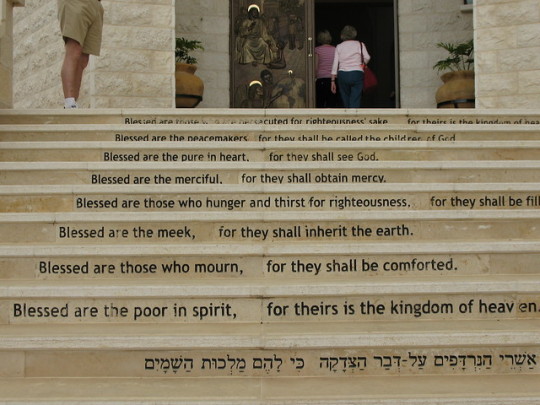
“Requirements” based on Micah 6:1-8 and Matthew 5:1-12

  • February 2, 2020February 11, 2020
  • by Sara Baron

By
my records, this is the 4th time I’ve preached on the
Beatitudes here, and the 7th time overall.  To be honest,
this makes things a little bit challenging.  To be a responsible
preacher, I think I have to go over the basics each time, but to be
an INTERESTING preacher I need to offer you something new.  The
Beatitudes, however, have been around for a while and they aren’t …
well…new.

In
fact, they’re so not new to those of us with lifetime exposures to
Christianity, that I’m not sure we can hear them anymore.  Bruce
Malina and Richard Rohrbough wrote the “Social-Science Commentary
on the Synoptic Gospels” which is one of the most useful books I’ve
ever met.  They put the Gospels into a social context, and use it to
explain how things would have made sense in the stories and to those
first hearing the stories.

Their
commentary on the Beatitudes is particularly helpful, as they
DISAGREE with the general consensus that “blessed” can be
translated as “fortunate” or “lucky” or “happy.”  Those
are all good translations of the Latin version of the text,
but they miss the social context of Jesus’s day.  Instead, they point
out:

The language used here, i.e. ‘blessed’ is
honorific language. … Contrary to the dominant social values, these
‘blessed are…’ statements ascribe honor to those unable to defend
their positions or those who refuse to take advantage of or trespass
on the position of another.  They are not those normally honored by
the culture.  Obviously, then, the honor granted comes from God, not
from the usual social sources.1

The
honor bit of this isn’t simply honor like we understand it today.
One of the primary points of the book is that honor and shame were
understood as a zero-sum reality in the Mediterranean region at that
time.  One was born into a certain amount of honor or shame and the
only way one gained honor was by gaining it FROM someone else and
that person then experienced an increase in shame.  Honor was the
FUNDMENTAL value in society, and it was a “limited good.”  In
fact, the “poor” and the “rich” in the New Testament are not
actually economic terms to begin with.  Rather, to be “poor” was
to be a person living with less honor than one was born to, and to be
“rich” was to have gained honor from others.  Malina and
Rorhrbough put it this way, “The ancient Mediterranean attitude was
that every rich person is either unjust or the hair of an unjust
person,” one who had stolen from others what they had.2
They conclude that,”The terms ‘rich’ and ‘poor’ therefore, are
better translated ‘greedy,’ and socially unfortunate.’”3
(This isn’t to say poverty wasn’t an issue, it was just such a
UNIVERSAL issue that it wasn’t actually the focus.)

This
understanding of honor, and the connection of honor to “blessed
are…”, is the key to understanding the Beatitudes in their
original context.  The challenge is that sometimes the text has been
used to mean the opposite of it’s intention.  When “Blessed are…”
is translated “lucky” it can SEEM like the beatitudes are saying:
“Lucky are the ones who struggle, don’t worry about them, they’re
better off than you think.”  Thus the social order of the day,
whatever day it may be, is upheld and people’s suffering is
justified.

That
sounds sort of like what a STANDARD set of honor and shame statements
would have been – the ones describing society as it was in Jesus’s
day:

Honorable
are those born into good families.

Honorable
are those who are spoken well of in the town square.

Honorable
are those who own large estates.

Honorable
are the elected officials who make the rules.

Honorable
are those who have many servants.

Honorable
are those who have the status to control others.

Honorable
are those who have the ear of power.

Honorable
are those who can enforce their will with violence.

Honorable
are those who speak, and others have to listen.

That
is, honor belongs to and is used by those are are already powerful,
important, and wealthy.  So, shame belongs to the powerless, the
unimportant, the poor, and those who lose status.  This clarifies
just how different the statements in Matthew’s gospel really are.
Because those that society shames, God does not.

Given
the information we have, the Beatitudes might be heard as:

Honorable to God are those who have lost the
honor of society, while they do not own the kingdoms of earth, they
are part of the kindom of heaven.

Honorable to God are those who are mourn, while
they have lost that which matters, loss is not the final word.

Honorable to God are those who refuse to harm
others, while they may lose out on power and wealth, they will end up
with everything that truly matters.

Honorable to God are those who hunger and thirst
for fairness, righteousness, and justice – it is coming.

Honorable to God are the merciful – those who
do not demand what they have a right to and shame others – they
will also receive mercy when they need it.

Honorable to God are those who are pure in
heart, the kind, for when they look in the world, they are able to
see the hand of God at work.

Honorable to God are the peace-able people, the
ones who reject violence and seek win-win situations, they are like
God.

Honorable to God are the ones who are shamed by
society for making the right choices, they also are a part of the
kindom of heaven.

Jesus
is describing an ENTIRELY ALTERNATE values system, one that ignores
the things that society cared about and instead focuses about caring
for each other, building each other up, not being willing to do harm,
and inverting the assumptions about how honor and shame work.

The
work of Jesus in this Matthew passage tracks well with the questions
posed in Micah.  In this passage God reminds the people what God has
done for them, and they respond with a wish to show appropriate…
well, honor and difference to God.  This leads to the question, “With
what shall I come before the LORD?” and the initial thoughts are
the sorts of gifts one might bring a king to indicate that one
understands oneself to be a vassal – that the approval of the king
is important to your own continued life.    But the answer is that
God does NOT work like that.  God isn’t looking for bribes, like the
kings of the world.  God is looking for something else entirely.

You
may well know this answer: to do justice, and to love kindness, and
to walk humbly with your God.  Sounds a bit like the Beatitudes,
doesn’t it?

I
asked a question last week about how we as Christians are supposed to
be in relationship with the world.  I think, perhaps, this is a large
part of the answer.  We are to exist within an alternative value
system, one that sees the world with different eyes.  We are to see
the values of justice, and of kindness, of humility, of peacefulness,
of humility, of mercy  – and let those values guide our lives.  How
we relate to the world at large is not in rejection or complicity –
it is with seeing it with different eyes.  

In
the video for the Living the Questions study last week Rev. Winnie
Varghese suggests that as Christians we should be dreaming dreams so
big that the world thinks we are CRAZY, and the dreams are
impossible. The reason, she says, is because God dreams of a truly
just society, and we’re supposed to be dreamers with God.  I think
that both Micah and the Beatitudes point us in the direction of God’s
dreams – of value systems that value compassion, collaboration, and
kindness.  May we dream right alongside of God, and act accordingly.
Amen

1Bruce
J. Malina and Richard L. Rorhrbough Social-Science Commentary on the
Synoptic Gospels (Minneapolis: Fortress Press, 2003) “Textual
Notes: Matthew 5:1-12” p. 41.

2Malina,
400.

3Malina,
401.

Rev. Sara E. Baron
First United Methodist Church of Schenectady
603 State St. Schenectady, NY 12305
Pronouns: she/her/hers
http://fumcschenectady.org/

02-02-2020

“Dawn Light” based on  Isaiah 9:1-4 and Matthew 4:12-23

  • January 27, 2020February 11, 2020
  • by Sara Baron

I’m
going to enter into the Bible’s metaphors today about darkness and
light, but before I can do so, I need to differentiate Biblical times
from current times.  In particular, today metaphors of light and
darkness reinforce racial stereotypes with claims that light skin
tones are related to lightness which are related to goodness while
dark skin tones are related to darkness which are related to badness.
These correlations are false and harmful, yet they are significant
in our society and have to be named.

The
Bible, however, isn’t racist.  There are a whole lot of problems with
the Bible and I’d be happy to list them with you in a personal
conversation, but racism actually isn’t one of them, because racism
was created well AFTER the Bible was completed.  Any claims of the
Bible supporting racism are, inherently, false.  

When
the Bible is talking about light and darkness I think it is fair to
assume it is talking about light like sunlight and darkness like
cloud covered nights.  It is probably worth remembering that electric
lights are also a feature of modernity that the Bible lacked, and so
light and dark were more constant and impermeable features of life
during Biblical times.

So,
we’re going to talk about light and darkness, and I’m going to follow
the Bible’s lead in acknowledging that humans yearn for light.  But I
want to be very clear that we are talking about lumens and not skin
tone.  After all, none of the people in the Bible were white.

Of
course, there are many positive traits of darkness.  Since reading
about the “Dark Night of the Soul,” I’ve been entirely convinced
that darkness is a gift to us.  A “Dark Night of the Soul” is a
time of discombobulation, and/or confusion, and/or grief – when the
faith a person has doesn’t work anymore and the faith a person will
have isn’t there yet.  It has been described as womb-like, when the
framework of understanding the world, and God, and even one’s self
collapses and then in silence and darkness takes on a new form.  The
new form doesn’t come into the light until it is ready.  Many
Christians have been through Dark Nights of the Soul, some have been
through multiple.  It is a normal and important part of faith, even
if it is profoundly uncomfortable and can be scary.  

So
it isn’t that darkness is bad, darkness is an important part of the
journey.  However, after a time of darkness, light is a precious
gift.

Isaiah
is talking about an experience of light after a prolonged darkness.
He is talking about dawn breaking after a particularly long night.
Isaiah is talking about a dark night of the soul for the whole
community, the whole nation of Ancient Israel, when everything they
had known and depended on was overturned… and then what would
happened afterwards.

After
the gloom, after journeying in the darkness, after living without
light or hope, the light dawns.  The sense of isolation from God and
each other lifts.  The fear and hopelessness that have permeated life
dissipate.  The heaviness of grief grows lighter.  Things start to
make a little bit of sense again, in a new way.

In
place of that heaviness, there is JOY.  The things that were dragging
the people down are broken, and they are able to stand tall and move
freely.  Hope and light abound.

The
narrative of Isaiah, and indeed of the entirety of the Hebrew Bible
is that bad things may come – and do – but they’re never the
final word.  The people are enslaved in Egypt, but God sets them
free.  The people are lost, wandering in the desert, but God shows
them the way home.  The people are oppressed under their own kings,
but God sends prophets to restore justice.  The people are taken back
into captivity in the exile, but God sets them free again.  The
people are oppressed by large empires, but God works towards freedom
time and time again.

Yes,
the darkness, comes, says the Bible.  But the light comes too.  The
darkness is never the final word.

Matthew
decided to use this passage from Isaiah to explain Jesus.   In fact,
he uses it to INTRODUCE the theme of Jesus’ ministry, which was his
teaching of “Repent and believe, for the kin(g)dom of heaven has
come near.”  That is, Jesus was part of God’s work of the light
dawning yet again.  Furthermore, the light and the kin(g)dom are
related.  

We
sometimes shy away from the word “repent” because of the ways it
has been misused around us, but the word itself is just fine.  It can
be understood as “expressing regret or remorse about one’s
wrongdoing”1
or more traditionally to Christianity, as “apologizing AND changing
couse so the harmful action isn’t repeated.”  My friend the Rev.
Dr. Barbara Throrington Green says that to repent is to realize that
you are headed in the wrong direction, to look around to figure out
where God is looking, and then to reorient yourself to look in the
same direction God is looking.  That’s my favorite definition.

I wonder
sometimes if I really understand Jesus’ message yet.  It always feels
like a work in progress.  “Repent and believe, for the kin(g)dom of
heaven has come near.”  I think this is an invitation to leave
fear, hopelessness, and isolation behind and to join with Jesus in
the work of the kin(g)dom – which is work done in community, for
the well-being of all, in faith that with God’s help the kin(g)dom
will come.  But I also think it is about letting go of the things “of
the world” that do harm in order to make space for the things “of
the kin(g)dom” and that is much harder to sort out.  There is a
big, long-standing question in Christianity about what our
relationship is to be with “the world.” Do we stand against it?
Do we ignore it?  Do we recognize it’s gifts?  Do we think of it as
sacred?  Do we call it into more wholeness?  Do we accept it as it
is?

And
that ends up really mattering.  How much do we reject?  How much do
we celebrate?  Why?  How do we even figure out what things are of the
world and what things are of the kin(g)dom when we ourselves are in
both and most people we know are too?  Purism doesn’t happen much in
real life.  I think some of the things “of the world” are
competition, tribalism, greed, pulling ourselves up by pushing others
down, and violence.  Yet, I’ve definitely seen those things in the
church too!  I want to think of the things of the kin(g)dom as being
about the common good, shared resources, the full humanity of all
people, spirituality, holistic well-being, peace, hope, and joy.
Yet, in reality there aren’t clear lines between the two, or at least
not as clear as I’d like most of the time.


Which
worries me, because if I’m supposed to “repent and believe” and
I’m still not entirely clear on what I’m repenting of or believing
in, maybe I’m not helping much in the building of the kin(g)dom, even
though I really, really want to.  

This
Matthew passage is power packed.  It claims and then reframes
Isaiah’s dawning light, it offers Jesus’ ministry and its key ideas,
it includes the calling of the disciples, and then it describes the
work of Jesus during his ministry, “Jesus went throughout Galilee,
teaching in their synagogues and proclaiming the good news of the
kingdom and curing every disease and every sickness among the
people.”

Perhaps one
doesn’t have to have a particularly good sense of where to draw the
line or how to understand the kindom.  Perhaps in the thin light of a
new dawn , one is only able to see a little bit, and yet that little
bit of light is enough to guide you safely one step at a time.  

We don’t
really have to have it all figured out – no one does, and no one
ever has.  But there is a need to trust God, and trust ourselves, and
trust each other, so that we can take a little bit of light and let
it lead us.

There is
deep goodness in the darkness, and I hope we’ve savored its lessons.
May we prepare ourselves for light dawning, and to take tentative
steps in the early morning light, moving as well as we can toward the
kin(g)dom.  Amen

1  Apple
dictionary

Rev. Sara E. Baron

 First United Methodist Church of Schenectady

603 State St. Schenectady, NY 12305

Pronouns: she/her/hers

http://fumcschenectady.org/

https://www.facebook.com/FUMCSchenectady

January 26, 2020

Posts pagination

1 … 3 4 5 6 7 … 24
  • First United Methodist Church
  • 603 State Street
  • Schenectady, NY 12305
  • phone: 518-374-4403
  • alt: 518-374-4404
  • email: fumcschenectady@yahoo.com
  • facebook: https://www.facebook.com/FUMCSchenectady
  • bluesky: @fumcschenectady.bluesky.social
Theme by Colorlib Powered by WordPress