 Uncategorized
“God’s Table Extended” based on Jeremiah 31:31-34 and 1…
Rabbi
Rafi Spitzer of congregation Agudat Achim in Niskayuna, led an
amazing workshop this week entitled “People of the Library: An
Introduction to Talmudic Literature and the Mythic Transmission of
Jewish Tradition for Clergy of Other Faiths.” Schenectady Clergy
Against Hate is a VERY cool organization, and I learned a lot.
Rabbi
Spitzer talked about the roots of modern Rabbinic Judaism as emerging
in the period after the destruction of the 2nd
Temple (70-200 CE). This is the same period as the formation of most
of the Christian texts. Jesus lived earlier, of course, but most
scholars date the earliest Gospel, the Gospel of Mark, to 70 CE
because it mentions the destruction of the Temple.
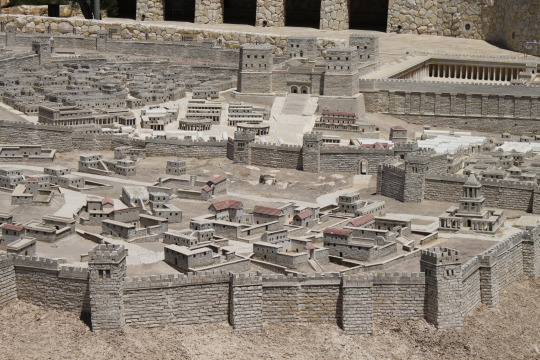
That
is, both Modern Judaism and Christianity-As-We-Know-It (as a separate
faith tradition) emerged after, and in the response to Rome’s
destruction of Jerusalem and the Temple. It was in making sense of
this horrific disaster that new expressions of God’s ways in the
world emerged.
This
is particularly interesting to me because the Hebrew Bible was
written down in the aftermath of the destruction of Jerusalem and the
First Temple in 587-586 BCE, when the Jewish leaders and scholars
were sent into exile. The stories, of course, were much older, but
they were written down then, and that means that they were written
down with the question “why did this happen to us?” at the
forefront.
That
is, the Hebrew Bible gets written down and tries to make sense of
death, destruction, and disaster. The majority of the “New
Testament” gets written down and tries to make sense of death,
destruction, and disaster, AND concurrently the Jewish Mishnah gets
written down and tries to make sense of death, destruction, and
disaster.
It
seems to indicate our faith traditions are deeply rooted in trying to
make sense of death, destruction, and disaster, or that God is up to
new things when prior systems are destroyed, or that in trying to
preserve what used to be we end up making new things possible, or
that God can bring good even out of bad, or maybe all of the above.
In
any case, I think it is interesting, and worth continuing to ponder.
Especially now, when we have experienced death, destruction, and
disaster, and are wondering what we and God will be up to next.
Our
Hebrew Bible Lesson today from Jeremiah speaks lovingly of the “new
covenant” between God and the people. This is such a foundational
idea in Christianity that we may not know that this passage is the
ONLY time such an idea emerges in the Hebrew Bible.
“Foundational,”
you say, “why?” Think of the words “old testament” and “new
testament” and remember that testament is a synonymous with
covenant here. This is how some people made sense of the whole
Christian tradition. That said, there are far too many who take
these words to mean that the Hebrew Bible is old, or outdated, or
replaced, and that is problematic. We intentionally use the words
“Hebrew Bible” to recognize our shared biblical tradition.
Anyway,
back to Jeremiah. Jeremiah is a prophet of the exile, and for much
of the book Jeremiah warns of the dangers of the impending exile.
However, once the exile happens, Jeremiah’s tone changes, and he
turns to comfort and hope. This passage is part of that, promising a
return to God’s promises and relationships. The promise is
particularly full, as it speaks to both the northern and southern
kingdoms, the wholeness of Ancient Israel. It is also full in that
the new covenant will not be dependent on the people’s faithfulness.
God will take care of it.
“I
will put my law within them, and I will write it on their hearts; and
I will be their God, and they shall be my people. No longer shall
they teach one another, or say to each other, “Know the LORD,”
for they shall all know me, from the least of them to the greatest,
says the LORD; for I will forgive their iniquity, and remember their
sin no more.” (Jeremiah 31:33b-34, NRSV)
It
is a lovely vision, in some ways the ultimate comfort: a relationship
with God one can’t mess up.
The
Christian church has claimed this covenant as their own. Take these
words from our communion liturgy, “By the baptism of his suffering,
death, and resurrection you gave birth to your church, delivered us
from slavery to sin and death, and made with us a new covenant by
water and the Spirit.” (UM Hymnal, page 9).
I
have some deeply mixed feelings about this claim. On the one hand,
it fits with my assumption that our status as beloveds of God is
based on the nature of God (grace) and not on our performance. On
the other hand, it seems rather profoundly to miss out on the idea
that God wants us to take care of each other, and that our actions
matter in the building of the kindom.
Or
maybe I’m exaggerating. After all, Jeremiah’s idea isn’t that the
people ignore God’s wishes. Rather it is that they know God and
God’s grace so well that it is inherent in them and they live it out
naturally. (I have mixed feelings about this too – in that it is
lovely, but simply not true of Christians I know.)
In
1 Corinthians we read the first historical record of communion. Paul
had planted the church in Corinth but had been away for a few years.
In the first century CE the communion meal was a full common meal
(think potluck) during which the last supper was remembered.
Apparently in the time after Paul left things had gone off kilter a
bit. According to Marcus Borg:
the
wealthy (who didn’t have to work) would gather early for the meal.
By the time the people who worked (most of the community) got to the
meal, the wealthy had already eaten and some were tipsy. They may
also have served the best food and the best wine to themselves before
the others arrived. Such was common among the wealthy of the world.
For Paul this violated the ‘one body’ understanding of the body of
Christ. It meant bringing hierarchical distinctions of ‘this world’
into the body of Christ.1
Borg
goes on to explain the later threat to those who eat and drink and an
“unworthy manner”. “In this context, eating and drinking the
bread and wine ‘in an unworthy manner’ refers to the behavior of the
wealthy in perpetuating the divisions of ‘this world.’ In Christian
communities, these divisions were abolished.”2
How
quickly the early church struggled with the equality and equity of
God’s kindom! How hard it is to let go of hierarchy and let love for
all be the way decisions are made. How familiar that is. Those of
us who are white have been trained in mostly subconscious ways that
we are at the top of a hierarchy, and when left to our own devices we
will re-create systems that put our needs at the top while telling
ourselves it is OK. Like the wealthy Corinthians might have said,
“We told them it started at 4, but they don’t make it until 5:20.
Why should we have to wait when we TOLD THEM what time it started?”
Or when a white person takes their own shame, guilt, anger, or
aggression as a reason to violate, harm, or kill people of color.
Or even in the tiny little micro-aggressions of every day, related to
who gets heard, who gets believed, who is expected to be soothing,
who is expected to sooth, and whose pain matters.
It
took Paul saying, “don’t violate God’s table like that” for it to
be heard. But I’m guessing that the reason he knew it was happening
was because the impoverished members of the community had been saying
so for quite some time, and finally tried a new way of getting their
needs heard. I am hearing from Asian and Asian American friends and
colleagues that violence against Asians and Asian Americans has been
a regular part of their lives in the United States all along, and has
been FAR worse for the past year +. I am also hearing exhaustion and
horror that a white man used his own shame as motivation for mass
murder, mostly of Asian women.
And
let me say, because it MUST BE SAID, that a person doing sex work
does not IN ANY WAY change their human value, nor make it permissible
to harm that person. Indeed, most people who support themselves with
sex work are people who exist in the most vulnerable positions of our
society, and as such are worthy of the most care and support to
counterbalance the harm they’ve lived.
The
Children and Youth of the Church have been working this Lent to
support a Lenten project to respond to hunger. They have invited us
to collect one canned good or nonperishables a week to donate to the
SICM food pantry. We are invited to bring those gifts this coming
Saturday (March 27 for those watching this NOT on Sunday) at the
flower sale. Those tangible gifts serve as a reminder of other
people’s tangible needs. It is also possible to make a donation to
SICM through our website or by check, knowing that SICM can buy food
at the Regional Food Bank at a very discounted rate.
That
is to say, that as we prepare God’s Communion Table for ourselves
today, given Paul’s admonitions, it might be a good time to be sure
that as we receive God’s gifts of grace, life, and hope, we extend
the table as we are able. Or, perhaps this is time for gifts to
Patty’s place. Patty’s Place is an outreach-based service for women
at-risk, exploited, or involved in sex work. They provide immediate
resources and long-term referrals.
I’m
less than sure we’re embodying Jeremiah’s new covenant, but I am
entirely sure that the part that says that God is with us, in our
hearts, and claiming us as beloveds is true. And I’m sure that we
have wonderful ways to respond to God’s love – with love, even,
ESPECIALLY in the midst of disaster. Let’s do it! Amen
1Marcus
J Borg, 59 Evolution of the Word: The New Testament in the Order
the Books Were Written (United
States of America: HarperOne, 2012), 59.
2Ibid.
Rev. Sara E. Baron
First United Methodist Church of Schenectady
603 State St. Schenectady, NY 12305
Pronouns: she/her/hers
http://fumcschenectady.org/
https://www.facebook.com/FUMCSchenectady
March 21, 20201